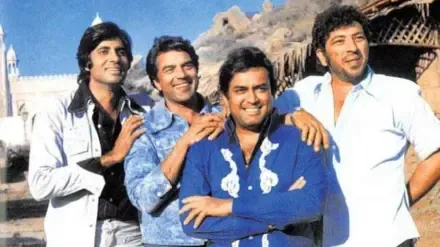
Half a century after its release, Sholay remains a cornerstone in Indian cinema, not merely for its storytelling or star-studded cast but for the seismic impact it had on Bollywood’s box office dynamics. The 1975 action-drama introduced a new era of high-budget, mass-appeal filmmaking, blending compelling narratives with technical innovation and strategic marketing. Its commercial triumph established benchmarks for revenue generation, distribution, and audience engagement, reshaping production strategies for decades. Beyond entertainment, Sholay demonstrated the financial viability of large-scale cinematic ventures in India, inspiring producers to pursue ambitious projects and revolutionizing the economics of Bollywood.
Introduction: The Genesis of a Phenomenon
When Ramesh Sippy’s Sholay hit theaters in 1975, it was more than just another film release. With an unprecedented budget of Rs. 3.5 crore, the movie combined intricate storytelling, iconic characters, and technical finesse rarely seen in Indian cinema. Its release marked a turning point, showing that a well-crafted narrative, paired with star power and innovative promotion, could captivate millions and generate extraordinary box office returns.
Box Office Innovation and Revenue Model
Sholay pioneered the concept of the “multi-release strategy,” staying in theaters for over five years in some locations. This extended run was unprecedented, maximizing both ticket sales and audience reach. The film’s financial success also highlighted the potential of ancillary revenue streams, such as merchandise and music rights, which had been largely underutilized in Bollywood until that point. The commercial blueprint established by Sholay became a model for producers aiming to balance artistic ambition with market viability.
Impact on Film Production and Marketing
The blockbuster reshaped production norms, encouraging filmmakers to invest in higher budgets for technical excellence, elaborate sets, and complex narratives. Moreover, marketing strategies evolved: teasers, posters, and media engagement became vital tools for audience anticipation. By demonstrating that investing in production quality and strategic promotion could deliver exponential returns, Sholay influenced an entire generation of filmmakers and producers to rethink how films were financed and marketed.
Cultural Resonance and Financial Legacy
Beyond economics, Sholay became a cultural touchstone, embedding phrases, characters, and music into India’s collective consciousness. Its enduring popularity underscores the intersection of creative vision and business acumen. Financially, it proved that blockbuster films could create lasting value, both in terms of revenue and brand equity, encouraging studios to explore franchise potential and diversified income streams.
Conclusion: The Blueprint for Modern Bollywood
Fifty years on, Sholay’s influence is evident in the contemporary Bollywood landscape. From high-budget action dramas to meticulously planned marketing campaigns, the film’s legacy continues to guide financial and creative decisions in the industry. By demonstrating the synergy between cinematic artistry and commercial strategy, Sholay did more than entertain—it fundamentally transformed how Bollywood approaches box office success.
Comments