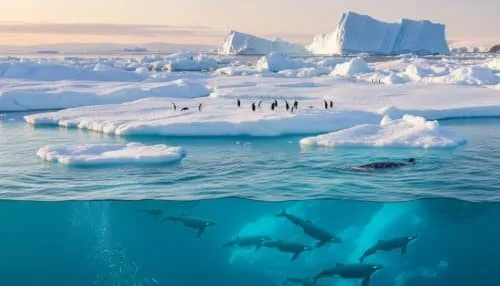
New research indicates that Antarctic sea ice is melting at unprecedented rates, raising alarms about the potential release of trapped carbon compounds previously locked in frozen ecosystems. Scientists warn that this “hidden carbon bomb” could significantly accelerate global warming, creating feedback loops that intensify climate change. The rapid ice loss threatens to disrupt marine ecosystems, alter ocean circulation, and amplify greenhouse gas emissions. Understanding the dynamics of Antarctic ice melt is crucial for climate modeling and mitigation strategies. Experts emphasize that timely global action is required to limit emissions and manage the cascading effects of polar ice loss on the Earth’s climate system.
Record Antarctic Ice Melt
Recent satellite observations reveal that Antarctic sea ice is shrinking faster than historical averages, driven by rising global temperatures and oceanic warming. The unprecedented melt exposes vast regions of the Southern Ocean, altering local albedo and triggering further ice loss. Scientists warn that as ice retreats, the previously trapped organic carbon in permafrost and sediments may be released, contributing to atmospheric greenhouse gas levels.
The Hidden Carbon Threat
Antarctic sediments contain significant quantities of carbon accumulated over millennia. When exposed to warming and microbial activity, these carbon stores can be converted into CO₂ and methane, potent greenhouse gases. This feedback mechanism could accelerate climate change beyond current projections, compounding the impact of human-induced emissions. Researchers emphasize that the potential scale of carbon release from the Antarctic could rival other major natural carbon sources if melt continues unchecked.
Environmental and Ecological Impacts
Melting sea ice not only affects the global carbon cycle but also threatens Antarctic ecosystems. Marine species dependent on ice cover, including krill and penguins, face habitat loss, altering food chains and biodiversity. Additionally, changes in sea ice distribution influence ocean currents and weather patterns worldwide, linking polar dynamics to global climate systems.
Urgency for Global Action
Experts stress that addressing Antarctic ice melt requires coordinated global efforts to curb greenhouse gas emissions. Monitoring ice loss, studying carbon release, and integrating findings into climate models are critical for predicting and mitigating future warming scenarios. The Antarctic serves as both a warning and a laboratory, highlighting the interconnectedness of polar regions and the broader climate system.
Comments