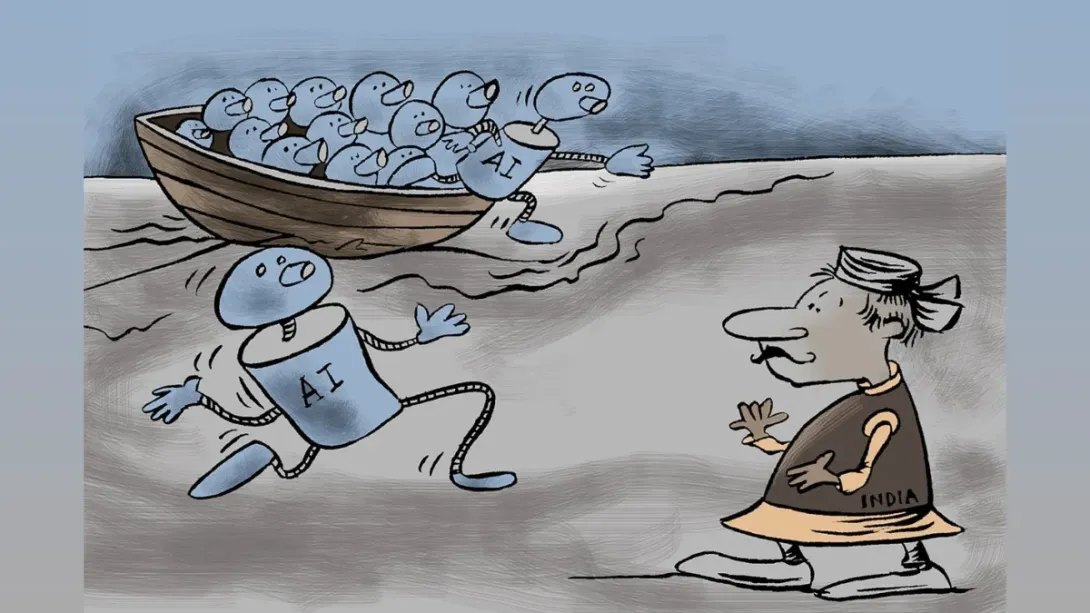
India’s booming artificial intelligence (AI) sector faces a widening talent shortage, with demand for generative AI specialists far outpacing available expertise. Industry estimates suggest that for every ten openings in this domain, there is just one qualified engineer available to fill the role. This sharp imbalance underscores both the extraordinary pace at which enterprises are adopting AI technologies and the urgent need for skilling initiatives to bridge the gap. As companies race to embed AI across business operations, the scarcity of skilled professionals is becoming one of the sector’s biggest growth constraints.
Demand Outstrips Supply in Generative AI
The surge in demand for generative AI applications — ranging from chatbots and creative design tools to enterprise automation — has created a hiring frenzy. Technology majors, startups, and global enterprises operating in India are aggressively scouting for talent capable of building, training, and fine-tuning large language models (LLMs). However, the availability of engineers with advanced AI skills remains alarmingly low, creating a scenario where positions stay open for months despite competitive compensation packages.
The Scale of the Shortfall
Recruitment data indicates that for every ten generative AI roles advertised, only one professional with the requisite skillset is available. This translates into a 90 percent demand-supply gap, among the steepest in India’s technology sector. Positions such as prompt engineers, AI model architects, and machine learning scientists are the hardest to fill. The imbalance is driving salaries to unprecedented levels, with entry-level roles in AI now commanding multiples of traditional IT jobs.
Industry Response and Upskilling Initiatives
To mitigate the shortfall, enterprises and academic institutions are increasingly investing in reskilling programs. Leading IT firms are collaborating with universities to design specialized AI curricula, while startups are turning to global training platforms to nurture in-house expertise. The government, through initiatives such as the Digital India framework, is also encouraging partnerships aimed at building a future-ready AI workforce. Despite these efforts, experts warn that closing the talent gap will take years, given the steep learning curve required for advanced AI research and engineering.
Strategic Implications for India’s Tech Economy
India’s aspiration to become a global hub for AI innovation hinges on its ability to bridge this talent gap. While the country has a large base of software engineers, only a small fraction possesses the expertise needed for generative AI. Without sufficient skilled professionals, companies may face delays in deploying AI solutions, limiting competitiveness in a sector projected to add billions to the global economy. For India, addressing this shortage is not merely a workforce issue but a strategic imperative to secure leadership in the AI revolution.
Outlook
The generative AI boom has created opportunities as well as challenges for India’s technology ecosystem. With companies investing heavily in research, infrastructure, and training, the supply-demand imbalance may gradually ease. However, unless skilling accelerates at scale, the gap between ambition and execution will remain stark. For now, the message is clear: the race to secure AI talent is just as fierce as the race to build AI solutions.
Comments