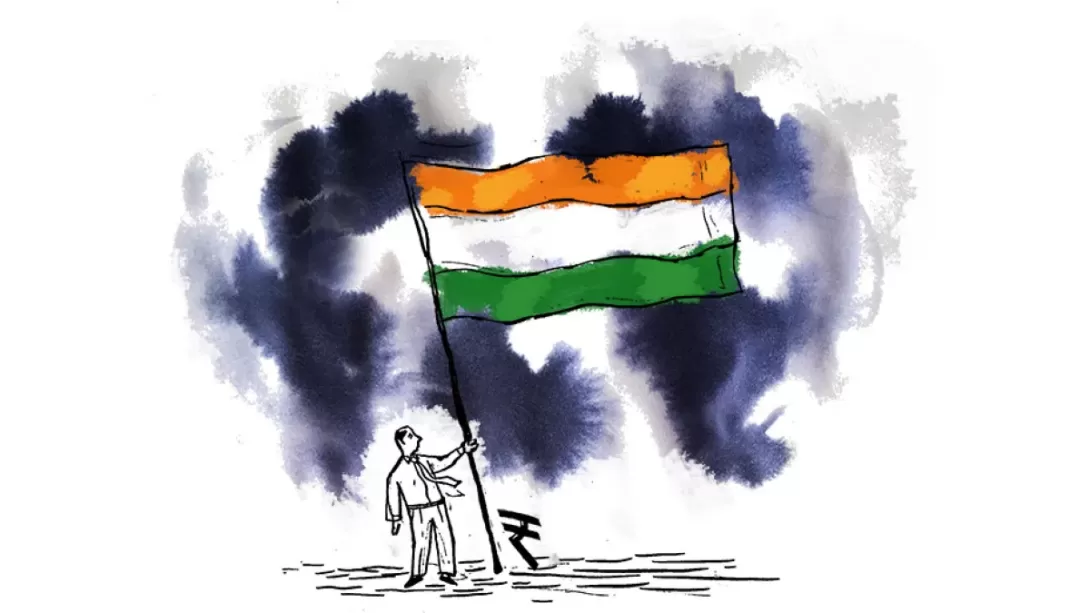
Samajwadi Party leader Akhilesh Yadav has sharply criticized the government's economic agenda, underscoring what he describes as a widening gap between the rhetoric of self-reliance and the reality of growing dependency on imported goods. According to Yadav, this dissonance has eroded domestic manufacturing, weakened traditional craftsmanship, and led to the steady dismantling of indigenous industries. His critique arrives amid government initiatives to develop tier-2 and tier-3 cities and boost local production. Yadav contends that the push for foreign collaborations contradicts these ambitions, exacerbating income inequality and leaving India vulnerable to external market forces.
Industrial Displacement and Economic Inequality
In a post shared on X, Akhilesh Yadav, the president of the Samajwadi Party and former chief minister of Uttar Pradesh, attributed India’s deepening economic inequality to a sustained decline in domestic manufacturing. Yadav warned that major industrial houses are moving away from production to focus on trading, a shift he argued has significantly eroded the value of local resources and labor.
He stressed that this transformation has not only impacted traditional industries but also stripped the workforce of crucial employment opportunities, threatening the livelihoods of skilled artisans and laborers. The result, he said, is an economy more dependent on imported finished goods and less resilient in the face of global economic turbulence.
Modi's Call for Self-Reliance Versus Ground Realities
Yadav’s comments follow a recent speech by Prime Minister Narendra Modi in Gandhinagar, in which the prime minister emphasized leveraging the potential of India’s smaller cities to propel the country to the status of the world’s third-largest economy. Modi encouraged consumers to choose locally manufactured goods over imports as a key pillar of economic independence.
However, Yadav argues that there is a fundamental contradiction in this narrative. While the government champions “Atmanirbharta” (self-reliance) in public addresses, he claims it simultaneously fosters alliances with multinational corporations. According to Yadav, this duality not only undermines indigenous manufacturing but also weakens India’s broader economic sovereignty.
A Disparity Between Words and Actions
Yadav’s critique highlighted what he sees as a growing disparity between the government’s policy pronouncements and its actual practices. The government's push to forge strategic partnerships with foreign conglomerates, he said, often overshadows domestic capabilities and sidelines local industry players.
This, he argued, has left India’s economy exposed to external market pressures, effectively reducing local enterprises to mere distributors of foreign-made goods. Such policies, Yadav said, reinforce a lopsided economic structure where the gap between the rich and the poor continues to widen.
Rhetoric Versus Reality
“The government resembles a showpiece elephant—different teeth for display, different teeth for eating,” Yadav said, in a biting metaphor aimed at underscoring what he sees as a fundamental hypocrisy in India’s economic policymaking.
He further noted that national prosperity cannot be measured by a trillion-dollar GDP figure alone, but must be reflected in improvements in per capita income and a reduction in inequality. Without robust local production and support for domestic industries, he warned, India’s aspirations for equitable growth and genuine self-reliance would remain out of reach.
Conclusion
Akhilesh Yadav’s critique of India’s economic policies reflects a deep-seated concern that, without meaningful support for domestic manufacturing and traditional industries, the country risks becoming a mere conduit for foreign goods. As India strives to cement its status as a global economic powerhouse, balancing the allure of international partnerships with the imperatives of local empowerment will remain a crucial—and contentious—challenge.
Comments