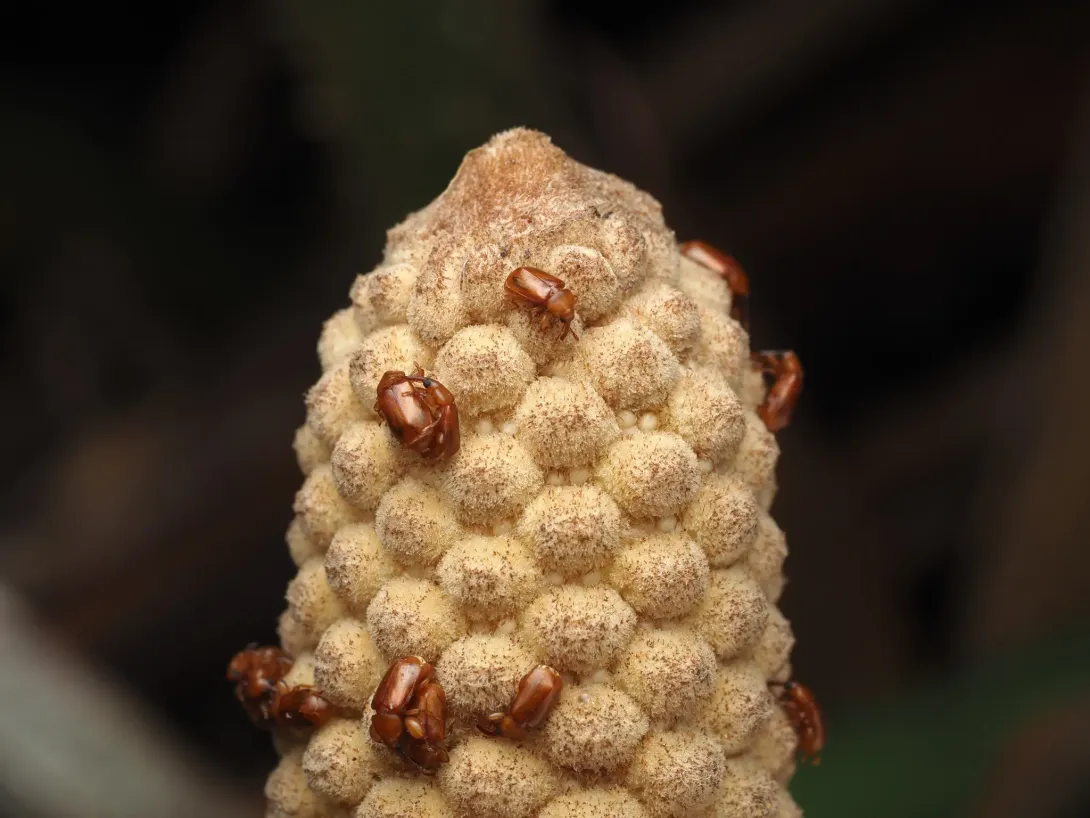
New scientific research suggests that some of Earth’s earliest flowering plants may have used subtle heat signals to attract pollinators, revealing a surprisingly advanced evolutionary strategy. The study indicates that long before visual cues and strong scents became dominant, ancient plants generated localized warmth to guide insects toward reproductive structures. This discovery reshapes understanding of early plant–pollinator relationships and highlights heat as a critical, yet underappreciated, biological signal. Beyond evolutionary biology, the findings offer insights relevant to modern agriculture, climate adaptation and biomimetic design, underscoring how ancient natural systems continue to inform contemporary science and innovation.
Rethinking Early Plant–Pollinator Communication
For decades, scientists believed early plants relied primarily on visual contrast and chemical scents to attract pollinators. The latest research challenges that assumption, showing that thermal cues may have played a foundational role.
By producing small but detectable temperature differences, ancient plants could guide insects efficiently, even in low-light or visually complex environments.
How Heat Became a Biological Signal
Researchers found that certain plant structures were capable of retaining or generating warmth through metabolic processes. Insects, which are highly sensitive to temperature variations, would naturally gravitate toward these warmer zones.
This mechanism offered a dual advantage: attracting pollinators while also providing them with a thermal reward, enhancing the likelihood of repeated visits and successful pollination.
Evolutionary Advantages of Thermal Signaling
From an evolutionary standpoint, heat-based signaling likely emerged as an energy-efficient and reliable method of communication. Unlike scent, which disperses unpredictably, or color, which depends on light conditions, heat offers a direct and localized signal.
This strategy may have given early flowering plants a competitive edge, accelerating diversification and shaping the trajectory of terrestrial ecosystems.
Implications for Modern Ecology and Agriculture
Understanding how plants use non-visual cues has practical implications today. Modern crops still interact with pollinators that respond to temperature changes, suggesting opportunities to enhance pollination efficiency through plant breeding or greenhouse design.
As climate variability increases, insights into heat-based signaling could help develop resilient agricultural systems that better align with pollinator behavior.
Technological and Commercial Insights
Beyond biology, the discovery has sparked interest in biomimicry. Engineers and designers are exploring how subtle thermal gradients could be used in navigation systems, sustainable architecture and sensor technology.
Such cross-disciplinary applications highlight how evolutionary solutions refined over millions of years can inspire commercially viable innovations.
A Broader Perspective on Plant Intelligence
The findings contribute to a growing body of research suggesting plants employ complex, multi-sensory communication strategies. Heat, once considered incidental, now appears to be a deliberate and functional signal embedded in evolutionary design.
This reframing challenges simplistic views of plant behavior and positions ancient flora as active participants in shaping ecological networks.
Looking Forward
As research continues, scientists expect to uncover additional examples of thermal signaling across plant species. These discoveries not only deepen understanding of Earth’s biological history but also offer valuable lessons for future-facing industries.
In revealing how ancient plants quietly harnessed heat to survive and thrive, the study underscores a powerful truth: innovation in nature often begins long before humanity learns how to recognize it.
Comments