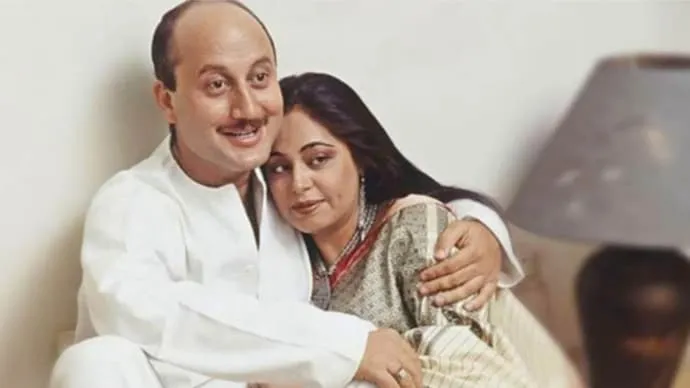
Veteran actor Anupam Kher, known for his prolific career spanning over four decades in Indian cinema, recently shared an unconventional yet pragmatic personal choice—he prefers to live in a rented home. In a revealing interview, Kher cited his decision as a deliberate step to avoid future familial disputes over property inheritance. The seasoned actor also touched on his relationship with his son Sikandar, noting a dynamic rooted in mutual independence. His candid remarks provide a rare glimpse into the personal philosophies guiding one of India’s most respected public figures, raising thought-provoking questions about legacy, ownership, and the burdens of wealth.
A Conscious Departure from Conventional Asset Building
In a culture where property ownership is often equated with success and security, Anupam Kher’s decision to rent rather than buy stands out. Far from being a matter of affordability, the actor’s choice is rooted in foresight and a desire to prevent intergenerational conflict. According to Kher, he has no intention of leaving behind assets that might trigger disputes among heirs after his death.
His approach challenges the conventional Indian ethos that regards homeownership as a family’s most prized possession. Kher’s reasoning rests not in rejection of the tradition but in a redefinition of legacy—prioritizing peace over property.
Avoiding the Pitfalls of Inheritance Disputes
Kher’s concern is not unfounded. India has long witnessed property disputes tearing families apart, often stretching over decades in courtrooms. The actor, having observed many such stories around him, appears to have drawn a clear boundary between material inheritance and familial well-being. His rented accommodation, thus, becomes more than a home—it is a symbol of detachment from conflict-ridden conventions.
By sidestepping ownership, he subtly distances himself from the complications that typically accompany asset division. It’s a choice that blends emotional intelligence with legal pragmatism—especially pertinent in high-net-worth households where disputes often transcend material worth.
A Father-Son Dynamic Built on Autonomy
The actor also addressed his relationship with his son, Sikandar Kher, an actor in his own right. Anupam Kher expressed that Sikandar exercises complete independence in his life decisions and does not seek his father’s approval before taking action. While some might interpret this as a generational divide, Kher presents it with neutrality, almost pride. His tone suggests acceptance of autonomy rather than the imposition of legacy or parental control.
This viewpoint reinforces Kher’s broader stance on detachment—not only from material assets but also from expectations. He seems to endorse a model of parenting that honors individuality over inheritance.
Rethinking Wealth, Legacy, and Life Planning
Anupam Kher’s perspective may not resonate with every Indian household, but it certainly opens up a conversation on life planning that goes beyond financial accumulation. As real estate prices rise and joint families fragment into nuclear units, the question of how one’s wealth is handled posthumously becomes increasingly relevant.
Choosing to rent at a stage in life when most people focus on passing down assets could be seen as radical—or deeply wise. Kher’s rationale urges a reevaluation of what we truly leave behind: is it the square footage or the absence of strife?
Final Thoughts: An Intentional Simplicity
In an industry where opulence often defines stature, Anupam Kher's choice to rent rather than own stands in contrast to the celebrity lifestyle. But it is not about frugality—it’s about intentional simplicity. By decoupling his legacy from material property, he reinforces values of harmony, freedom, and self-sufficiency.
In doing so, Kher doesn’t just live differently; he thinks differently. And perhaps in that lies the most enduring inheritance he offers—not to his family alone, but to a society grappling with the complexities of modern wealth and familial responsibility.
Comments