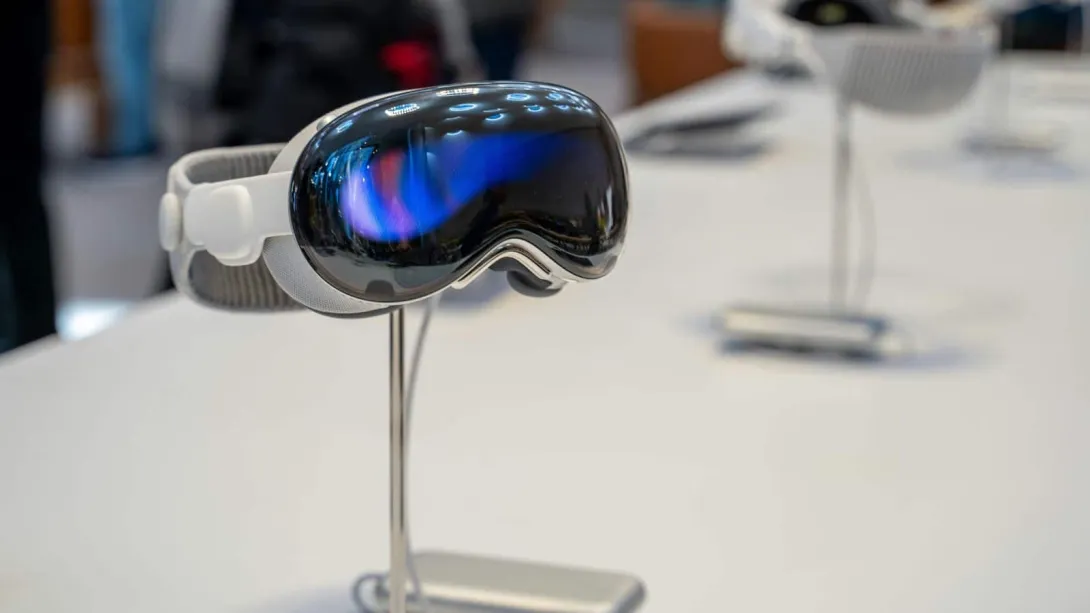
Apple has reportedly reduced production of its Vision Pro mixed-reality headset, suggesting a reassessment of near-term demand for the premium device. The move comes months after the product’s high-profile debut, which positioned it as a breakthrough in spatial computing. While the Vision Pro showcased Apple’s engineering capabilities, its high price point and niche use cases appear to have tempered mass-market uptake. Industry analysts view the production adjustment as a pragmatic response to early sales trends rather than a retreat from the category, with Apple likely refining its strategy as the market matures.
Production Adjustment Reflects Demand Realities
According to industry reports, Apple has scaled back manufacturing volumes of the Vision Pro to better align supply with demand. The decision highlights the challenges of introducing a first-generation product in an emerging category, particularly one priced at a premium.
Supply-chain recalibration is common in the early life cycle of new hardware, especially when consumer adoption patterns differ from initial projections.
Pricing and Market Positioning
The Vision Pro entered the market as a high-end device, targeting developers, enterprises, and early adopters rather than mainstream consumers. While its advanced display technology and computing power set new benchmarks, the price limited its immediate appeal.
Market observers note that adoption in the mixed-reality space remains constrained by cost, content availability, and questions around everyday use cases.
Strategic Implications for Apple
Analysts say the production cut does not necessarily signal diminished commitment to spatial computing. Instead, it may reflect Apple’s characteristic long-term approach, using early versions to gather user feedback and refine future iterations.
Apple has historically adjusted output and strategy in response to market feedback, often leading to more accessible products in subsequent generations.
Competitive and Industry Context
The mixed-reality and augmented reality markets are still in a formative stage, with global players experimenting with hardware, software, and ecosystems. Apple’s entry has intensified competition while raising expectations for quality and user experience.
A temporary production slowdown may also give developers time to build compelling applications, a critical factor in driving sustained adoption.
Outlook
Looking ahead, analysts expect Apple to continue investing in spatial computing while recalibrating timelines and product tiers. A more affordable version of the headset or incremental upgrades could broaden appeal over time.
The Vision Pro’s early journey underscores the complexity of launching transformative technology, where initial restraint may ultimately support a more sustainable and scalable growth path.
Comments