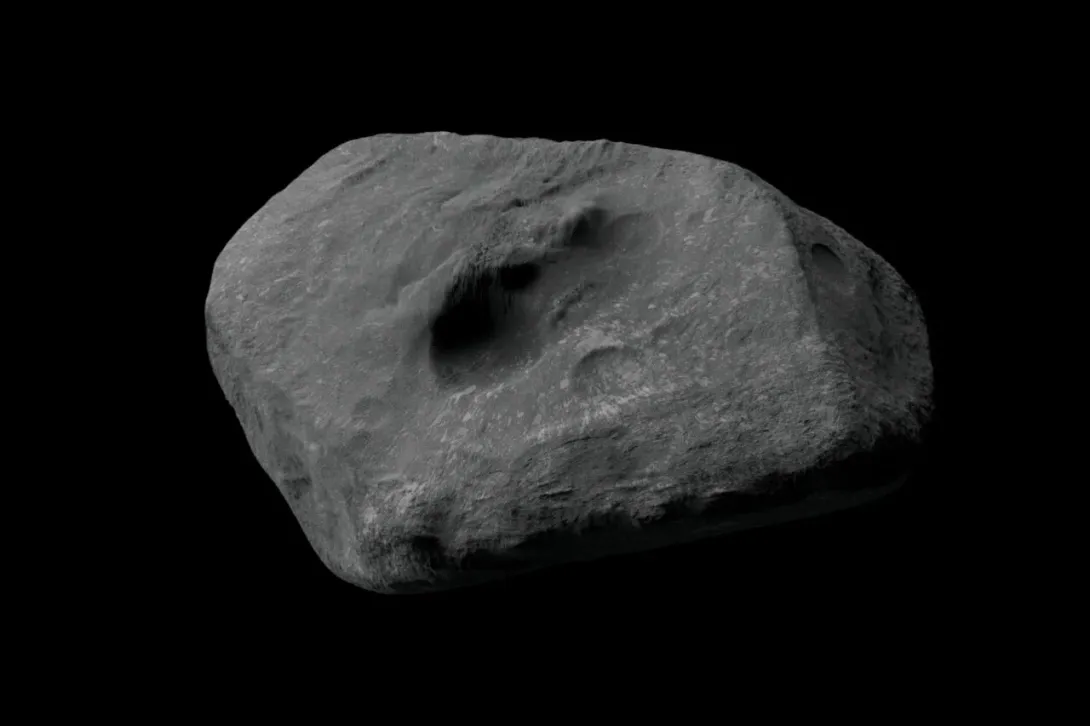
Asteroid 2024 YR4 has emerged as a point of scientific interest after astronomers tracked its trajectory in relation to the Moon, highlighting the growing sophistication of near-Earth object monitoring. While the asteroid poses no known threat to Earth or the Moon, its passage has provided researchers with valuable data on orbital dynamics, gravitational influence and long-term space risk assessment. Observations of such objects play a critical role in planetary defense and space science, offering insights into how small celestial bodies interact with larger systems. The event underscores the importance of continuous surveillance in an increasingly data-driven era of astronomy.
Tracking Asteroid 2024 YR4
Asteroid 2024 YR4 was identified through routine sky surveys designed to detect and catalog near-Earth objects. Once discovered, astronomers calculated its orbit and confirmed that its path brought it into a region of space influenced by the Moon’s gravity.
Although the asteroid did not approach closely enough to raise collision concerns, its trajectory offered an opportunity to study how lunar gravity can subtly alter the motion of smaller bodies passing nearby.
The Moon’s Gravitational Influence
The Moon plays a significant role in shaping the behavior of asteroids and debris that enter Earth’s neighborhood. In the case of 2024 YR4, scientists observed minor orbital variations caused by gravitational interaction, a phenomenon known as a gravitational perturbation.
Such interactions are closely analyzed because they help refine predictive models, improving accuracy in forecasting the future paths of asteroids that may pass through the Earth-Moon system.
Why These Observations Matter
From a scientific and strategic perspective, tracking asteroids like 2024 YR4 strengthens planetary defense capabilities. Accurate modeling reduces uncertainty and supports early-warning systems designed to assess long-term impact risks.
The financial implications are also notable. Investments in asteroid detection and monitoring programs—modest compared with large-scale space missions—can prevent potential losses running into several lakh crore rupees in the unlikely event of a future impact.
Advances in Space Surveillance
The analysis of 2024 YR4 reflects advances in telescope sensitivity, automated detection and computational modeling. These tools allow astronomers to identify smaller objects earlier and track them more precisely than ever before.
International collaboration has further improved data sharing, ensuring that observations are rapidly verified and integrated into global tracking databases.
A Reminder of a Dynamic Space Environment
Asteroid 2024 YR4’s interaction with the Moon is not a cause for alarm, but it serves as a reminder that Earth exists within a dynamic and constantly evolving cosmic environment. Each observation adds to a growing body of knowledge that informs science, policy and long-term risk planning.
As monitoring systems continue to improve, such events will increasingly shift from curiosity-driven astronomy to essential components of global space security and economic resilience.
Comments