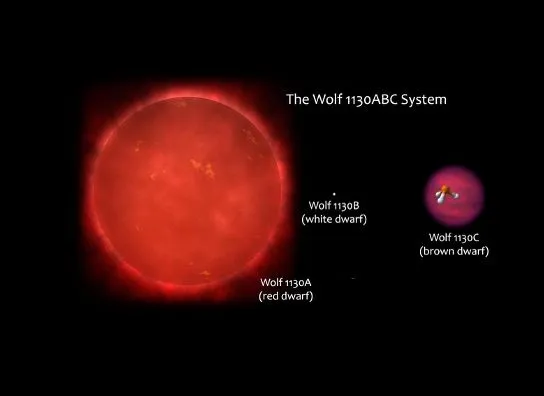
In a groundbreaking discovery, astronomers have identified the presence of a highly reactive and toxic gas in an ancient brown dwarf, offering unprecedented insight into the atmospheric chemistry of these substellar objects. Brown dwarfs, often described as “failed stars,” bridge the gap between planets and stars, and this finding challenges existing models of their composition and evolution. The detection suggests complex chemical processes occurring in extreme environments, with implications for understanding planetary formation, stellar evolution, and potentially hazardous molecular behavior in space. Researchers aim to study these gases further to refine astrophysical theories and advance the search for life-related chemistry in the cosmos.
---
Understanding Brown Dwarfs
Brown dwarfs are substellar objects too massive to be planets but not massive enough to sustain hydrogen fusion like true stars. Typically, they emit faint infrared radiation and possess extreme temperatures and pressures. Their unique physical properties make them laboratories for studying chemical processes under conditions impossible to replicate on Earth.
---
Discovery of Explosive, Toxic Gas
Using advanced spectroscopic instruments, astronomers detected a highly reactive gas in the atmosphere of an ancient brown dwarf. The gas, characterized as both explosive and toxic, indicates the presence of energetic chemical reactions previously unobserved in substellar atmospheres. Researchers emphasize that these findings highlight the dynamic and often volatile nature of brown dwarf environments.
---
Implications for Astrophysics
This discovery challenges existing theoretical models of brown dwarf atmospheres, suggesting more complex chemical pathways than previously assumed. Astrophysicists believe that studying these gases can illuminate processes relevant to planetary atmospheres, stellar evolution, and the formation of organic and inorganic molecules in extreme conditions.
---
Potential Broader Significance
Understanding toxic and reactive gases in brown dwarfs may also aid the study of exoplanets and the search for habitable worlds. Insights into chemical stability, energy transfer, and atmospheric dynamics could refine models of planetary atmospheres and contribute to predictions of chemical hazards in space exploration missions.
---
Conclusion
The detection of explosive, toxic gas in an ancient brown dwarf marks a milestone in astrophysical research. By revealing unexpected chemical activity in substellar atmospheres, this discovery not only deepens our understanding of brown dwarfs but also informs broader studies of planetary formation, stellar evolution, and cosmic chemistry. As technology advances, continued observation of these exotic objects promises to unveil further surprises about the complexities of the universe.
Comments