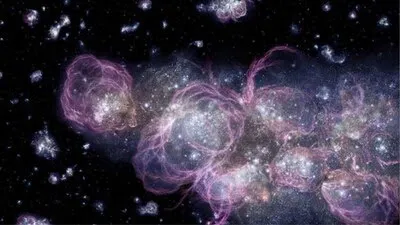
A groundbreaking astronomical observation suggests that scientists may have finally detected the universe’s first generation of stars, a cosmic mystery that has persisted for over 13 billion years. These primordial stars, known as Population III stars, are believed to have formed shortly after the Big Bang and played a critical role in shaping the early cosmos, including the creation of heavier elements necessary for planets and life. Using cutting-edge telescopes and spectroscopy techniques, researchers have identified potential signatures of these elusive stars, opening a new chapter in understanding cosmic evolution and providing insights into the earliest epochs of star formation.
---
Hunting the Cosmic Dawn
For decades, astronomers have theorized the existence of Population III stars — massive, hot, and composed almost entirely of hydrogen and helium. Unlike later generations, they lacked heavier elements, making them fundamentally different in structure and lifespan. Detecting these stars directly has been nearly impossible due to their immense distance, faint light, and transient nature.
Recent observations utilizing advanced space-based telescopes have allowed scientists to peer back in time to less than a billion years after the Big Bang. Researchers identified distinct spectral features indicative of stars with minimal metallicity, consistent with theoretical predictions for the universe’s first luminous bodies.
---
The Role of Population III Stars
These first stars played a pivotal role in cosmic evolution. Their intense radiation reionized the surrounding hydrogen gas, ending the cosmic “dark ages” and initiating the formation of galaxies. As they aged and exploded in supernovae, they synthesized heavier elements — carbon, oxygen, and iron — seeding the universe for subsequent generations of stars, planets, and eventually life.
Understanding these stars provides critical insight into early galaxy formation, chemical evolution, and the conditions that shaped the cosmos. Researchers believe that pinpointing their locations will refine models of star formation in the universe’s infancy.
---
Technological Breakthroughs Enable Discovery
The potential detection was made possible by next-generation telescopes capable of capturing faint infrared light, which stretches from early cosmic epochs due to the universe’s expansion. High-resolution spectroscopy revealed signatures such as specific hydrogen and helium emission lines, strongly suggesting the presence of Population III stars.
These observations exemplify how state-of-the-art instrumentation, precise data analysis, and theoretical modeling are converging to unlock mysteries that were once considered unreachable.
---
Implications for Cosmology and Astrophysics
Confirming the first stars has profound implications for our understanding of cosmic history, galaxy evolution, and the chemical enrichment of the universe. It could also provide benchmarks for simulations of star formation, helping astronomers predict where future primordial stars or their remnants might be located.
This discovery marks a major milestone in human knowledge, bridging theoretical predictions and observational evidence, and offering a glimpse into the very first chapters of the universe’s story.
---
Conclusion: Illuminating the Cosmic Past
While further verification is required, the potential identification of the universe’s first stars represents a triumph of modern astronomy. By tracing the light from these 13-billion-year-old celestial pioneers, scientists are peeling back layers of cosmic history, revealing the origins of the elements, galaxies, and ultimately, the universe as we know it. The discovery underscores humanity’s relentless pursuit to understand its place in the cosmos and illuminates the dawn of starlight that shaped everything thereafter.
Comments