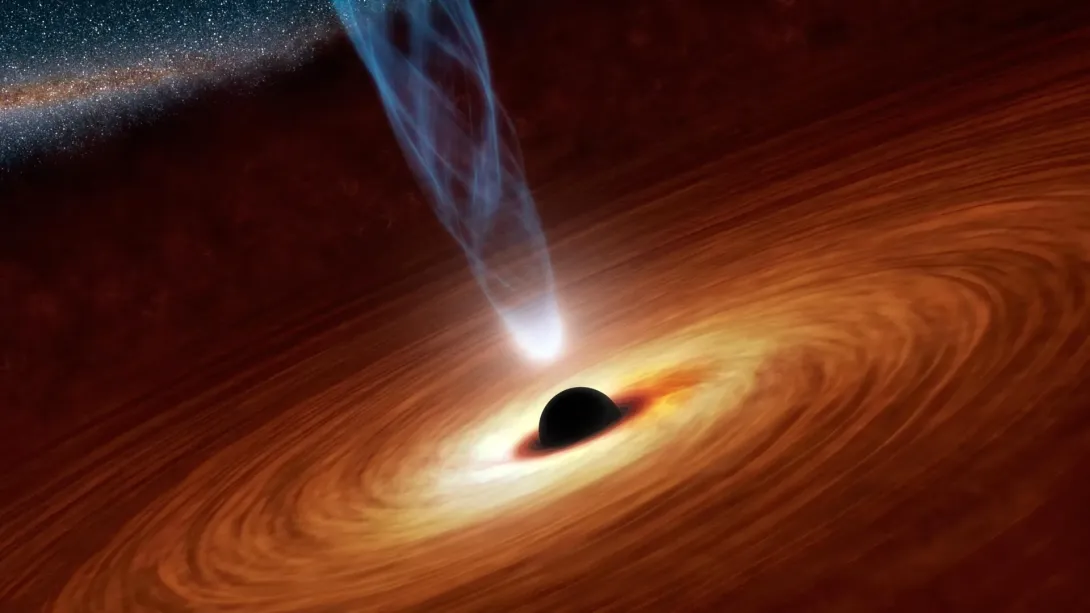
Astronomers are using advanced ground- and space-based telescopes to study black holes formed in the universe’s earliest epochs, shedding new light on how these extreme objects grew so rapidly after the Big Bang. By observing faint, distant signals, researchers are reconstructing the environments in which primordial black holes emerged and evolved. The work is helping scientists address one of cosmology’s most enduring puzzles: how supermassive black holes formed so quickly in a young universe. Beyond pure science, the research demonstrates the growing power of modern observatories to explore cosmic history with unprecedented precision.
Exploring Black Holes from the Dawn of Time
Early-universe black holes are among the most enigmatic objects in cosmology. Detected at vast distances, they appear as they existed billions of years ago, offering a direct window into the universe’s formative stages. Using next-generation telescopes, astronomers can analyze the light emitted by matter falling into these black holes, revealing clues about their mass, growth rate, and surrounding galaxies.
These observations challenge traditional models of black hole formation.
Telescope Technology Driving New Discoveries
The research relies on a combination of powerful optical, infrared, and radio telescopes capable of capturing extremely faint signals. Space-based observatories provide clarity free from atmospheric interference, while ground-based facilities deliver flexibility and scale.
Together, these instruments allow scientists to piece together a more complete picture of how early black holes interacted with their environments and influenced galaxy formation.
Rethinking Black Hole Growth Models
One of the key questions facing researchers is how black holes reached enormous sizes in a relatively short cosmic timeframe. Standard growth through gradual accretion may not fully explain the observations. As a result, scientists are exploring alternative theories, including rapid collapse of massive gas clouds or early mergers of smaller black holes.
Each hypothesis carries significant implications for understanding cosmic evolution.
Impact on Cosmology and Galaxy Evolution
Early black holes are thought to play a central role in shaping young galaxies by regulating star formation and redistributing energy. Studying these interactions helps astronomers refine models of how galaxies and large-scale cosmic structures developed.
The findings also contribute to broader efforts to map the universe’s expansion and matter distribution.
Looking Ahead in Cosmic Research
As telescope sensitivity continues to improve, astronomers expect to identify even older and more distant black holes. These discoveries will further test existing theories and may fundamentally reshape understanding of the universe’s earliest chapters.
For science, the ongoing study of early-universe black holes represents not just incremental progress, but a profound expansion of humanity’s view of its cosmic origins.
Comments