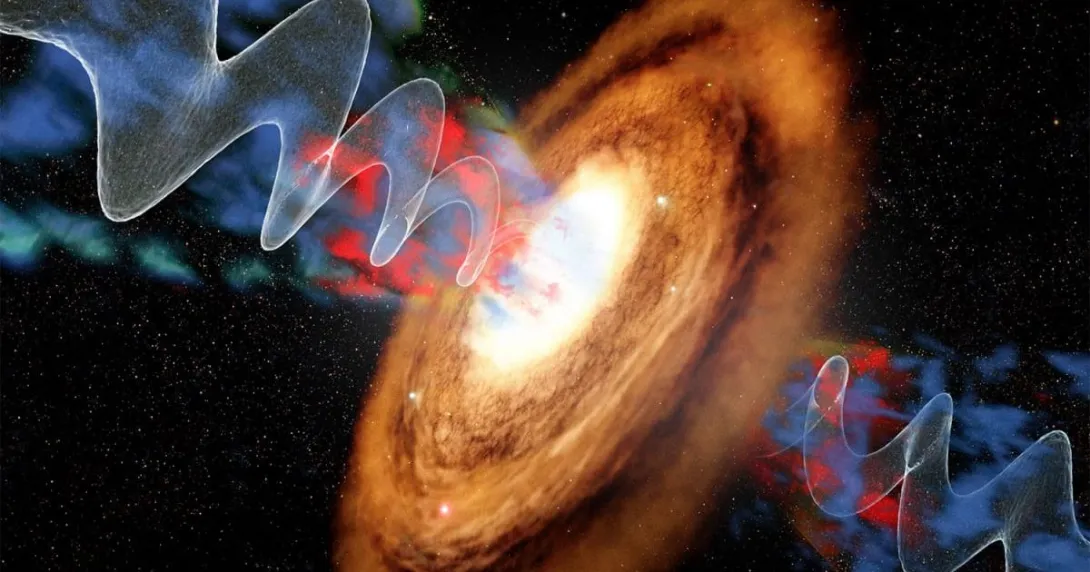
Astrophysicists have reported groundbreaking observations of a supermassive black hole at the center of a distant galaxy, offering unprecedented insights into cosmic dynamics, gravitational behavior, and galactic evolution. Utilizing advanced telescopes and observational techniques, researchers tracked matter accretion, relativistic jets, and gravitational effects influencing nearby stars. The study not only enhances understanding of black hole physics but also informs models of galaxy formation and evolution. Analysts emphasize that these findings highlight the synergy between observational astronomy, computational simulations, and theoretical physics, while reinforcing the importance of global scientific collaboration in exploring phenomena that remain among the universe’s most enigmatic and compelling entities.
Observational Breakthroughs
The black hole, located millions of light-years away, exhibits characteristics typical of supermassive black holes, including a dense accretion disk and relativistic jet emissions. High-resolution imaging allowed scientists to track the motion of nearby stars and gas clouds, offering a direct view of gravitational influences and energy emissions.
These observations provide empirical data to test Einstein’s general relativity under extreme conditions and validate computational models predicting black hole behavior.
Impact on Galactic Evolution Models
Supermassive black holes are pivotal in shaping the structure and evolution of their host galaxies. The new data demonstrates how energy outflows regulate star formation, redistribute interstellar matter, and influence galactic morphology over cosmic timescales.
Analysts note that understanding these processes is essential for modeling galaxy lifecycles, explaining phenomena such as active galactic nuclei, and predicting long-term cosmic dynamics.
Technological Innovations Enabling Discovery
The research leveraged state-of-the-art telescopes, including radio, X-ray, and optical observatories, as well as adaptive optics and interferometry techniques. These technologies facilitated unprecedented spatial resolution and sensitivity, enabling precise measurement of matter interactions in the black hole’s vicinity.
Computational simulations complemented observational data, helping scientists visualize and predict the behavior of extreme gravitational fields and relativistic jets.
International Collaboration and Scientific Significance
The study exemplifies the power of global scientific collaboration, with contributions from multiple institutions, space agencies, and observatories. Such partnerships allow pooling of expertise, data, and technology to study phenomena that cannot be observed by a single entity.
Experts emphasize that these discoveries enrich fundamental astrophysics, inform space mission planning, and inspire public interest in science, technology, and cosmology.
Outlook: Future Black Hole Research
The findings mark a significant step toward unraveling the mysteries of black holes and their role in the universe. Future observations aim to capture more detailed dynamics, study multiple galaxies, and explore extreme gravitational physics.
Comments