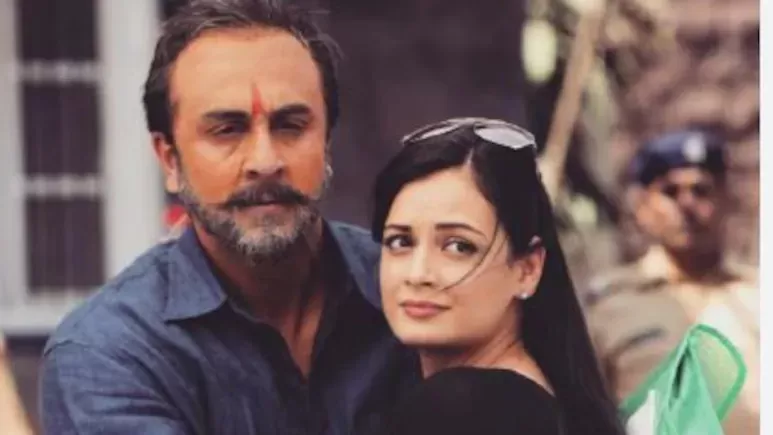
The 2018 blockbuster Sanju, which charted the tumultuous life of actor Sanjay Dutt, garnered both critical acclaim and commercial triumph. Yet, behind the applause lies a quieter voice of dissent — that of his sister, Priya Dutt. In a recent interview, Priya candidly expressed her dissatisfaction with the film’s narrative choices, highlighting the emotional gaps, overlooked parental influence, and an over-simplified portrayal of a complex life. While she appreciated Ranbir Kapoor’s performance, she underscored that Sanju leaned more toward spectacle than substance, offering an incomplete picture of the Dutt family’s legacy and struggles.
A Sister’s Perspective: The Missing Depth in Sanju
While Sanju dominated box offices and stirred conversations across the film industry, Priya Dutt’s recent comments offer a sobering counterpoint to its cinematic celebration. Speaking with veteran journalist Vickey Lalwani, she revealed that the film, though compelling and well-performed, lacked emotional balance and biographical authenticity.
According to Priya, the narrative was overly focused on Sanjay Dutt himself, sidelining critical figures like their parents — the late Sunil and Nargis Dutt — whose impact on Sanjay’s life was profound. “I also felt the movie didn’t do justice to, I think, even my mum in the film, or my father,” she stated. “There is a lot that could have been worked on.”
Overshadowed Figures: The Dutt Legacy Beyond Sanjay
Sunil and Nargis Dutt, icons in their own right, played pivotal roles in shaping Sanjay Dutt’s personal and professional life. Priya Dutt’s criticism points to the omission of these narratives as a missed opportunity. Their influence — from Sunil Dutt’s stoic support through Sanjay’s legal battles to Nargis Dutt’s untimely passing — represents more than backstory; it is the emotional and moral compass of Sanjay’s journey.
Priya emphasized that even the father-son dynamic, which was touched upon in the film, lacked emotional nuance. “The relationship between the father and son... a lot more could have been shown,” she noted.
A Story Retold for the Screen — Or Rewritten?
While biopics often require creative liberties to fit a feature-length format, Priya questioned whether Sanju sacrificed depth for dramatization. “Maybe they had to amalgamate too many characters... It became a bit of a caricature,” she remarked. Her choice not to confront director Rajkumar Hirani, despite initial temptation, was grounded in her understanding that the filmmakers had a different agenda — one that favored mass appeal over a comprehensive portrayal.
Despite these reservations, Priya acknowledged Ranbir Kapoor’s commendable performance. “He played Sanju very well,” she said, distinguishing the actor’s effort from the shortcomings of the script. However, she concluded with a poignant critique: “It wasn’t really a biopic. It was a film... very entertaining, and included only certain aspects of his life. The intensity was missing.”
Family Reactions and Acceptance
In her reflections, Priya also revealed her conversation with Sanjay Dutt after viewing the film. When she shared her thoughts with him, his response was dismissive, almost resigned: “Now, what?” It’s a reply that perhaps captures the essence of Sanjay Dutt’s own journey — one marked by public scrutiny, private loss, and a narrative that, even now, seems beyond his own control.
Final Thoughts: Biopics, Truth, and Artistic Responsibility
Sanju undeniably achieved its goal as a commercial film. But the conversation initiated by Priya Dutt brings to the fore a broader issue in the realm of cinematic biopics: Where does entertainment end and truth begin? Her insights call attention to the responsibility filmmakers bear when presenting real lives on screen — especially those as layered and tumultuous as Sanjay Dutt’s.
The challenge, moving forward, lies in reconciling narrative economy with emotional truth. As audiences grow more discerning, and as families of public figures voice their perspectives, the demand for authenticity in biographical storytelling will only intensify.
Comments