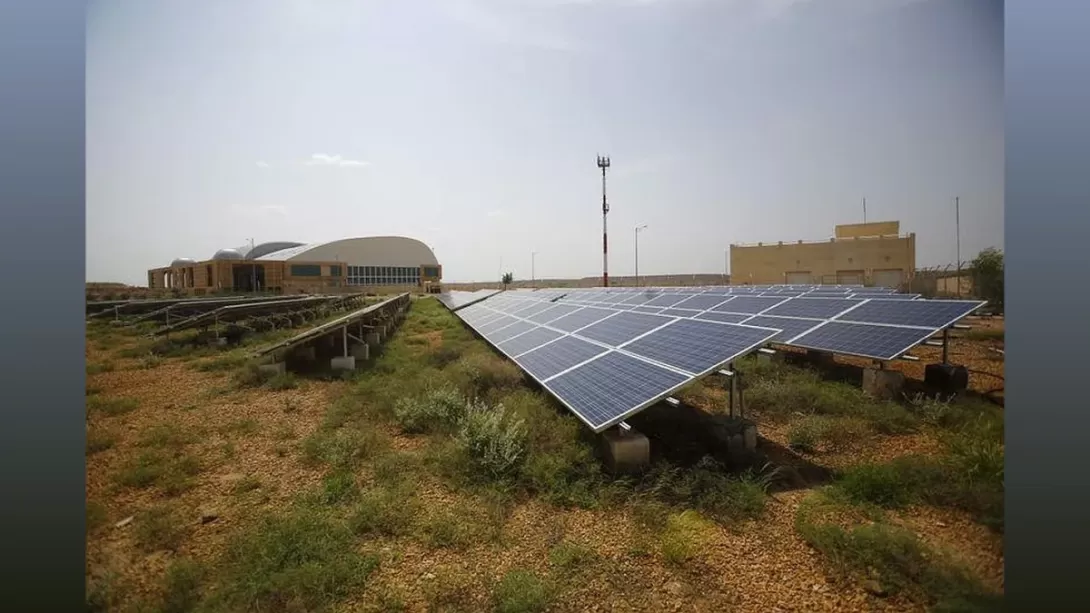
Borosil Renewables has greenlit an ambitious expansion plan worth Rs. 950 crore to enhance its solar glass production capacity by 600 tonnes per day (TPD). The move comes in the wake of supportive government policy, particularly the imposition of anti-dumping duties on Chinese and Vietnamese imports, which is expected to strengthen the domestic solar manufacturing ecosystem. The investment will see the commissioning of two new furnaces at the company’s Bharuch facility, reinforcing Borosil’s strategic positioning as a key enabler of India’s clean energy transition.
Expansion Blueprint Aligned with Market Dynamics
In a decisive move to align with evolving industry conditions, Borosil Renewables has approved a revised capital expenditure program to increase its solar glass production capacity from 1,000 TPD to 1,600 TPD. The expansion will be executed by installing two new furnaces—each with a capacity of 300 TPD—at the company’s flagship manufacturing complex in Bharuch, Gujarat.
The enhanced production footprint is expected to significantly augment Borosil’s ability to meet the increasing domestic demand for solar glass, a core component in the photovoltaic value chain. The upgrade is anticipated to propel annual output to an equivalent of over 10 GW of solar module capacity.
Investment Structure and Financial Planning
The updated investment outlay of Rs. 950 crore marks a substantial increase from the company’s earlier projection of Rs. 675 crore for a 500 TPD expansion. The management clarified that this higher allocation reflects not only the scale of the upgrade but also the incorporation of advanced technological and environmental safeguards.
To finance the expansion, Borosil Renewables will employ a combination of funding mechanisms—potentially including equity infusion, debt instruments, internal accruals, or a hybrid of all three. The financial strategy will be refined based on market conditions and capital availability.
Policy Backing and Strategic Implications
The company attributes the revised expansion to a favorable policy shift—specifically, the Indian government’s imposition of a five-year anti-dumping duty on solar glass imports from China and Vietnam. The regulation, effective December 4, 2024, is designed to prevent unfair pricing practices and ensure fair competition for domestic manufacturers.
This development provides a critical buffer for Indian players facing intense pricing pressure from imports, and is widely seen as a catalyst for domestic capacity expansion. Borosil Renewables expects this regulatory tailwind to create a robust market environment, encouraging investment and improving operating margins across the sector.
Long-Term Vision and Market Outlook
As part of the Borosil Group, Borosil Renewables has established itself as India’s sole manufacturer of solar glass and a pivotal stakeholder in the country's solar value chain. Its sprawling facility in Bharuch—spanning more than 100 acres—currently operates at a capacity of 1,000 TPD, enabling annual solar module production of up to 6.5 GW.
The planned scale-up positions the company to meet anticipated demand growth, driven by India’s aggressive renewable energy targets and increasing localization of clean-tech supply chains. Beyond capacity, the expansion is expected to bolster Borosil’s technological edge, improve cost efficiencies, and enable product innovation tailored for next-generation solar modules.
Conclusion
Borosil Renewables’ Rs. 950 crore expansion initiative marks a bold response to the dual imperatives of market opportunity and policy support. By proactively increasing capacity in a protected regulatory environment, the company is not only fortifying its competitive advantage but also reinforcing its commitment to India’s broader green energy ambitions. As global supply chains evolve and sustainability goals intensify, Borosil appears well-positioned to play a defining role in shaping the future of solar manufacturing in India.
Comments