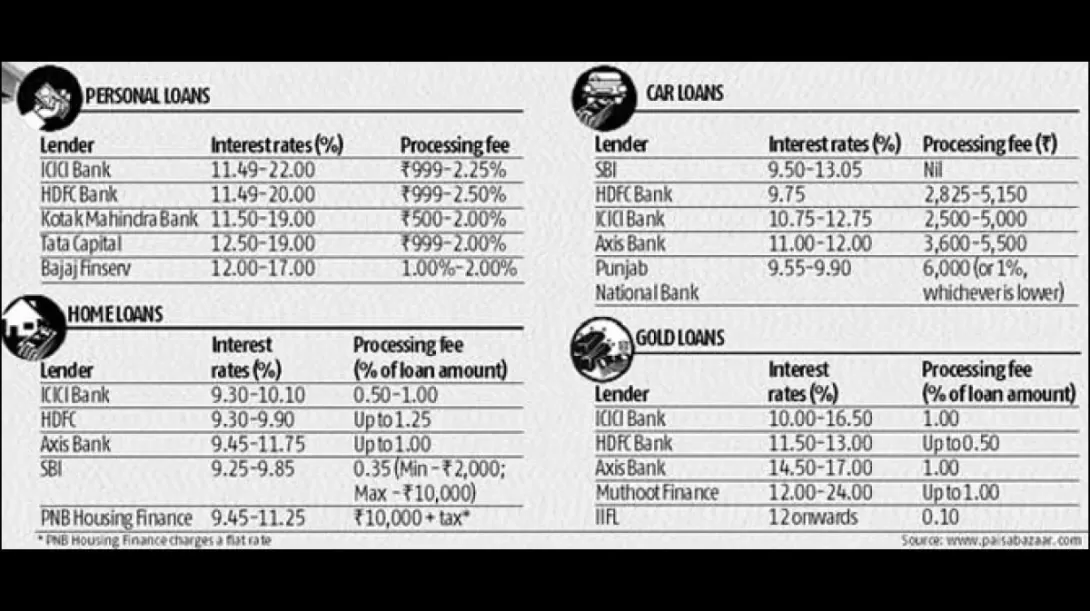
During the typically high-demand festive season of FY25, lending activity in India saw a notable decline, driven by cautious lending practices among financial institutions. According to a report by Crif High Mark, lenders adopted a more “responsible and risk-conscious” approach, reflecting broader economic concerns such as rising household debt and stricter regulatory norms. Consumer loan volumes, including home, personal, and auto loans, all experienced reduced demand, marking a significant shift in borrowing patterns. This cautious sentiment, coupled with macroeconomic challenges, underpins a broader trend of restrained consumption and cautious borrowing.
The Shift Towards Cautious Lending
The festive season, traditionally a peak period for borrowing in India, saw a departure from typical patterns in FY25, with lenders opting for more prudent approaches to credit disbursement. Crif High Mark, a prominent credit information company, highlighted that "responsible and risk-conscious lending" has become the norm as financial institutions adjusted to mounting economic uncertainties.
According to Sachin Seth, Chairman of Crif High Mark, a more cautious stance is evident when examining consumer loans in the third quarter of FY25. Lenders have increasingly focused on risk management, reducing their exposure in response to growing concerns surrounding consumption levels, which have been subdued for the last few quarters. The overall consumption growth in FY24 was limited to a modest 4%, further fueling apprehension in lending circles.
Consumer Loan Categories See Slower Growth
The slowdown in borrowing activity was particularly evident across several major loan segments. Home loans, a key segment in the Indian lending landscape, saw only a marginal increase of 0.1% in value terms. However, the volume of home loan originations dropped by 7%, reflecting diminished borrower enthusiasm in the face of higher interest rates and tight liquidity conditions.
Similarly, personal loans and consumer durable loans also recorded declines in both volume and value. Personal loan volumes dropped by 6.7%, while consumer durable loans saw a decline of 1.9%. This reduced appetite for credit is consistent with a broader trend of tightening financial conditions and heightened caution among consumers.
Auto Loans and Rising Household Debt Contribute to Caution
The auto and two-wheeler loan segments, which typically see strong demand during festive periods, also exhibited muted growth. A combination of stricter regulatory measures, rising household debt, and tight liquidity led to a more restrained approach by lenders, resulting in less favorable terms for borrowers.
The RBI’s half-yearly financial stability report underlined the growing concern over rising household debt, with higher levels of credit being extended to sub-prime borrowers—those with weaker credit histories. In contrast, super-prime borrowers—those with the best credit profiles—were increasingly using credit for asset creation rather than consumption, further complicating the outlook for lenders.
Geographical Trends and Lender Performance
Geographically, loan originations also showed a decline, with most of the top-10 states reporting a softening in lending activity, particularly in terms of loan value. However, Madhya Pradesh, Uttar Pradesh, and Rajasthan stood out as exceptions, where lending activity remained relatively steady.
In terms of lender performance, private sector banks exhibited a slowdown in both loan origination value and volume across several products. On the other hand, public sector banks played a dominant role in the auto and home loan segments, particularly in terms of loan value, suggesting their continued preference for larger, more secured loans.
Non-banking financial companies (NBFCs), however, outperformed other lenders in the volume of two-wheeler, personal, and consumer durable loans, showing their continued prominence in catering to the mass market and smaller loan segments.
Factors Driving the Shift in Lending Behavior
Several factors have contributed to this shift in lending behavior. First and foremost, the absence of softened interest rates has made borrowing more expensive, dissuading consumers from taking on new loans. Additionally, the increase in risk weights on unsecured loans—a measure that raises the capital banks must hold against risky loans—has further tempered the willingness of financial institutions to extend credit, particularly for higher-risk consumer segments.
The broader macroeconomic challenges—including inflationary pressures, tighter liquidity conditions, and rising debt levels—have created a less conducive environment for borrowing, both for consumers and for lenders. As a result, lending institutions have had to adjust their risk models, focusing on higher-quality borrowers and more secure loans, particularly in the face of potential economic slowdowns.
The Path Forward: A More Cautious Lending Environment
As India navigates these economic challenges, the cautious lending behavior observed during the festive season could become the norm moving forward. With consumer demand sluggish and economic growth showing signs of moderation, it’s likely that lenders will continue adopting more stringent lending practices.
For borrowers, this means that credit may become harder to obtain, especially for higher-risk individuals. As interest rates remain elevated and macroeconomic headwinds persist, it’s essential for both financial institutions and consumers to recalibrate their expectations and strategies. Financial institutions, in particular, will need to balance risk mitigation with economic growth, carefully assessing loan portfolios and maintaining liquidity to weather potential future disruptions.
Conclusion: A Sign of Times to Come in India’s Lending Landscape
The cautious approach to lending during the festive season of FY25 reflects deeper shifts in both consumer behavior and broader economic conditions. With a focus on responsible lending, banks and NBFCs are navigating a complex environment shaped by rising debt levels, inflationary pressures, and geopolitical uncertainty. As the Indian economy faces these challenges, the lending market may experience further adjustments, potentially leading to more conservative credit issuance. For borrowers, the message is clear: prudent borrowing, coupled with a focus on affordability and sustainability, will be key in the years ahead.
Comments