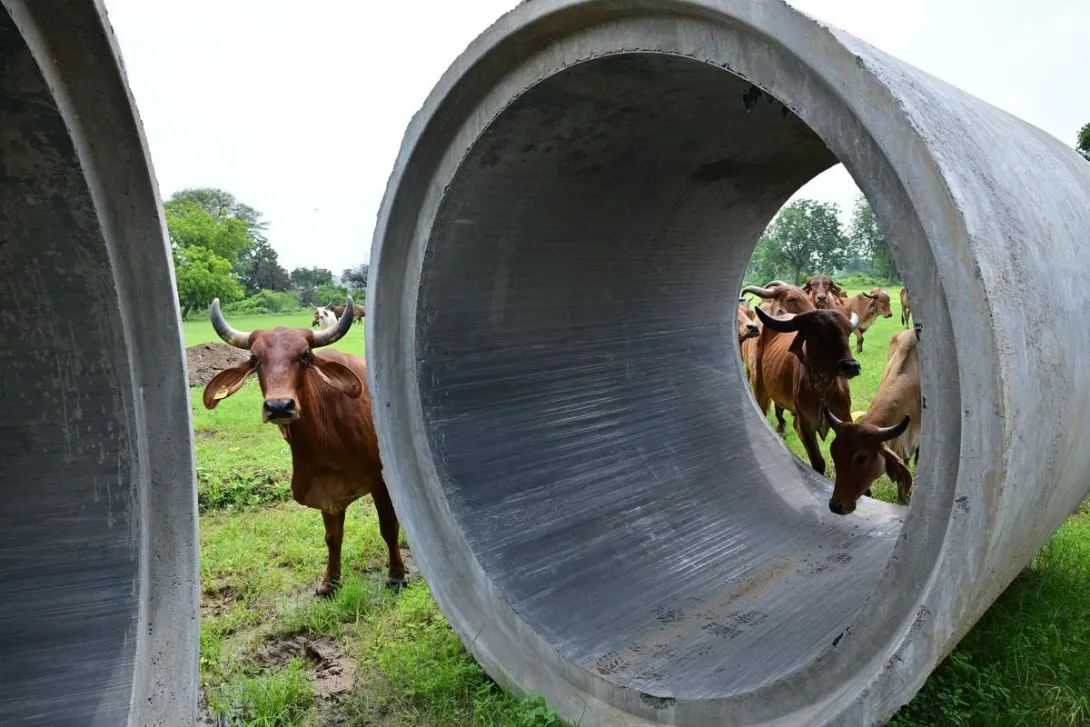
The Union government has formally clarified in Parliament that the cow does not hold the status of India’s national animal, addressing a long-standing public misconception fueled by cultural reverence and political discourse. While the cow is considered sacred in many communities and protected under various state laws, the Ministry of Fisheries, Animal Husbandry and Dairying confirmed that the Bengal tiger remains the country’s only official national animal. The statement underscores the distinction between cultural symbolism and legal designation, reaffirming that official status is determined by specific government notifications, not societal sentiment or religious significance.
---
Parliamentary Clarification
Responding to a query during the ongoing parliamentary session, the Centre stated unequivocally that the cow has never been conferred national animal status. The ministry noted that while cows hold a special place in Indian culture, their legal standing is limited to protections under specific state laws and the Prevention of Cruelty to Animals Act, 1960. The clarification seeks to dispel recurring misinformation that often surfaces in public debates and on social media platforms.
National Symbols and Legal Designation
The Bengal tiger, declared India’s national animal in 1973, holds this recognition through a formal government notification under the Wildlife Protection Act. Officials emphasized that national symbols are not determined by popular belief but through a defined administrative process. Other symbols, such as the peacock (national bird) and the banyan tree (national tree), similarly derive their status from official declarations rather than cultural practices.
Cultural Reverence Versus Legal Status
In many parts of India, particularly in northern and central states, the cow enjoys deep religious significance and is often associated with agrarian livelihoods. Several states enforce stringent anti-slaughter laws, reflecting both economic and cultural considerations. However, the government reiterated that such reverence, while respected, does not translate into a nationwide legal designation.
Political and Social Context
The statement comes amid a broader socio-political discourse where issues concerning the cow often intersect with policy debates, electoral narratives, and rural economy discussions. Analysts suggest that the government’s precise wording is aimed at separating fact from perception, ensuring that administrative definitions remain clear and consistent with statutory provisions.
Comments