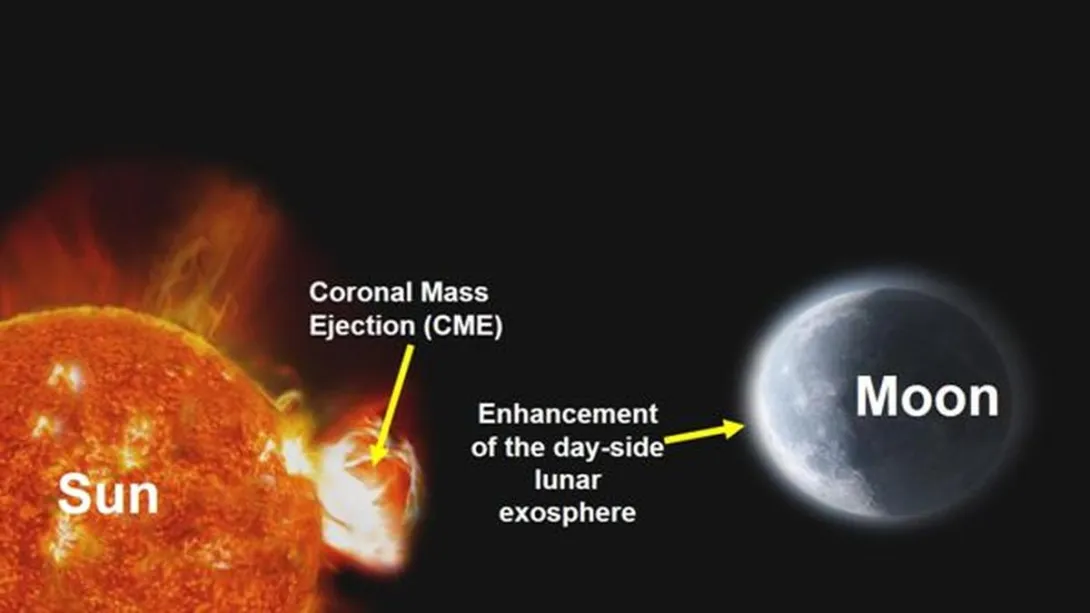
India’s Chandrayaan-2 mission has provided groundbreaking observations of how solar activity affects the Moon’s surface, offering new insights into lunar plasma environments and space weather phenomena. Using its suite of scientific instruments, the spacecraft has detected variations in surface ionization and particle dynamics caused by solar wind and solar flares. These findings are critical for understanding the Moon’s exosphere, potential resource distribution, and the effects of space weather on future crewed missions. Scientists note that Chandrayaan-2’s data complements global lunar research, reinforcing India’s role as a leader in space exploration and providing foundational knowledge for sustainable lunar exploration and habitation.
Observing Solar Influence
Chandrayaan-2’s instruments have recorded the Moon’s response to solar wind streams and episodic solar flares. These interactions generate localized ionization, particle acceleration, and transient magnetic phenomena on the lunar surface. By monitoring these variations, scientists can study how solar activity shapes the Moon’s tenuous exosphere, offering clues about surface chemistry, dust dynamics, and potential volatile migration across the lunar terrain.
Implications for Lunar Science
Understanding solar impacts is vital for mapping the Moon’s plasma environment, which influences both robotic and future human missions. Data from Chandrayaan-2 helps model radiation exposure, optimize landing site selection, and assess long-term risks for infrastructure and instruments. The findings also contribute to global studies of planetary magnetospheres and space weather interactions, offering comparative insights for other airless celestial bodies.
Technological Achievement
Chandrayaan-2’s observation capabilities demonstrate India’s technological prowess in space instrumentation, orbital maneuvering, and remote sensing. Instruments such as the Orbiter Spectrometer and Solar X-ray Monitor have been pivotal in detecting subtle plasma and ionization changes. The mission’s success underscores India’s growing leadership in space exploration and its ability to contribute valuable scientific data to the global community.
Strategic Importance
These observations enhance India’s strategic position in lunar research, supporting potential resource utilization such as water ice and rare elements. By understanding how solar activity interacts with the lunar surface, mission planners can design safer habitats, energy systems, and exploration strategies, ensuring sustainable lunar operations in the decades ahead.
Conclusion
Chandrayaan-2’s detection of solar impacts on the Moon represents a significant advancement in planetary science, providing insights into lunar exosphere dynamics, surface chemistry, and space weather effects. The mission not only strengthens India’s reputation in space exploration but also lays a scientific foundation for future crewed missions, sustainable lunar infrastructure, and broader understanding of airless bodies in the solar system.
Comments