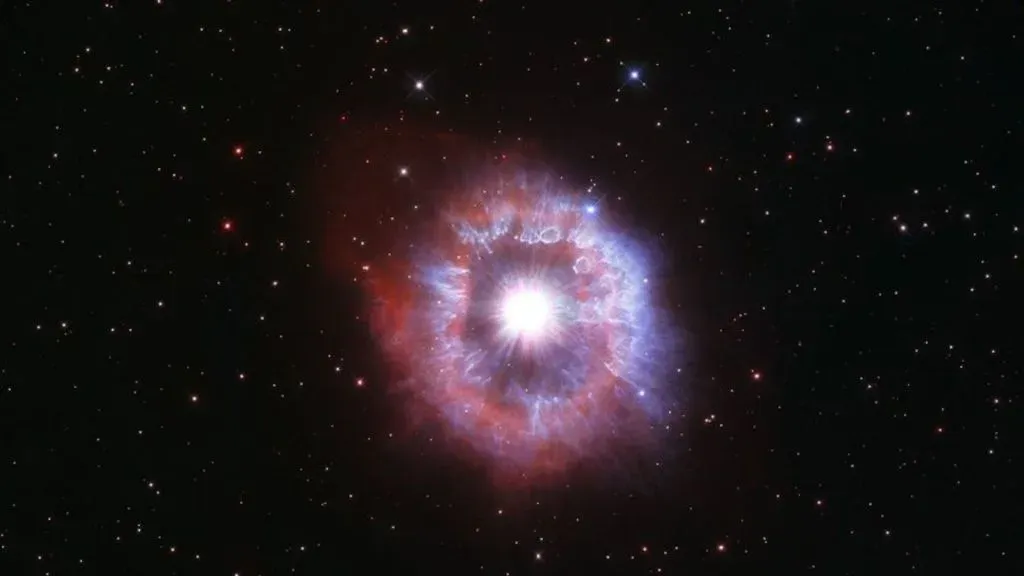
Astronomers have uncovered compelling evidence suggesting that extraordinarily massive stars existed in the universe’s earliest epochs, reshaping prevailing theories of cosmic evolution. Using advanced observational data and refined analytical models, researchers believe these supermassive stars formed shortly after the Big Bang and played a decisive role in shaping early galaxies and black holes. Their immense size and short lifespans likely accelerated chemical enrichment and influenced the structure of the young universe. The findings offer a fresh perspective on how complexity emerged from cosmic infancy and mark a significant step forward in understanding the universe’s formative years.
Breakthrough in Early-Universe Research
The discovery stems from detailed observations of distant galaxies whose light has traveled billions of years to reach Earth. Astronomers identified unusual spectral signatures that cannot be explained by conventional stellar populations. Instead, the data point toward stars with masses far exceeding those commonly observed today, suggesting a radically different stellar environment in the early universe.
What Makes These Stars “Supermassive”
Unlike typical stars, which form and evolve over millions or billions of years, these hypothesized supermassive stars may have been hundreds or even thousands of times more massive than the Sun. Their extreme gravity and intense radiation would have caused them to burn rapidly, collapsing or exploding after relatively brief lifetimes. Scientists believe such stars could be the missing link between the first generation of stars and the formation of supermassive black holes.
Implications for Galaxy Formation
The presence of supermassive stars helps explain how early galaxies grew so quickly after the Big Bang. Their explosive deaths would have seeded surrounding space with heavy elements, enabling subsequent generations of stars and accelerating galactic development. This mechanism may also clarify why massive black holes appear surprisingly early in cosmic history.
Technology Driving the Discovery
The findings were made possible by next-generation telescopes capable of detecting faint light from the distant universe. Enhanced infrared sensitivity and improved data modeling allowed researchers to isolate signals that were previously indistinguishable from cosmic noise, opening a new window into the universe’s earliest structures.
Redefining Cosmic Timelines
Scientists say the evidence challenges long-held assumptions about how quickly the universe evolved after its birth. If confirmed through further observation, the existence of supermassive stars would require revisions to standard models of stellar formation and early cosmic growth.
Comments