India’s corporate real estate landscape witnessed a substantial shift in 2024, with leasing of green-certified office spaces surging by 20% to reach 492 lakh square feet across six key metropolitan cities. This rising demand underscores an evolving corporate mindset prioritizing sustainability, energy efficiency, and employee well-being. A joint report by CREDAI and Colliers India reveals that approximately 75% of Grade A leasing activity took place in green-certified buildings. As the country targets net-zero emissions by 2070, the real estate sector—accounting for nearly 40% of global carbon emissions—is at a critical juncture, where environmental stewardship is becoming essential to business strategy.
Green Buildings Lead the Charge in Corporate Leasing
The real estate market in India’s top six cities—Delhi-NCR, Mumbai, Bengaluru, Hyderabad, Chennai, and Pune—saw leasing of green-certified office spaces rise from 410 lakh square feet in 2023 to 492 lakh square feet in 2024. This impressive 20% year-on-year growth is fueled by companies striving to align their operations with global sustainability benchmarks.
According to CREDAI and Colliers India’s report titled "Sustainability in Real Estate: Towards a Greener Skyline", companies are increasingly prioritizing environmentally certified workspaces due to heightened focus on energy efficiency, reduced carbon footprints, and improved employee wellness.
This momentum marks a crucial evolution in corporate real estate strategies, where sustainability is no longer just a branding exercise but a fundamental part of long-term planning and competitive advantage.
The ESG Imperative and Real Estate Transformation
India's commitment to reducing its carbon intensity by 45% by 2030 and achieving net-zero emissions by 2070 places the real estate sector under the spotlight. As one of the largest contributors to greenhouse gas emissions, the industry is uniquely positioned to lead the country’s green transition through adoption of cleaner technologies and building practices.
“Real estate is not just constructing buildings—it’s shaping the future of how we live and work,” said Shekhar G Patel, the newly appointed President of CREDAI (2025–27). “This shift toward green buildings is not just commendable; it's imperative if we are to meet our national climate goals.”
As per the report, around 75% of all Grade A office space leasing activity in 2024 occurred in green-certified properties. This indicates a broader industry-wide push to adopt ESG (Environmental, Social, and Governance) principles into real estate decisions.
Grade A Green Stock on the Rise
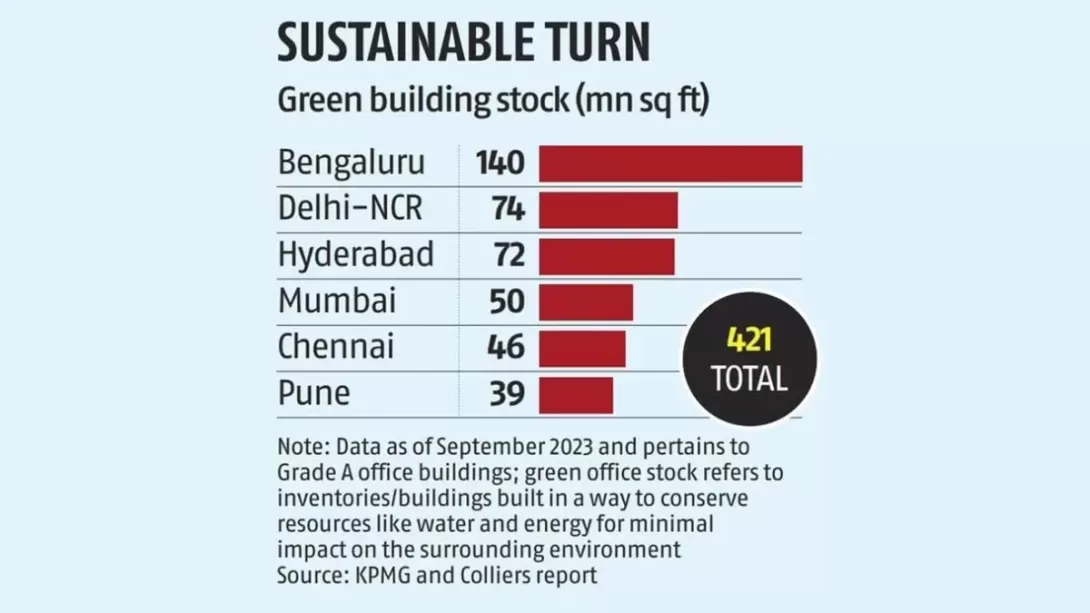
As of 2024, India’s green-certified Grade A office stock stood at approximately 503 million square feet, representing 66% of the total top-tier office inventory across major urban centers. This growing footprint of environmentally conscious real estate has allowed landlords to command premium rentals due to the value-added benefits of such infrastructure.
Colliers India CEO Badal Yagnik emphasized the critical role the construction industry plays in climate action. “With nearly 40% of global greenhouse gas emissions stemming from the built environment, the real estate sector stands at the crossroads of transformation. Sustainability is now an essential, not optional, business mandate.”
Changing Workplace Dynamics and Future Outlook
The report also suggests that the evolving nature of work—centered around collaboration, innovation, and wellness—is reinforcing demand for technologically advanced, eco-friendly workspaces.
Peush Jain, MD – Commercial Leasing and Advisory at Anarock Group, highlighted the significance of ESG metrics in modern real estate decision-making. “Corporates are increasingly making choices based on ESG considerations. This shift is catalyzing demand for premium green-certified spaces equipped with smart infrastructure and sustainability-focused design.”
With workplace strategy evolving and environmental regulations tightening, developers and occupiers alike are being compelled to invest in sustainable infrastructure that meets both operational and regulatory expectations.
Conclusion
The trajectory of India’s commercial real estate market is undeniably moving toward greener horizons. The surge in demand for green-certified office spaces reflects a larger shift in corporate India’s ethos—where environmental accountability and business performance are seen as interlinked. As India progresses toward its climate commitments, sustainable real estate will remain a cornerstone of economic growth, environmental resilience, and corporate competitiveness. The era of green buildings is not just upon us—it is becoming the new benchmark for success in the Indian office space market.
Comments