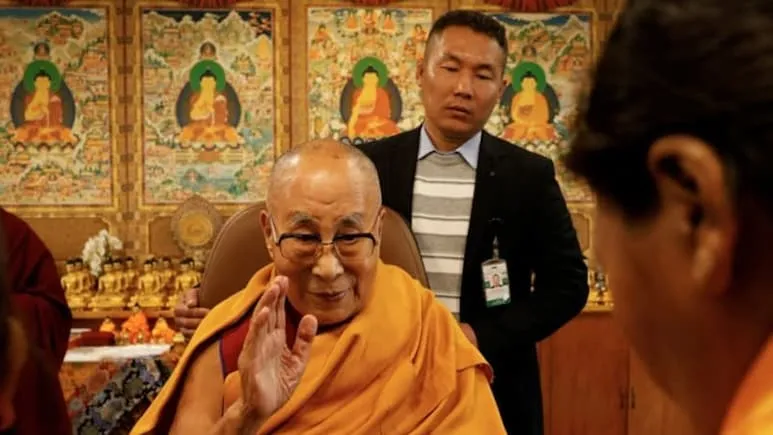
As he approaches his 90th birthday, the 14th Dalai Lama remains one of the most enduring and influential spiritual figures of the modern era. From his humble origins in rural Tibet to his status as a global symbol of peace and compassion, the Dalai Lama’s journey has spanned tumultuous geopolitical shifts and decades of exile. His consistent advocacy for non-violent resistance against Chinese rule, along with his recent reflections on succession and the future of the Tibetan movement, signal a pivotal moment in Tibetan history. This milestone raises profound questions about spiritual continuity, political identity, and the enduring impact of one man’s moral leadership.
From Himalayan Roots to Global Reverence
Born in 1935 to a farming family in Amdo—now part of China's Qinghai Province—Lhamo Dhondup was recognized at the age of two as the reincarnation of the 13th Dalai Lama. He was enthroned as the 14th Dalai Lama, taking on both spiritual and temporal authority over Tibet at an exceptionally young age. As Beijing extended control over Tibet in the 1950s, labeling its occupation a “peaceful liberation,” the young leader was thrust into a perilous political landscape.
In 1959, following a failed uprising against Chinese rule and amid credible fears of abduction, he escaped to India disguised as a soldier. His flight marked a dramatic turning point not only in his own life but also in the history of Tibetan resistance. Settling in the Himalayan town of Dharamshala, the Dalai Lama established a government-in-exile, which he opened to democratic participation through the creation of an elected parliament.
Championing the Middle Way
Over the past six decades, the Dalai Lama has carved out a moral high ground, consistently advocating for non-violence and reconciliation. He formally renounced the goal of full Tibetan independence in 1988, instead proposing the "Middle Way Approach," a framework that seeks genuine autonomy within China, with protection for Tibetan culture, language, and religion.
This philosophy won him the 1989 Nobel Peace Prize and cemented his standing as a global moral authority. His affable nature, spiritual teachings, and persistent calls for compassion and kindness—often encapsulated in lines like “Be kind whenever possible. It is always possible”—have resonated with millions around the world.
However, these positions have done little to improve relations with China. The Chinese government continues to vilify the Dalai Lama, describing him in severe terms and exerting diplomatic pressure on countries to deny him formal engagements.
Succession and the Struggle for Spiritual Sovereignty
As he approaches a landmark age, the Dalai Lama has begun speaking with increasing clarity about the question of succession. According to Tibetan Buddhist tradition, the Dalai Lama is reincarnated in the form of a child, whose identity is confirmed through a meticulous search process. This tradition, however, now sits at the center of a geopolitical tug-of-war.
In a book published earlier this year, Voices for the Voiceless, he declared that his successor would be born in the "free world"—a clear indication that he does not intend for the next Dalai Lama to emerge under Chinese authority. He also reaffirmed that any appointment orchestrated by Beijing would lack legitimacy and international recognition.
These comments are the strongest signals yet of his intentions to ensure that the spiritual lineage of Tibetan Buddhism remains independent of Chinese state control. In the past, he has also mused that the next Dalai Lama could be female, or that the institution itself may cease altogether, a notion that adds layers of complexity to the succession debate.
The Physical Toll of Time and the Persistence of Spirit
Despite advancing age and persistent health issues—including mobility challenges and recent knee surgery—the Dalai Lama remains engaged with the public and continues to inspire visitors to his residence in Dharamshala. Clad in his iconic maroon and saffron robes, he receives a steady stream of spiritual seekers, diplomats, and journalists.
Notably, the Dalai Lama maintains an optimistic view of his longevity. “According to my dream, I may live 110 years,” he told Reuters in a December interview—underscoring his enduring vitality and continued relevance.
The Road Ahead: Cultural Survival in Exile
The Tibetan cause today exists at a crossroads. While the Dalai Lama’s moral authority remains unchallenged within the Tibetan diaspora and among international supporters, the movement for Tibetan autonomy has struggled to gain traction in recent years, especially amid China's rising geopolitical and economic clout.
His decision in 2011 to retire from political leadership and hand over power to an elected head of the Tibetan government-in-exile was both pragmatic and symbolic—a step to ensure institutional continuity beyond his lifetime. Yet the emotional and spiritual weight he carries remains irreplaceable, making the questions of succession all the more critical.
As he turns 90, the Dalai Lama represents more than a religious figure; he embodies a nation in exile, a moral compass in a polarized world, and a beacon for those who believe that empathy and conviction can move mountains—even from the quiet hills of Dharamshala.
Conclusion: A Legacy Beyond Borders
The Dalai Lama’s life is an extraordinary chronicle of resilience, wisdom, and non-violent resistance. His 90th birthday is more than a personal milestone; it is a moment of reflection for millions invested in the future of Tibet, the role of spiritual leadership, and the defense of human dignity under authoritarian pressure.
Whatever direction the question of his successor takes, the global significance of the Dalai Lama’s legacy is secure. His message of compassion, inner peace, and moral clarity continues to transcend borders, reminding the world that even in exile, the power of ideas can endure.
Comments