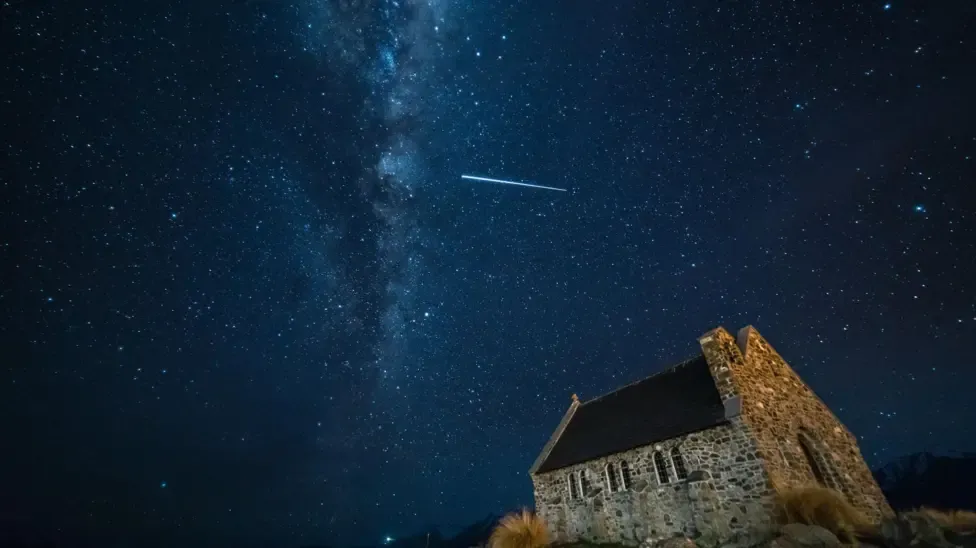
The Geminids meteor shower, one of the most anticipated annual celestial events, is set to illuminate December’s night skies with a dazzling display of bright, multicolored meteors. Known for its reliability and unusually high meteor count, the shower originates from the asteroid 3200 Phaethon—a rarity among meteor showers typically formed from cometary debris. Astronomers expect this year’s event to be especially vivid due to favorable dark-sky conditions and the Geminids’ characteristic luminous trails. For skywatchers and researchers alike, the shower offers a valuable opportunity to observe asteroid-generated meteors and deepen understanding of near-Earth objects and planetary science.
A Meteor Shower With an Asteroidal Origin
Unlike most meteor showers that stem from icy comets, the Geminids originate from 3200 Phaethon, a rocky, sun-scorched asteroid with an unusually elongated orbit. This unique source material results in meteoroids that are denser and more durable, producing exceptionally bright streaks as they burn through Earth’s atmosphere.
Scientists note that this particular shower’s intensity has steadily increased over the past century, likely due to gravitational interactions with Earth and other planets, which have gradually pulled more debris into our planet’s orbital path.
Peak Viewing Conditions and Expected Activity
Astronomers predict that the Geminids will reach peak activity in mid-December, with an estimated 80 to 120 meteors per hour visible under clear, dark skies. This year’s viewing conditions are expected to be highly favorable, with minimal moonlight interference.
Observers in rural and semi-urban regions can expect the most spectacular views, as light pollution significantly reduces visibility. The meteors, often appearing white, yellow, green, or blue, will radiate from the constellation Gemini but can be seen streaking across all parts of the sky.
Scientific Value for Astronomers
Beyond its visual appeal, the Geminids meteor shower holds significant scientific importance. Because the meteoroids originate from an asteroid rather than a comet, they offer rare insight into the structural composition and behavior of rocky bodies in the solar system.
Researchers analyze their chemical signatures and fragmentation patterns to study the evolution of near-Earth objects and assess potential risks posed by asteroid debris. This year’s shower also offers a chance to compare long-term observational data, helping scientists refine models of Phaethon’s orbit and activity.
A Global Spectacle for Enthusiasts and Researchers
The Geminids remain a favorite among amateur astronomers due to their dependability and brilliance. Many stargazers plan annual viewing sessions, leveraging the shower’s typically high meteor count to capture long-exposure photographs and time-lapse videos.
Scientific institutions often coordinate public outreach events, using the spectacle to foster interest in astronomy and educate participants about the nature of meteoroids, asteroid orbits, and Earth’s dynamic relationship with the broader solar environment.
Comments