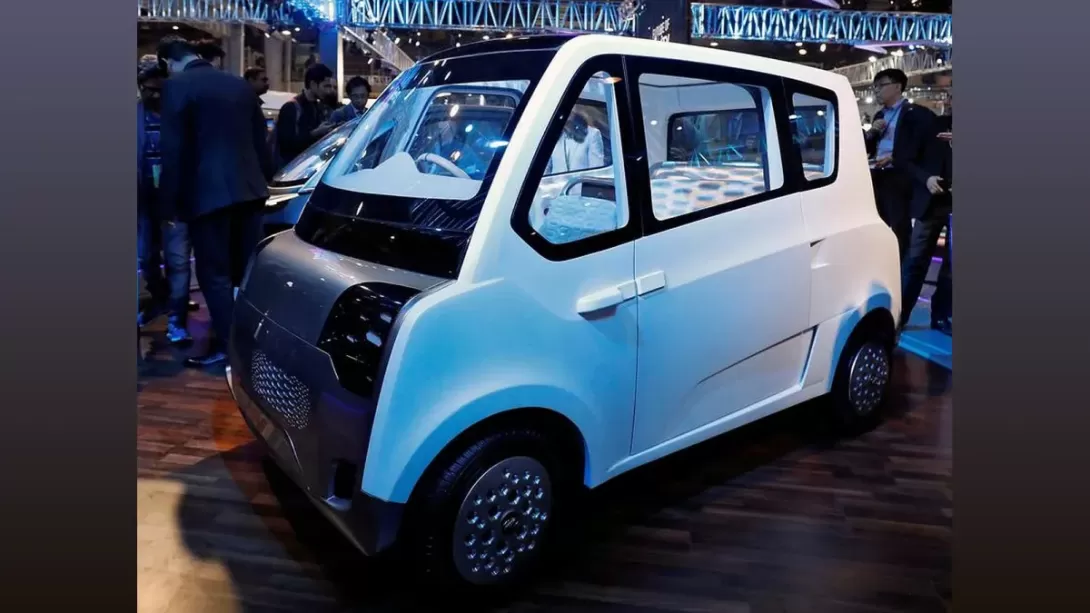
The Delhi government is poised to introduce the second iteration of its Electric Vehicle (EV) policy by next month, reaffirming its commitment to a cleaner, smarter urban mobility framework. Delhi Transport Minister Pankaj Kumar Singh, speaking at the Urban Adda 2025 conference, emphasized the administration’s renewed focus on quality, commuter safety, and electrification across the capital’s public transportation system. The EV Policy 2.0—currently under Cabinet review and developed with expert consultation—aims to build upon the original 2020 policy by fostering sustainable mobility solutions, enhancing infrastructure, and expanding last-mile connectivity through an intelligent, data-driven governance approach.
A Renewed Policy for a Cleaner Future
Delhi’s forthcoming EV Policy 2.0 is expected to mark a significant advancement in the capital's transition to cleaner transportation. Initially launched in August 2020, the first version of the policy was pivotal in incentivizing the adoption of electric vehicles as a means to combat deteriorating air quality and reduce dependence on fossil fuels.
Transport Minister Pankaj Kumar Singh confirmed that the next phase of the policy is in its final stages, awaiting Cabinet clearance. “We’ve assembled a committee of experts to guide this process,” Singh stated, while withholding specific details until the official rollout.
The current policy was recently extended by three months in April to allow time for the completion and launch of its successor. This follows multiple extensions since its inception, reflecting both administrative transitions and the evolving nature of electric mobility in the city.
Public Transit Overhaul Underway
Beyond the EV policy itself, Minister Singh painted a broader picture of a city-wide public transportation overhaul. Notably, he promised that Delhi would no longer face a bus shortage by the end of the year, addressing long-standing service gaps left by previous administrations.
“The number of buses is not the primary concern—it’s the quality of service, safety, and system efficiency that we’re focusing on,” he said. The government is in the process of phasing out older buses and replacing them with electric alternatives, enhancing both environmental outcomes and commuter experience.
A central component of this upgrade is the Delhi Electric Vehicle Integration (DEVI) Bus Service, which Singh lauded as a technological and operational success. These buses are equipped with GPS, onboard surveillance systems, and are connected to a central control room, enabling real-time monitoring and improved passenger safety.
Focus on Last-Mile Connectivity and Route Rationalization
The EV transformation goes hand-in-hand with a systematic restructuring of Delhi’s transport routes. Singh highlighted significant investment in route rationalization to better serve high-demand areas and close the last-mile connectivity gap—a key barrier to widespread public transport usage in the National Capital Region.
The administration is working to ensure that residents can conveniently access public transport hubs from their homes or workplaces, thereby reducing the dependency on private vehicles. This complements the broader climate goals of reducing vehicular emissions and easing congestion in densely populated urban zones.
Policy Enforcement and Legal Framework
In a bid to further enforce responsible road use, the Delhi government is drafting a legal framework to address all categories of traffic violations. The initiative is part of a larger commitment to road safety, data-led transport governance, and cleaner air.
Singh reaffirmed that this policy overhaul is not limited to just the electrification of vehicles. It is part of a comprehensive approach to urban mobility that prioritizes pedestrian safety, infrastructure modernization, and real-time data analytics to inform decision-making and improve transparency.
A Roadmap for Sustainable Urban Mobility
The Electric Vehicle Policy 2.0 arrives at a pivotal moment for Delhi, where pollution, congestion, and public transport inefficiencies remain pressing challenges. With a well-funded and expertly informed policy on the horizon, the government aims to reinforce Delhi’s status as a national leader in green mobility.
If successfully implemented, EV Policy 2.0 could serve as a model for other Indian cities grappling with similar environmental and urban transport concerns. As the capital city transitions into a more sustainable and commuter-centric future, the policy will be closely watched for its design, implementation, and long-term impact on India’s broader clean energy goals.
Comments