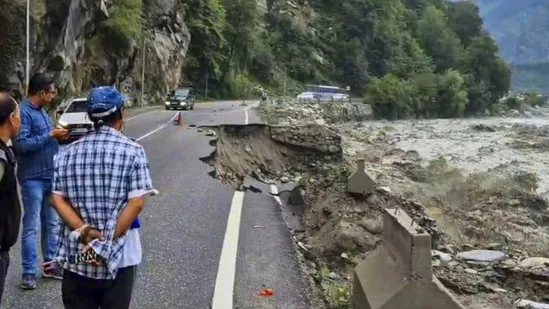
In the wake of torrential rainfall and flash floods, Himachal Pradesh is grappling with significant devastation, particularly in Kullu and Kangra districts. The calamity, exacerbated by cloudbursts and rising water levels, has already claimed at least five lives, with several others reported missing. The state government has issued an orange weather alert, expecting further rainfall and potential landslides through the weekend. While rescue operations are ongoing, the flash floods have disrupted infrastructure and posed a serious threat to local tourism. Authorities have urged citizens and travelers to remain cautious as conditions continue to worsen.
Flash Floods and Cloudbursts Cause Widespread Havoc
Heavy rains and cloudbursts have wreaked havoc across Himachal Pradesh, with Kullu and Kangra districts bearing the brunt of the disaster. The state has experienced flash floods and significant structural damage due to the heavy downpours, with at least five confirmed fatalities and several individuals still missing. Local authorities report cloudbursts in three areas, and flash floods have been confirmed at nine different locations.
The situation remains dire, as rescue operations are still ongoing. Over 250 individuals have been rescued, with local police providing crucial updates on the scale of destruction. In a harrowing account, a survivor from the forested areas near Manuni described the terrifying moments when flash floods swept away several of his companions. According to reports, eight individuals remain unaccounted for in the region.
Rising Waters and Structural Damage
The calamity has severely impacted both the infrastructure and the environment in Himachal Pradesh. Numerous roads, including those leading to popular tourist destinations like Manali, have suffered significant damage. The flash floods, which are particularly harmful to smaller villages and remote locations, have left vital roads impassable and disrupted access to essential services.
A notable example of the destruction includes the power projects near Dharamshala, which employ a significant number of laborers. The National Disaster Response Force (NDRF) and State Disaster Response Force (SDRF) teams have been deployed to affected areas, although challenges persist due to the isolated locations and rapidly changing conditions. A joint operation has already led to the recovery of one body, while six people are still missing.
Tourism and Economic Impact
While Himachal Pradesh remains a top tourist destination, the ongoing monsoon season, compounded by the recent weather disaster, has raised serious concerns about the future of local tourism. Roads in the popular hill stations, including Kullu and Manali, have suffered extensive damage, potentially affecting the inflow of tourists to the state.
Despite the devastation, Chief Minister Sukhwinder Sukhu has expressed a desire to keep the region open for tourism but has cautioned against venturing near rivers and nallahs, where the risk of flash floods remains high. Local authorities are urging tourists and residents alike to stay updated on weather conditions and avoid unnecessary travel, especially in areas prone to landslides or flooding.
A State on High Alert
In response to the ongoing crisis, the India Meteorological Department (IMD) has issued an orange alert for Himachal Pradesh, warning of continued rainfall and the threat of additional flash floods. The IMD has forecast heavy rainfall to persist over Himachal Pradesh, Punjab, Haryana, Uttarakhand, and West Uttar Pradesh through July 1.
As the state braces for more rainfall, the threat to life and property remains high. The flash floods have already caused considerable damage to infrastructure, including approximately 15 homes, several village roads, and a private power facility. Authorities are urging residents to avoid traveling in the rain and to stay away from hillsides and rivers. People have been advised to closely monitor weather updates from the IMD for the latest developments.
Conclusion: A Call for Vigilance
The heavy rainfall and flash floods in Himachal Pradesh underscore the growing vulnerability of hill states to extreme weather events. As climate change contributes to the intensity and frequency of such natural disasters, authorities must continue to strengthen infrastructure resilience and preparedness.
While rescue operations are ongoing, the impact of this disaster could reverberate for some time, both in terms of human lives and the state’s economy, particularly tourism. For now, the state’s focus is on ensuring the safety of its residents and visitors, urging them to exercise caution and stay informed.
Himachal Pradesh, once again, faces the challenge of rebuilding after a natural calamity, while also managing the immediate threats posed by continuing adverse weather conditions.
Comments