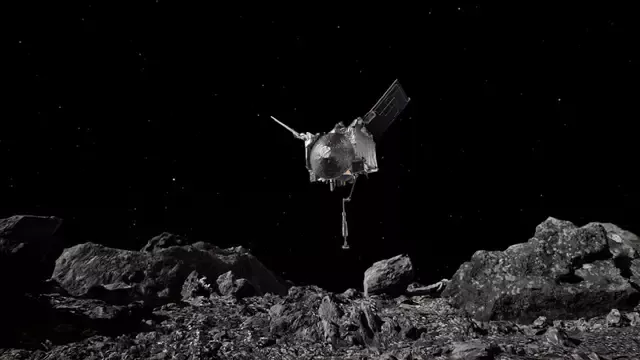
A team of international scientists has identified organic compounds and key chemical ingredients essential for life in samples retrieved from asteroid Bennu by NASA’s OSIRIS-REx mission. The discovery provides compelling evidence that asteroids may have played a crucial role in delivering the raw materials necessary for life to early Earth. Analyses reveal complex carbon-based molecules, including amino acids, which are fundamental to biological processes. Researchers suggest that these findings enhance our understanding of prebiotic chemistry and the cosmic origins of life, reinforcing the significance of asteroid exploration in unraveling fundamental questions about Earth’s biological and chemical evolution.
The OSIRIS-REx Mission and Bennu Samples
NASA’s OSIRIS-REx spacecraft collected samples from Bennu, a carbon-rich asteroid, in 2020:
- Objective: To study the chemical composition of asteroids and assess their potential contribution to life on Earth.
- Sample Return: The spacecraft successfully delivered over 250 grams of pristine material to Earth in 2023.
- Significance: Bennu is considered a primitive asteroid, preserving materials from the early solar system, offering scientists a direct glimpse into prebiotic chemical processes.
The mission represents a pivotal step in linking cosmic materials with terrestrial life origins.
Discovery of Organic Compounds
Recent laboratory analyses have revealed:
- Complex Carbon Molecules: Including amino acids and aromatic compounds, which are critical building blocks of proteins and DNA.
- Water-Related Minerals: Suggesting interactions between organic compounds and water, essential for chemical reactions that could give rise to life.
- Prebiotic Chemistry Indicators: The presence of molecular precursors hints at the mechanisms through which organic matter could form in space.
These findings support the hypothesis that asteroids served as delivery vessels for life-essential molecules on early Earth.
Implications for Astrobiology and Space Science
The discovery has far-reaching consequences for our understanding of life’s cosmic origins:
- Cosmic Delivery of Life Ingredients: Asteroids like Bennu could have seeded early Earth with materials necessary for life.
- Prebiotic Chemistry Across the Solar System: Such findings indicate that organic chemistry may be widespread beyond Earth, raising possibilities for life elsewhere.
- Guiding Future Missions: Insights from Bennu inform target selection for asteroid missions and the search for extraterrestrial life.
Astrobiologists view these results as a critical piece of the puzzle in understanding how life might emerge naturally in diverse environments.
Global Collaboration and Scientific Impact
The research represents a collaborative effort among scientists worldwide, combining expertise in:
- Organic chemistry and spectroscopy
- Planetary science and geology
- Astrobiology and prebiotic chemical synthesis
By analyzing Bennu’s samples, researchers are bridging the gap between astronomy and biology, creating new models for how life-building compounds form and survive in space.
Conclusion: Bennu’s Role in the Origins of Life
The identification of life-building ingredients in Bennu samples strengthens the theory that asteroids contributed directly to the emergence of life on Earth. As scientists continue to analyze these materials, they are not only expanding our understanding of prebiotic chemistry but also reshaping the narrative of how life may arise elsewhere in the cosmos. Bennu’s tiny grains, preserved over billions of years, now offer a profound link between celestial phenomena and terrestrial biology, highlighting the critical importance of space exploration in addressing humanity’s oldest questions.
Comments