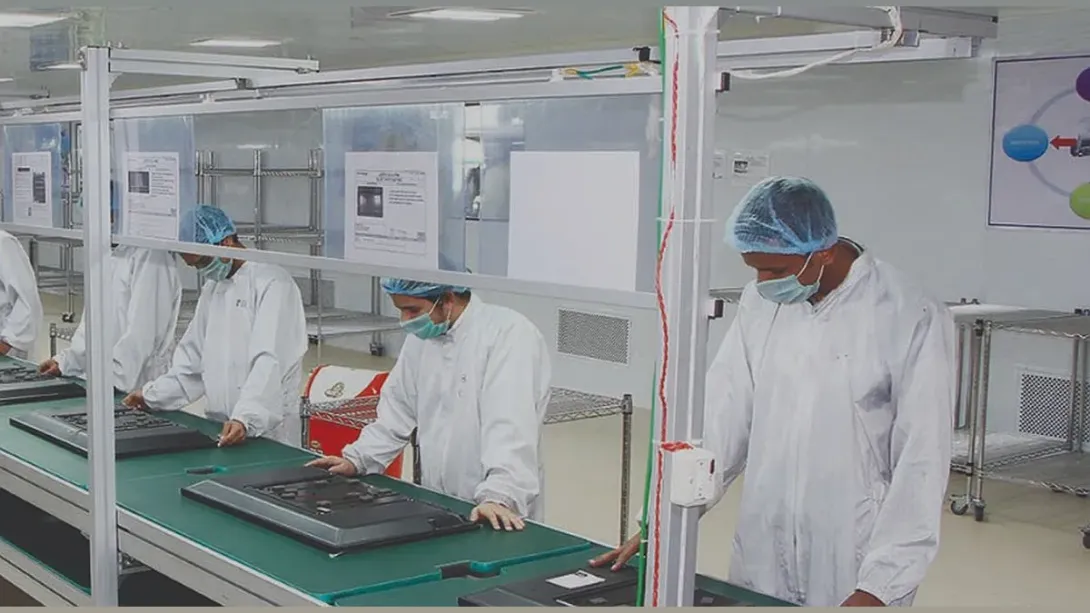
Dixon Technologies, a leading Indian electronics contract manufacturer, reported a remarkable 86% increase in net profit for the September quarter, reflecting strong operational performance, rising demand, and strategic business expansion. Revenue growth, cost optimization, and increased manufacturing efficiency drove the robust financial results. The company continues to benefit from rising electronics consumption, government incentives for domestic manufacturing, and global supply chain diversification trends. Analysts project sustained growth in revenue and profitability, estimating potential annual turnover gains of Rs. 3,000–3,500 crore, positioning Dixon as a key player in India’s consumer electronics and contract manufacturing sector.
Financial Performance Highlights
For the September quarter, Dixon Technologies reported:
- Net profit: Increased by 86% year-on-year.
- Revenue growth: Strong double-digit growth fueled by contracts across consumer electronics, LED TVs, smartphones, and home appliances.
- Operational efficiency: Cost rationalization and economies of scale contributed to improved margins.
The company attributes this performance to a combination of robust domestic demand, strategic client acquisitions, and expansion of manufacturing capabilities in India under government-supported initiatives such as the Production Linked Incentive (PLI) scheme.
Drivers of Growth
Several factors underpin Dixon’s strong quarterly performance:
Rising Consumer Electronics Demand: Growing penetration of LED TVs, smartphones, and home appliances in urban and semi-urban markets has boosted production volumes.
Export Opportunities: Diversification into global markets, including Southeast Asia and Africa, has increased revenue streams.
Government Support: Initiatives like the PLI scheme incentivize domestic manufacturing, supporting cost-competitive production and capacity expansion.
Operational Excellence: Focus on supply chain optimization, automation, and lean manufacturing has enhanced profitability margins.
Dr. Rajiv Malhotra, a market analyst, commented, “Dixon’s performance demonstrates how Indian contract manufacturers are capitalizing on both domestic consumption growth and the global shift towards supply chain localization.”
Market and Strategic Outlook
Dixon Technologies is well-positioned to leverage the ‘Make in India’ initiative and ongoing supply chain diversification trends. Analysts forecast continued revenue expansion, estimating potential annual turnover in the range of Rs. 3,000–3,500 crore, driven by:
- Expansion of manufacturing capacity in electronics and smart appliances.
- Long-term contracts with global OEMs.
- Adoption of advanced technologies, including automation and IoT-enabled production lines.
The company’s strategic focus on high-growth segments such as LED panels, smartphones, and home appliances is expected to sustain profitability and margin expansion in upcoming quarters.
Investor Perspective and Economic Implications
Dixon’s strong quarterly results have positive implications for investors, signaling resilience amid global supply chain volatility and competitive pressures. For the broader economy, the company’s growth supports:
- Employment generation through expanded manufacturing operations.
- Import substitution in electronics, reducing reliance on foreign products.
- Strengthening India’s position in global electronics supply chains.
Equity analysts have revised earnings estimates upward, reflecting confidence in sustained operational performance and market share gains.
Conclusion
Dixon Technologies’ 86% surge in net profit underscores the company’s ability to capitalize on rising domestic demand, strategic expansion, and operational efficiency. With supportive government policies, growing consumer electronics consumption, and global supply chain opportunities, Dixon is poised for sustained growth.
For investors, stakeholders, and industry observers, the company represents a benchmark in Indian contract manufacturing, illustrating how strategic execution and market alignment can deliver substantial financial returns while contributing to domestic industrial development.
Comments