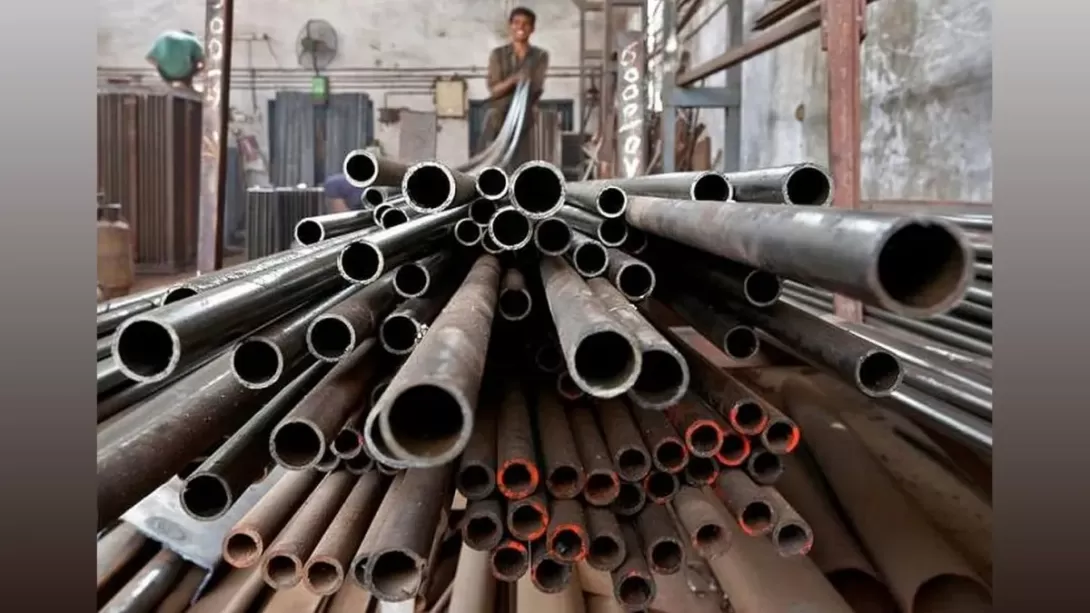
India’s stainless steel industry is facing heightened pressure from increasing imports of finished steel, particularly from China and other ASEAN countries. The Indian Stainless Steel Development Association (ISSDA) has called on the government to implement safeguard duties to protect local manufacturers already struggling with high input costs and volatile market conditions. The surge in cheap imports is seen as a direct challenge to the growth of India’s steel sector, with the industry’s stakeholders emphasizing the importance of enhancing domestic production capabilities and enforcing fair trade practices. The issue will be discussed at the upcoming Global Stainless-Steel Summit in June 2025.
The Growing Threat of Finished Steel Imports to India’s Stainless Steel Industry
India’s stainless steel industry is increasingly at risk as the influx of cheap imports threatens to destabilize the market. Domestic manufacturers are already grappling with high input costs and market volatility, and the rising volume of finished steel imports is compounding these challenges. According to the Indian Stainless Steel Development Association (ISSDA), this surge in imports—especially from countries like China, Indonesia, Vietnam, and South Korea—is significantly undermining the competitiveness of local players.
The situation has become even more alarming as Indian manufacturers now face unfair competition from substandard, subsidized stainless steel products, often dumped into the country at prices below market value. In light of these concerns, the industry has urged the Indian government to take urgent action by imposing safeguard duties and boosting local production capacity.
Impact of Cheap Imports on Domestic Manufacturers
The entry of low-cost stainless steel products into India has created an uneven playing field for domestic manufacturers, particularly smaller enterprises. These manufacturers, who are already burdened by rising production costs and unpredictable market conditions, are now forced to compete with subsidized imports that are often priced far below the cost of locally produced steel.
Vijay Sharma, Director of Corporate Affairs at Jindal Stainless, pointed out that Chinese-origin steel, often circumventing tariffs through adjacent ASEAN nations, is one of the main culprits. This "dumping" of cheap steel into the Indian market, he argued, is particularly harmful to India’s small and medium-sized enterprises (MSMEs), who do not have the scale or resources to compete with the lower prices of imported goods.
This issue is not only impacting large manufacturers but also the broader ecosystem of India’s stainless steel industry, which relies on a stable and competitive market to thrive. As the import volume continues to rise, there is a genuine concern that the future of the country’s steel sector could be jeopardized.
The Role of Safeguard Duties and Trade Policies
In response to these challenges, the ISSDA is calling for stronger enforcement of trade protection measures such as safeguard duties. These duties are designed to level the playing field by increasing the cost of imported goods, thus making domestic products more competitive. Rajamani Krishnamurti, President of the ISSDA, highlighted the need for a more robust "Make in India" approach, specifically within the steel sector. He suggested that the government should not only raise tariffs on finished steel imports but also invest in enhancing domestic production infrastructure.
A well-rounded trade policy would also involve addressing unfair trade practices, such as the circumvention of duties and the dumping of substandard products. The ISSDA advocates for the introduction of additional measures like Anti-Dumping Duties (ADD) and Countervailing Duties (CVD) to effectively combat these issues and create a more sustainable and competitive domestic industry.
Rising Imports: The Numbers Behind the Surge
The scale of the problem is becoming increasingly apparent through import data. According to market research firm BigMint, India’s stainless steel imports grew by approximately 3% year-on-year, reaching a total of 1.73 million tonnes in FY25. China, Indonesia, Vietnam, and South Korea were identified as the primary contributors to this influx. These numbers reflect a disturbing trend, with foreign suppliers gaining a larger foothold in India’s stainless steel market at the expense of local producers.
While imports are a natural part of a globalized economy, the speed and volume of these shipments—particularly from nations with lower production costs—pose a serious threat to India’s manufacturing sector. The potential consequences of continued unchecked imports include a sharp decline in the capacity of domestic manufacturers, resulting in job losses and a weakened industrial base.
The Call for Action: Why Safeguard Duties Are Necessary
Industry leaders are unequivocal about the need for immediate action. Yash Mehta, CEO of Rajputana Stainless, argued that India risks becoming a dumping ground for subpar steel products if corrective measures are not taken swiftly. The imposition of safeguard duties, he said, is crucial, particularly in the context of global economic uncertainty, trade wars, and geopolitical tensions that could further distort international trade flows.
Mehta also emphasized that such duties would not only help protect local jobs but also ensure the long-term viability of India’s steel manufacturing sector. By creating a more level playing field, safeguard duties would allow local manufacturers to regain competitiveness and encourage investment in innovation and infrastructure.
Industry Stakeholders to Discuss Solutions at the Global Stainless-Steel Summit
The issue of rising imports and its impact on India’s stainless steel industry will be one of the central topics at the upcoming Global Stainless-Steel Summit 2025, scheduled for June. Industry stakeholders from around the world will come together to discuss not only the challenges posed by increasing imports but also opportunities for growth, technological advancements, and collaborations in the global steel market.
The summit provides an important platform for industry leaders to voice their concerns, exchange ideas, and formulate strategies to strengthen the global stainless steel supply chain. With India being a key player in the global steel market, the outcome of these discussions will have wide-ranging implications for both the domestic industry and the international marketplace.
Conclusion: The Path Forward for India’s Stainless Steel Industry
India’s stainless steel industry is at a crossroads. While the sector has significant potential for growth, it is currently being hindered by a combination of high input costs, market volatility, and an influx of cheap imports. The call for safeguard duties is a critical step in ensuring the survival and competitiveness of the local industry.
The government’s response to these concerns will play a pivotal role in shaping the future of India’s steel sector. By implementing policies that promote fair trade, protect domestic producers, and invest in infrastructure development, India can safeguard its position as a global leader in stainless steel production. However, these efforts must be backed by strong enforcement and a long-term vision that balances both domestic needs and global trade dynamics.
For now, the focus remains on ensuring that the right protective measures are in place to shield local manufacturers from unfair competition and to foster a sustainable, competitive steel industry that can thrive in an increasingly interconnected world.
Comments