Fresh scientific findings on Antarctica’s Thwaites Glacier—often referred to as the “Doomsday Glacier”—have intensified global concern over rising sea levels and long-term climate risk. Researchers warn that structural weakening beneath the glacier could accelerate its retreat, with far-reaching consequences for coastal economies worldwide. The glacier’s potential collapse would not occur overnight, but its gradual destabilization poses serious financial, environmental and geopolitical challenges. As governments and markets grapple with climate-linked risks, the Doomsday Glacier has become a stark symbol of the costs of inaction and the urgency of coordinated global climate policy.
Why the Doomsday Glacier Matters
Thwaites Glacier is one of the largest and most unstable ice formations in Antarctica. Roughly the size of a large country, it acts as a natural barrier holding back vast amounts of inland ice. Scientists consider it critical because its collapse could trigger a chain reaction, accelerating ice loss across West Antarctica.
If Thwaites were to give way completely over time, global sea levels could eventually rise by several feet, threatening major coastal cities, infrastructure and trillions of rupees in economic assets.
What Scientists Are Observing
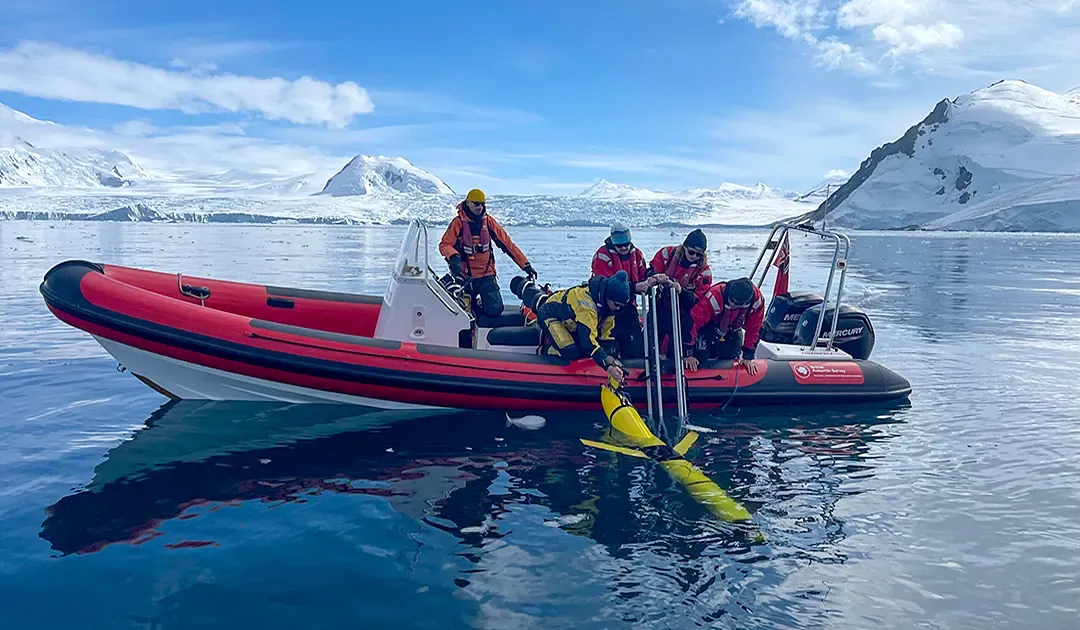
Recent studies indicate that warm ocean currents are melting the glacier from below, weakening its grounding points—the areas that anchor it to the seabed. Advanced satellite imaging and underwater surveys have revealed cracks and thinning at rates faster than previously projected.
Researchers stress that while catastrophic collapse is not imminent, the glacier’s retreat appears increasingly irreversible under current warming trends. The concern lies in speed: once certain thresholds are crossed, natural feedback loops may make stabilization extremely difficult.
Economic and Financial Implications
From a financial perspective, the risks associated with the Doomsday Glacier extend far beyond environmental damage. Rising sea levels threaten ports, insurance markets, real estate valuations and national infrastructure budgets. Coastal adaptation and disaster recovery could require investments running into several lakh crore rupees globally over coming decades.
Investors and policymakers are increasingly factoring climate-related physical risks into long-term planning, with Antarctica’s ice loss serving as a measurable indicator of future exposure.
Climate Policy and Global Responsibility
The glacier’s trajectory underscores the limits of localized solutions to a global problem. Scientists emphasize that reducing greenhouse gas emissions remains the most effective way to slow ice loss, alongside investments in climate monitoring and adaptation.
International cooperation, data sharing and sustained funding for polar research are seen as essential. Without them, warning signs may come too late to influence outcomes.
A Signal, Not a Sudden Apocalypse
Despite its ominous nickname, the Doomsday Glacier is not expected to cause sudden global flooding. Instead, it represents a slow-moving but profound risk—one that unfolds over decades but reshapes coastlines, economies and population centers.
For governments, businesses and citizens alike, the message is clear: the glacier is not just an environmental concern, but a long-term economic and strategic challenge that demands urgent, informed action today.
Comments