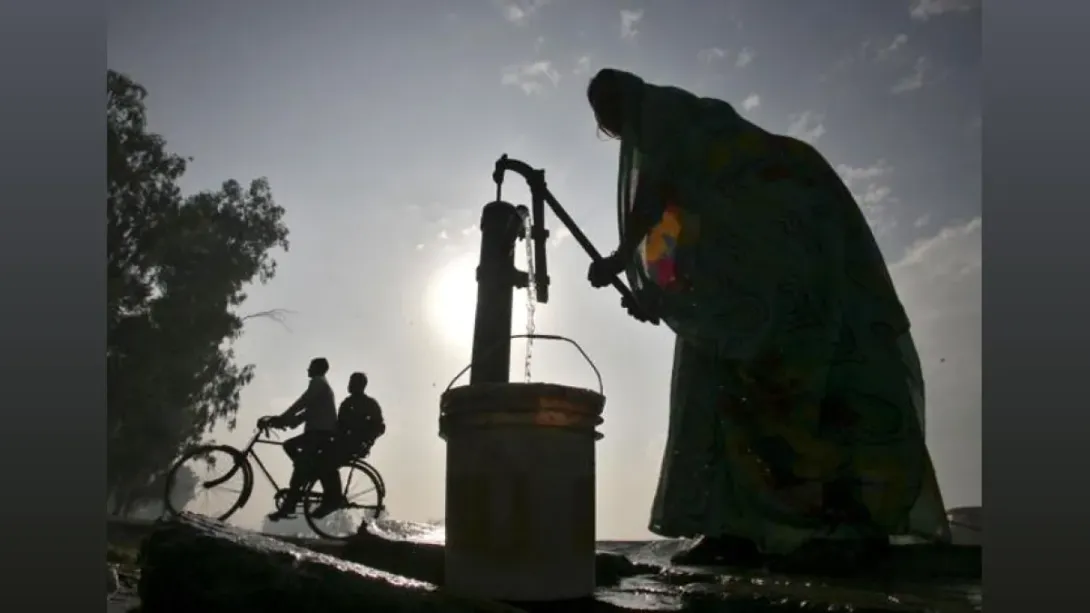
The Indian government has revised the operational framework of the Per Drop More Crop (PDMC) scheme to empower states and Union Territories with greater autonomy in planning and executing micro-irrigation and water conservation initiatives. The new guidelines lift the earlier funding caps for “Other Interventions” such as farm ponds, rainwater harvesting structures, and diggis, allowing states to design interventions based on local climatic and soil conditions. This policy overhaul marks a strategic step toward sustainable water use, improved irrigation efficiency, and enhanced agricultural productivity—key priorities in India’s quest for climate-resilient farming and rural prosperity.
A Major Policy Shift in Irrigation Strategy
The Ministry of Agriculture and Farmers Welfare has officially revised the guidelines of the Per Drop More Crop scheme under the Pradhan Mantri Krishi Sinchayee Yojana (PMKSY), signaling a transition toward decentralised, state-driven decision-making in agricultural water management.
Under the revised framework, states and UTs will now have the discretion to allocate funds more flexibly for micro-level water conservation structures, including farm ponds, percolation tanks, diggis, and rainwater harvesting systems. Previously, expenditure on these “Other Interventions” was restricted to 20 percent of a state’s PDMC allocation (and 40 percent for northeastern and hilly regions). The new policy removes these rigid limits, provided the proposed projects are technically sound and justified by the state.
Officials described the revision as a move toward “localized adaptation and autonomy”, ensuring that agricultural water management strategies align with the unique hydrological and agroclimatic realities of each state.
What the Revised Guidelines Introduce
Enhanced Financial Flexibility for States
States can now propose larger allocations for micro-water storage and distribution infrastructure under the “Other Interventions” category. This expanded flexibility enables them to address on-ground challenges—such as uneven rainfall distribution or groundwater scarcity—without being constrained by fixed funding ceilings.
Continued Subsidy Support for Farmers
The subsidy structure remains unchanged. Small and marginal farmers will receive a 55 percent subsidy, while other farmers will be eligible for a 45 percent subsidy on micro-irrigation systems like drip and sprinkler setups. These benefits apply for holdings up to five hectares, and farmers can reapply after seven years.
Broader Scope of Eligible Projects
The revised framework broadens the range of permissible activities beyond traditional micro-irrigation infrastructure. States can now prioritize:
- Rainwater harvesting structures and farm ponds to capture runoff.
- Percolation tanks and infiltration trenches for groundwater recharge.
- Water storage tanks (diggis) and community-based irrigation systems for collective benefit.
These projects aim to complement micro-irrigation adoption by ensuring reliable water availability even during dry spells.
Rationale Behind the Overhaul
India’s agriculture sector consumes nearly 80 percent of the country’s freshwater resources, making efficient irrigation indispensable to sustainability. However, erratic monsoons, declining groundwater levels, and uneven irrigation coverage continue to challenge productivity.
The government’s decision to revise the PDMC guidelines reflects a recognition that top-down policies often fail to capture local realities. By empowering states to design water management solutions specific to their geography and crop patterns, the revised scheme is expected to accelerate micro-irrigation coverage and optimize every drop of water used in agriculture.
A senior agriculture ministry official noted that “the revision is a move toward ‘water security through decentralization’, allowing states to be more innovative, accountable, and responsive to farmers’ needs.”
Anticipated Benefits
Improved Water Efficiency and Climate Resilience
Micro-irrigation systems, coupled with localized storage, can reduce water use by 30–50 percent and increase crop productivity by up to 40 percent, according to government estimates. This is particularly vital as climate change intensifies rainfall variability and water stress across India’s farmlands.
Higher Farm Incomes and Crop Diversification
Reliable irrigation encourages farmers to shift toward high-value crops such as fruits, vegetables, and spices. By stabilizing yields and reducing input costs, the scheme supports income diversification and boosts rural livelihoods.
Stronger State Ownership and Accountability
By devolving greater power to states, the new framework is likely to foster ownership-driven governance, with local authorities responsible for planning, monitoring, and sustaining water infrastructure projects. This bottom-up approach ensures better alignment with grassroots realities.
Challenges and Implementation Risks
While the revised guidelines enhance operational flexibility, their success hinges on execution discipline and institutional capacity.
- Financial oversight: States must ensure funds are not overcommitted or misallocated to low-impact projects.
- Maintenance and sustainability: Water structures require continuous upkeep, community participation, and technical monitoring to remain effective.
- Equitable access: Policymakers must ensure benefits reach small and marginal farmers, not just large landholders.
- Climate unpredictability: The success of on-ground interventions depends on timely rainfall and effective soil-water management practices.
Experts emphasize that institutional capacity building, real-time data systems, and community engagement will be critical to achieving tangible outcomes under the revised scheme.
Conclusion: Toward a New Water Paradigm in Agriculture
The revamped Per Drop More Crop scheme represents more than an administrative tweak—it signals a paradigm shift in India’s irrigation policy. By granting states the autonomy to plan, innovate, and invest in locally relevant water infrastructure, the government aims to create a climate-resilient, resource-efficient, and productivity-oriented agricultural ecosystem.
If implemented effectively, the scheme could serve as a cornerstone for India’s sustainable farming agenda—where every drop of water contributes not only to crop yield but to long-term ecological and economic stability.
Comments