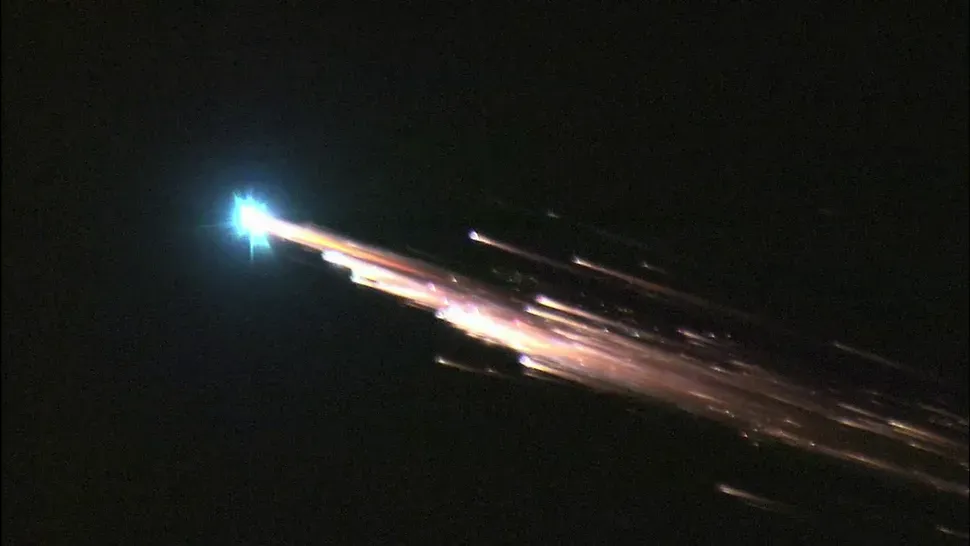
Scientists have confirmed that Earth’s seismic sensors are capable of detecting sonic booms generated by space debris reentering the atmosphere, offering a novel method to track objects falling back to the planet. The findings highlight an unexpected intersection between space science and geophysics, where ground-based instruments traditionally used to monitor earthquakes are now revealing signatures of atmospheric shockwaves. Researchers say the data can enhance understanding of reentry events, improve monitoring of orbital debris, and support global safety efforts. The development underscores how existing scientific infrastructure can deliver new insights into an increasingly congested near-Earth environment.
Seismic Sensors Pick Up Signals from the Sky
Seismic monitoring systems, designed to record vibrations within the Earth’s crust, have been found capable of registering pressure waves created when space debris reenters the atmosphere at extreme speeds. As fragments descend, they often exceed the speed of sound, generating sonic booms that travel through the air and couple with the ground, producing detectable seismic signals.
These signatures are subtle but distinct, allowing researchers to differentiate them from natural seismic activity.
How Reentering Debris Creates Detectable Shockwaves
When defunct satellites or rocket fragments reenter Earth’s atmosphere, friction rapidly heats the material, often causing it to fragment. This high-velocity descent produces shockwaves that propagate outward. In certain conditions, those shockwaves transfer energy into the ground, where sensitive seismic instruments can record them as brief, localized vibrations.
Scientists say the characteristics of these signals can reveal information about speed, trajectory, and breakup altitude.
Implications for Space Debris Monitoring
The ability to detect reentry events using seismic data could strengthen global tracking of space debris, a growing concern for space agencies and insurers alike. With thousands of objects orbiting Earth, uncontrolled reentries pose both safety and liability risks. Seismic detection provides an independent verification tool that complements satellite tracking and radar observations.
Experts note that this approach could be especially valuable for monitoring debris over remote regions or oceans.
Cross-Disciplinary Value for Science and Safety
Beyond space surveillance, the research demonstrates how interdisciplinary use of existing infrastructure can unlock new capabilities. Seismology, atmospheric physics, and space science converge in this application, offering cost-effective insights without deploying new sensor networks.
Policy analysts suggest such innovations could support international cooperation on space traffic management and risk mitigation.
A New Role for Earth’s Listening Posts
As orbital congestion increases, understanding what returns to Earth—and how—is becoming more critical. The discovery that seismic sensors can “hear” space debris reentries adds a powerful tool to that effort. It also reinforces a broader lesson: systems built to study our planet can play a vital role in monitoring humanity’s expanding footprint beyond it.
Comments