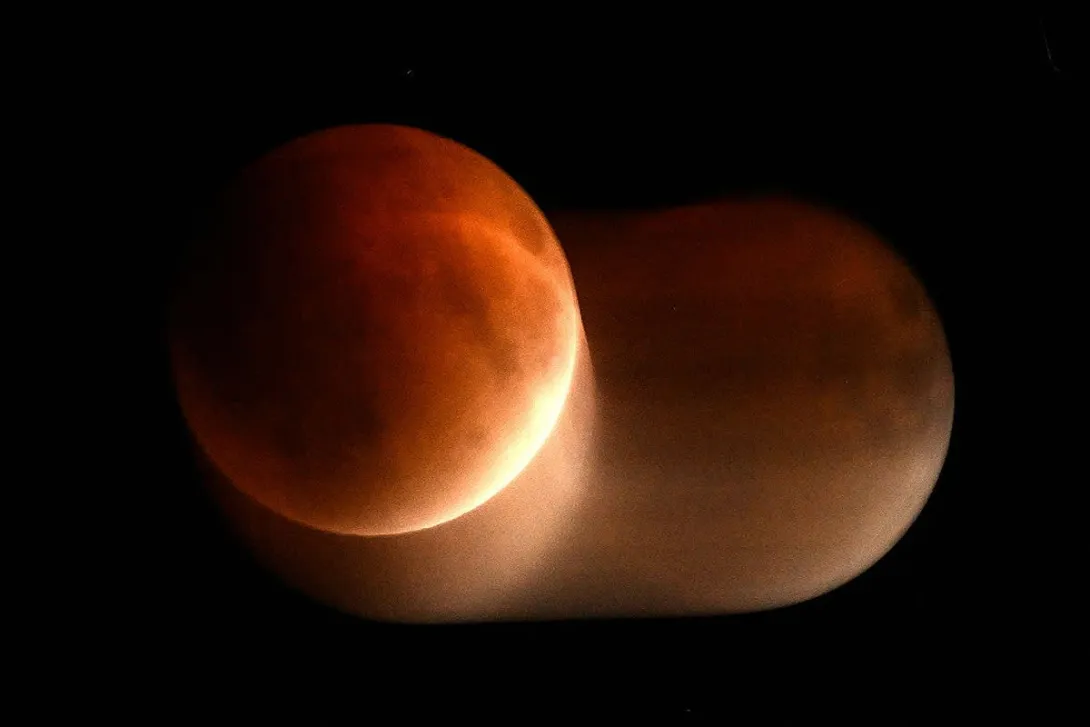
A groundbreaking study has revealed that the Moon, long considered a static and airless body, is gradually developing rust on its surface due to interactions with Earth’s magnetic environment. Scientists have identified that solar winds, combined with oxygen from Earth’s upper atmosphere, are creating iron oxide deposits in select lunar regions. This discovery challenges conventional assumptions about lunar geology and suggests that planetary bodies can be influenced by neighboring atmospheres and magnetic fields. The findings provide crucial insights into space weathering, interplanetary interactions, and may influence future lunar exploration and the search for water and resources on the Moon.
The Mechanism Behind Lunar Rust
Researchers have identified a unique process where charged particles from Earth’s magnetosphere interact with the Moon’s surface. Oxygen atoms, escaping from Earth’s upper atmosphere, are transported via magnetic field lines and interact with exposed iron on the Moon. When these particles meet iron on the lunar soil, they catalyze the formation of rust, specifically iron oxide, in areas directly facing Earth.
Scientific Implications
This revelation challenges long-standing assumptions that rust requires atmospheric moisture to form. Instead, the Moon demonstrates that even in near-vacuum conditions, interplanetary forces can induce chemical changes. The study underscores the significance of solar wind and Earth’s magnetic influence in shaping lunar surface chemistry, expanding our understanding of planetary surface evolution.
Broader Impact on Space Exploration
The discovery has practical implications for future lunar missions, particularly regarding material preservation and habitat construction. Understanding rust formation on the Moon could inform the design of equipment and habitats that resist degradation. Furthermore, this research may prompt scientists to reconsider environmental influences on other airless bodies in the solar system.
Future Research Directions
Scientists plan to map iron oxide deposits in greater detail, investigate seasonal or solar-cycle variations, and study whether similar phenomena occur on Mercury or other moons. The findings open avenues for research into interplanetary chemistry, the role of magnetic fields, and potential resource identification on the Moon.
Conclusion:
The Moon’s newfound rust is a striking reminder of the subtle but powerful ways celestial bodies influence each other. By linking Earth’s magnetic winds to lunar chemical changes, scientists are reshaping our understanding of planetary interactions and preparing the groundwork for more informed and sustainable lunar exploration.
Comments