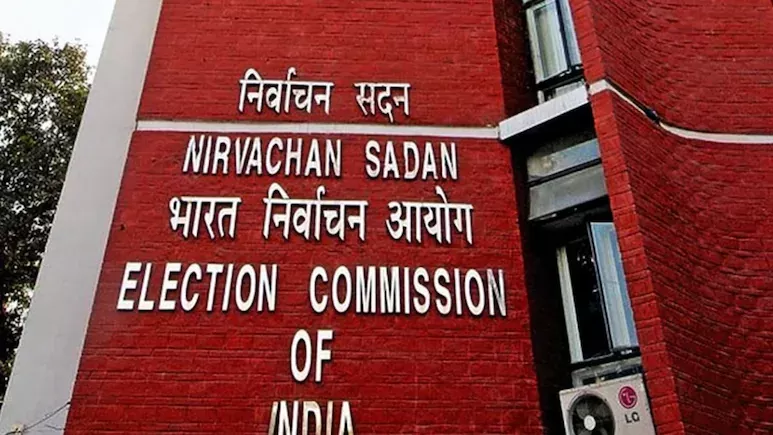
As opposition voices grow louder over election transparency, the Election Commission of India (ECI) has firmly defended its decision to retain polling station CCTV footage for no more than 45 days. The move, while criticized by Congress leader Rahul Gandhi as an attempt to "destroy evidence," is justified by the ECI on legal and ethical grounds—chiefly, to protect voter privacy and uphold the sanctity of secret ballots. The Commission argues that longer retention or distribution of such footage could expose voters to coercion and discrimination, potentially compromising democratic processes. Legal precedents and statutory obligations back its position.
The Controversy: Rahul Gandhi’s Allegations
In a sharp critique shared via social media, Rahul Gandhi, Leader of the Opposition in the Lok Sabha, questioned the credibility of electoral outcomes, suggesting “match-fixing” in the recently concluded polls. His criticism centered around the deletion of polling day video footage within 45 days—a statutory limit observed by the ECI. He accused the Commission of shielding potential electoral misconduct by limiting access to critical evidence.
Gandhi’s remarks also touched upon other transparency concerns, including the denial of machine-readable formats for voter lists and alleged obfuscation of data related to voter turnout.
The EC's Justification: Legal and Ethical Safeguards
In response to mounting public scrutiny, sources within the Election Commission outlined a multi-pronged rationale for the 45-day footage retention limit. According to them, this time frame is consistent with the period during which an election petition can be filed—within 45 days of the declaration of results, as per the Representation of the People Act, 1951.
The Commission stated that extending retention beyond this statutory window could result in misuse, especially by non-contesting parties, potentially leading to misinformation campaigns and social disruption.
Balancing Transparency with Voter Privacy
A major concern highlighted by the ECI revolves around voter privacy and the potential for voter intimidation. CCTV footage from polling stations, which documents the order in which electors enter, may indirectly reveal individual voting patterns—especially in areas with low turnout or homogeneous political leanings. The EC argued that releasing this footage could expose voters to coercion, especially from political groups aiming to target those perceived to have voted against them—or not voted at all.
Officials cited the possibility of anti-social elements exploiting this footage to discriminate against or intimidate individuals, a risk that far outweighs the benefits of public disclosure.
Statutory and Judicial Underpinnings
The ECI's position is reinforced by Section 128 of the Representation of the People Act, 1951, which criminalizes the violation of voting secrecy. Offenders can face imprisonment for up to three months, fines, or both. Additionally, videography of polling day activities, akin to Form 17A under Rule 49L of the Conduct of Elections Rules, 1961, is classified as sensitive data. This form records the serial number, identity verification details, and the sequence in which voters enter polling booths.
The Commission maintains that releasing such footage without the elector's consent is legally impermissible.
Context: Rising Political Tensions
The debate over electoral integrity has intensified in recent months. Rahul Gandhi had earlier alleged irregularities in the 2024 Maharashtra Assembly elections, pointing to inflated voter rolls, bogus voting, and alleged tampering with the electoral appointment panel. He has now expressed similar concerns about the upcoming Bihar elections.
The ECI has rebuked these claims, calling them “unsubstantiated” and accusing the Congress party of disregarding established legal processes and misrepresenting facts to create distrust.
Conclusion: A Fragile Balance Between Accountability and Anonymity
As India’s democratic machinery continues to evolve, the tug-of-war between demands for transparency and the necessity of protecting voter confidentiality presents a nuanced challenge. The Election Commission, entrusted with safeguarding electoral integrity, finds itself navigating a complex intersection of legal mandates, public expectations, and political pressures.
The larger question persists: Can democratic institutions enhance transparency without compromising individual liberties? For now, the ECI appears committed to upholding voter anonymity, even if it means drawing political fire in the process.
Comments