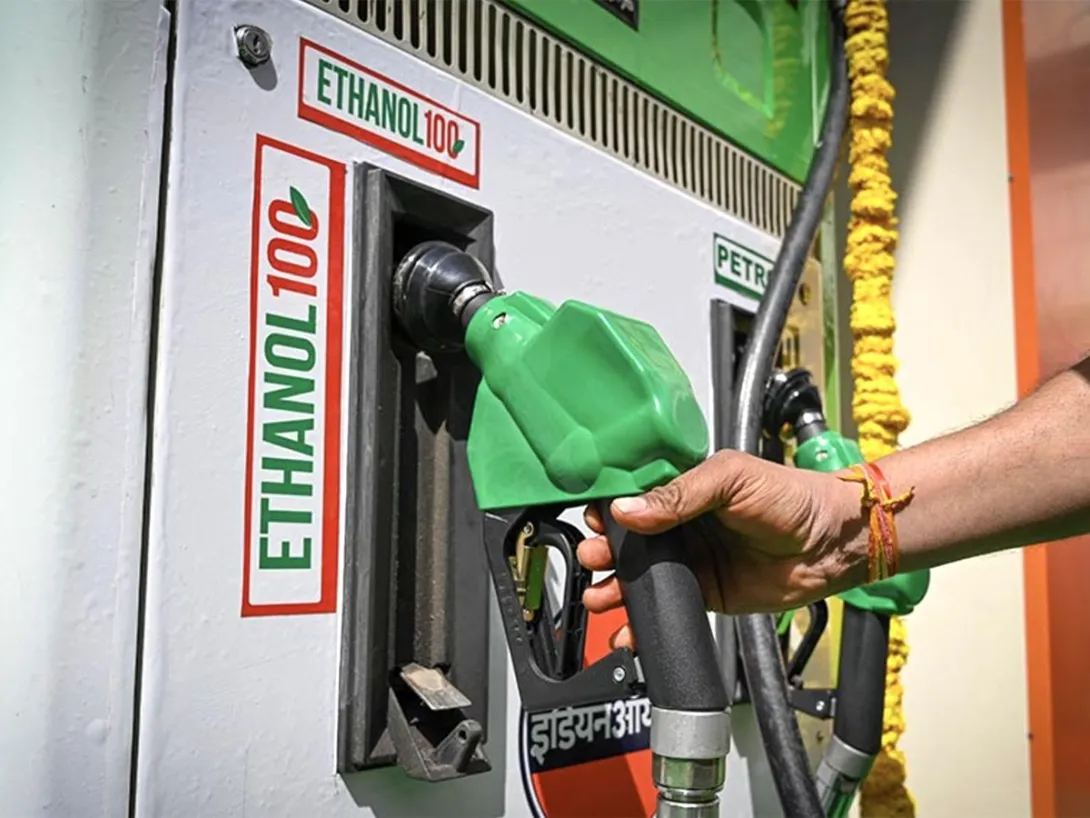
The Indian government’s expanded rollout of petrol blended with 20% ethanol—known as E20—has triggered a heated debate over its pricing strategy, with critics calling it economically burdensome for consumers. While the move is positioned as a step toward energy security, lower emissions, and reduced reliance on crude oil imports, concerns have surfaced over the retail pricing mechanism and transparency. Although ethanol is significantly cheaper than petrol in production terms, end consumers are reportedly paying nearly the same price as regular petrol. This discrepancy has raised questions about pricing parity, government accountability, and the real economic benefits passed on to the public.
---
Ethanol Blending Program: A Climate Strategy with Economic Implications
India's ethanol blending program, part of a broader strategy to decarbonize its transport sector and reduce dependence on imported fossil fuels, is being rapidly scaled up. The government has targeted nationwide availability of E20 fuel—petrol blended with 20% ethanol—across fuel stations as part of its Ethanol Blending Roadmap, with the aim of achieving full implementation by 2026.
This shift is intended to reduce the carbon footprint of transportation, promote cleaner energy sources, and support domestic agriculture by utilizing surplus sugarcane and grain for ethanol production. However, despite its policy merits, the economics of E20 at the consumer level have stirred significant controversy.
---
Pricing Concerns: A Question of Transparency and Equity
One of the central points of contention lies in the pricing mechanism for E20 fuel. While ethanol is considerably cheaper than refined petroleum—costing approximately Rs. 65–Rs. 70 per liter—blended fuel is reportedly being sold to consumers at nearly the same price as conventional petrol, which ranges between Rs. 96 and Rs. 110 per liter in most Indian cities.
This has led to growing criticism, with opposition leaders and consumer advocacy groups labeling it a form of “daylight loot,” alleging that the financial benefits of ethanol blending are not being passed on to the public. The price disparity has raised questions over whether oil marketing companies or the government are absorbing the margin, or if the lack of pricing reform is a missed opportunity for consumer relief.
---
Government’s Stand: Environmental Gains Over Short-Term Subsidies
From the government’s standpoint, the ethanol blending program is a long-term strategic investment. Officials argue that ethanol production boosts farmer incomes, reduces foreign exchange outflows by cutting crude oil imports, and lowers carbon emissions—benefits that cannot be immediately monetized by end consumers.
Moreover, blending infrastructure development, transportation, and storage costs are cited as reasons why the retail price difference may not be as substantial as theoretically expected. Authorities also highlight that, over time, greater scale and competition in ethanol production may drive costs—and eventually prices—down further.
---
Agricultural Impact and Industry Incentives
The ethanol policy is also seen as a significant rural stimulus, with sugar mills and distilleries being encouraged through financial incentives to divert more feedstock toward ethanol production. The government has offered interest subvention schemes, viability gap funding, and relaxed regulatory norms to fast-track the establishment of ethanol plants across states.
This transition also serves a dual purpose—clearing excess grain stocks and improving payment cycles for sugarcane farmers. However, critics argue that unless the fuel price reflects ethanol’s lower cost, the average consumer is being left out of the policy’s economic benefits.
---
Automotive Compatibility and Consumer Experience
Automakers have begun rolling out vehicles compatible with E20 fuel, although the transition remains gradual. While ethanol blending is broadly safe for engines under controlled conditions, concerns persist about long-term engine wear, mileage efficiency, and cost-benefit analysis from a consumer’s standpoint.
Until now, the lack of distinct pricing incentives has discouraged mass acceptance, particularly in segments where fuel cost savings are a primary factor in vehicle ownership decisions.
---
The Road Ahead: Balancing Reform with Fairness
The success of India’s ethanol blending strategy hinges not only on supply chain readiness and environmental outcomes but also on consumer perception and affordability. If E20 is priced almost identically to regular petrol despite being cheaper to produce, the optics may undermine public support for what is otherwise a progressive energy reform.
Greater transparency in the pricing structure, public awareness campaigns, and perhaps even dynamic pricing models could help bridge the gap between policy objectives and consumer expectations. As India pushes toward its 2047 net-zero goals, maintaining trust in energy reforms will be critical.
Comments