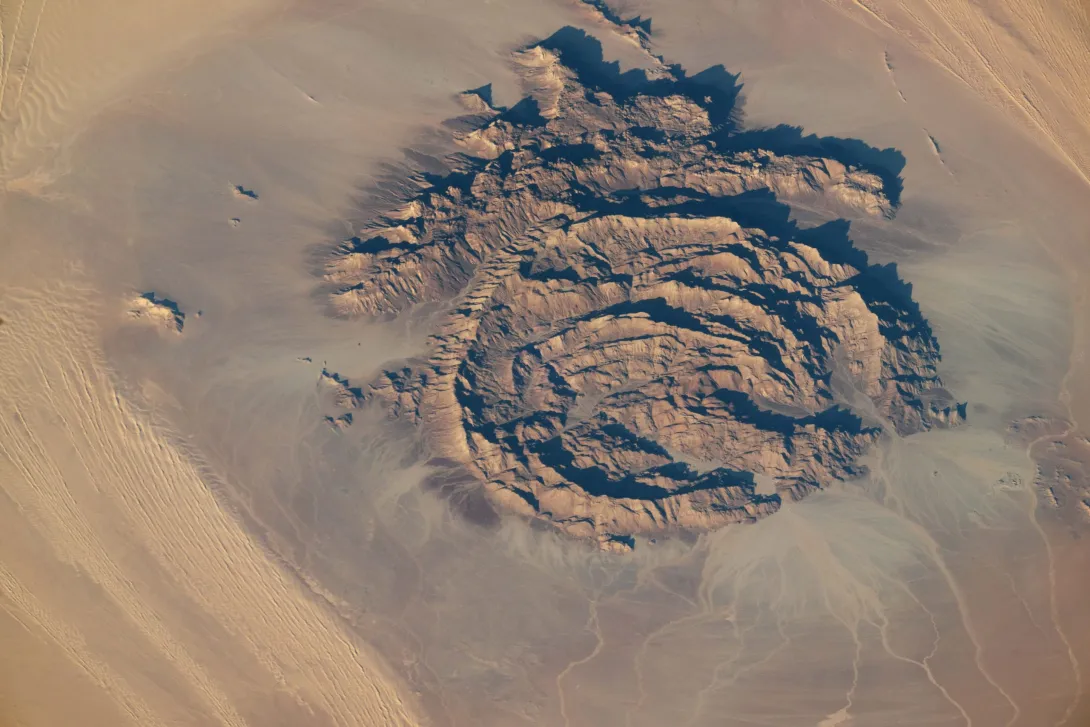
The Eye of the Sahara, also known as the Richat Structure, remains one of the most captivating geological formations on Earth. Located in Mauritania, this circular feature spans nearly 50 kilometers and offers unique insights into Earth’s geological history, including erosion processes, tectonic activity, and sedimentary layering. Beyond its scientific significance, the structure has sparked interest among geologists, researchers, and even the tourism sector due to its breathtaking aerial appearance. Understanding its origin and characteristics may also provide indirect economic opportunities in mineral exploration and geotourism, highlighting the intersection of natural history and economic potential.
Geological Marvel in the Heart of the Sahara
The Eye of the Sahara is a prominent circular geological formation, initially misinterpreted as an impact crater. Modern research identifies it as a deeply eroded domal structure, exposing ancient rock layers that date back hundreds of millions of years. Its concentric rings, visible even from space, reveal the underlying stratigraphy and offer a natural laboratory for studying Earth’s evolutionary geology.
Scientific Insights and Research
Researchers have long examined the Richat Structure for its unique geomorphological characteristics. The formation exposes sedimentary rocks from the Paleozoic era, including sandstone, limestone, and quartzite, providing valuable data on ancient climates and tectonic movements. Geologists use this site to study erosion patterns, structural doming, and the processes that shape large-scale circular formations. Its exceptional accessibility from satellite imagery also makes it a reference point for planetary geology studies, with analogies drawn to impact structures observed on Mars.
Economic and Strategic Implications
While the Eye of the Sahara is primarily a scientific marvel, it carries potential economic relevance. Geological surveys indicate the presence of mineral-rich strata in the surrounding region, offering prospects for mining ventures, including copper, gold, and phosphate extraction. Additionally, its unique landscape presents opportunities for geotourism, attracting adventure travelers, researchers, and photographers seeking immersive experiences in remote and extraordinary natural settings.
Cultural and Global Significance
The structure’s iconic circular form has sparked cultural curiosity, inspiring myths and hypotheses about its origin. From an educational perspective, it serves as a prime case study in earth sciences curricula worldwide. Its visibility from orbiting satellites also underscores the importance of Earth observation technologies in mapping, studying, and preserving geological heritage.
Looking Ahead
Continued exploration and research of the Eye of the Sahara will likely expand our understanding of Earth’s geological history while offering practical insights for economic development. Balancing scientific preservation with tourism and mineral exploration could unlock new avenues for sustainable engagement with one of the planet’s most enigmatic natural features, ensuring it remains a source of fascination for both scientists and the public alike.
Comments