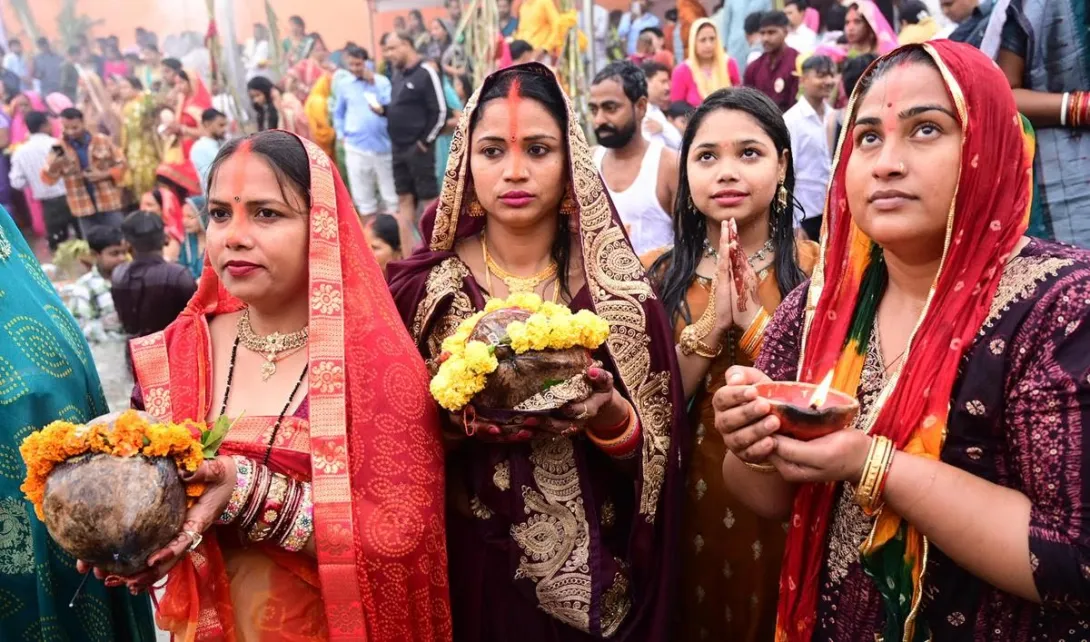
As the sacred festival of Chhath Puja unfolds across India, devotees have made their sentiments clear — politics has no place in this deeply spiritual celebration. Marked by devotion, discipline, and a profound connection with nature, Chhath Puja transcends regional and political divides. Worshippers gathering along riverbanks and ponds across Bihar, Uttar Pradesh, Jharkhand, and Delhi emphasize that the festival’s essence lies in faith, purity, and gratitude, not political symbolism. The message from devotees this year is unequivocal: Chhath belongs to the people, not to political parties.
---
The Spirit and Significance of Chhath Puja
Celebrated primarily in northern and eastern India, Chhath Puja honors the Sun God (Surya) and his consort Usha for sustaining life and granting prosperity. The four-day festival involves rigorous fasting, abstinence, and elaborate rituals performed at sunrise and sunset. Women, known as vratin, observe fasts without water, standing in rivers and ponds while offering arghya (prayers) to the setting and rising sun.
Unlike most festivals, Chhath is devoid of idol worship, focusing instead on the elemental forces of nature — water, sunlight, and air. Its simplicity and austerity make it a festival of spiritual endurance and communal harmony, where devotion overrides all worldly concerns.
---
Devotees Reject Political Interference
In recent years, Chhath Puja has gained political attention, with leaders seeking visibility by attending public rituals or extending greetings to particular communities. However, this year, many worshippers expressed a firm stance against such politicization. Devotees across several ghats in Bihar and Delhi stated that faith should remain untouched by electoral or ideological motives.
“Chhath is about faith, not politics,” remarked a devotee in Patna. “When politicians arrive for publicity, they dilute the sanctity of our worship. We want them to improve infrastructure, not interfere with our prayers.”
Similar sentiments echoed along the Yamuna and Ganga ghats, where devotees emphasized that the festival unites people from all backgrounds — transcending caste, creed, and political allegiance. Their message: Chhath is a personal dialogue with divinity, not a platform for political theatre.
---
Political Optics vs. Public Sentiment
The growing popularity of Chhath Puja in urban centers like Delhi and Mumbai has made it an important cultural marker for migrant communities. Consequently, political parties often attempt to associate themselves with the festival to strengthen outreach among these voters.
However, observers note that the public’s awareness has evolved. While they appreciate the government’s logistical support — such as cleaning riverbanks, ensuring safety, and arranging lighting — they remain critical of leaders who use the occasion for political messaging.
Analysts suggest that the strong reaction from devotees reflects a broader public desire to protect the authenticity of cultural traditions from opportunistic use. In an age of heightened political visibility, Chhath Puja stands as a reminder that spirituality and governance must operate in separate spheres.
---
Faith as a Symbol of Social Unity
What distinguishes Chhath from many other festivals is its egalitarian ethos. People from diverse social and economic backgrounds come together to prepare offerings, clean water bodies, and assist one another in performing rituals. There are no priests, no intermediaries — only faith and discipline.
This communal participation reinforces the values of unity and equality, providing a sense of collective purpose. Even in metropolitan areas, Chhath brings together migrant families, neighbors, and volunteers, creating an atmosphere of shared devotion.
For many, the festival also symbolizes women’s strength and resilience, as women often lead the rituals, fasting for the well-being of their families. In that sense, Chhath is both a spiritual and social celebration — a moment when humanity stands equal before nature.
---
Preserving Purity in an Age of Politics
As India’s political discourse becomes increasingly intertwined with cultural events, Chhath Puja’s devotees are drawing a line — reaffirming that faith must remain sacred and untouched by power struggles.
The festival’s true meaning lies not in spectacle but in silence — the quiet prayers at dawn, the glow of lamps on the water, and the shared belief in gratitude and endurance. It reminds the nation that while politics may shape governance, faith shapes the moral fabric of society.
---
Conclusion: A Festival That Belongs to the People
Chhath Puja endures as one of India’s purest expressions of devotion, simplicity, and sustainability. Its strength lies in its collective spirit — a unifying force that resists polarization.
By rejecting political interference, devotees have reclaimed the sanctity of their faith, reinforcing that Chhath Puja is not a stage for power, but a sacred covenant between humanity and nature.
In their quiet defiance, the worshippers have offered not just prayers to the sun, but a profound message to the nation — faith must remain above politics, always.
Comments