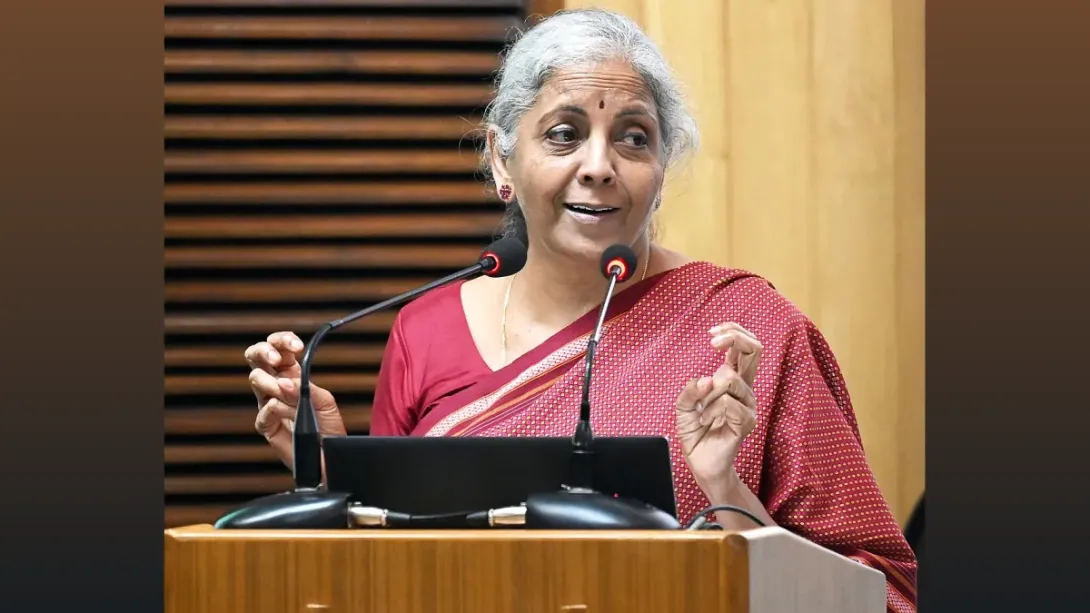
In a direct appeal to India’s income tax administration, Finance Minister Nirmala Sitharaman has urged officers to set higher professional standards and cultivate deeper trust with taxpayers. Her remarks, delivered at an official engagement, emphasized the crucial role of transparency, fairness, and ethical conduct in sustaining a tax system aligned with a fast-growing economy. Sitharaman also encouraged officers to adopt a taxpayer-centric mindset, minimize grievances, and reduce litigation through efficient assessments. As the country targets a more robust tax-to-GDP ratio, the Finance Minister’s message signals a policy shift toward both accountability and collaboration in tax administration.
Reinforcing Ethical Governance in Taxation
Finance Minister Nirmala Sitharaman’s remarks come at a pivotal time when India is aiming to deepen formalization and boost tax collections without imposing undue burden on honest taxpayers. She emphasized that income tax officials, as custodians of the system, must uphold high ethical standards and ensure that their conduct fosters confidence among individuals and businesses.
She underscored the need for a proactive approach—one where officers serve as facilitators of compliance rather than enforcers of penalties. Sitharaman’s message was clear: revenue collection must not come at the cost of public trust.
Emphasis on Transparency and Communication
The Finance Minister urged officials to improve communication with taxpayers by providing clarity on procedures, ensuring timely responses to queries, and offering recourse in cases of grievances. She stressed that effective redressal mechanisms and transparent dealings are fundamental to nurturing voluntary compliance.
Taxpayers, she noted, should never feel alienated or harassed by the system. Instead, the tax department should project itself as a service-oriented institution, capable of both collecting revenues and respecting citizen rights.
In this context, she lauded the use of digital platforms that have helped streamline operations but emphasized that technology must complement, not replace, human empathy and accountability.
Reducing Litigation and Strengthening Assessments
Sitharaman also addressed the importance of minimizing tax-related disputes through quality assessments. She advised officers to avoid adversarial practices and instead base scrutiny on well-documented facts and rational interpretations of the law.
Citing the growing number of appeals and reversals in tax cases, she emphasized the need for reasoned decision-making and judicious application of tax statutes. A tax system that depends on aggressive assessments, she warned, risks creating friction between the department and the taxpayer community.
Building a Trust-Based Tax Culture
At the core of the Finance Minister’s remarks was a call to create a culture of mutual respect between the state and the taxpayer. She reaffirmed the government’s commitment to simplifying compliance procedures, expanding the taxpayer base, and ensuring that citizens view paying taxes as a contribution to nation-building rather than a burdensome obligation.
This cultural shift, she explained, cannot be legislated—it must be nurtured by the attitudes and actions of those in charge of the system.
Sitharaman’s message aligns with the broader policy trajectory of the last few years: from faceless assessments to pre-filled returns, India’s tax regime has increasingly leaned toward being more predictable and citizen-friendly.
A Path Toward Sustainable Revenue Growth
With India targeting a tax-to-GDP ratio exceeding 11% in the coming years, Sitharaman’s address to the tax administration serves as both a warning and a roadmap. Sustainable revenue growth will not come merely through enforcement, but through a social contract built on efficiency, fairness, and mutual trust.
As the country prepares for deeper economic integration, especially under the expanding digital economy and formal job sectors, the income tax department will play a central role in shaping perceptions of state efficiency and fairness.
Sitharaman’s vision is not merely about collecting more taxes—but about collecting them right.
Comments