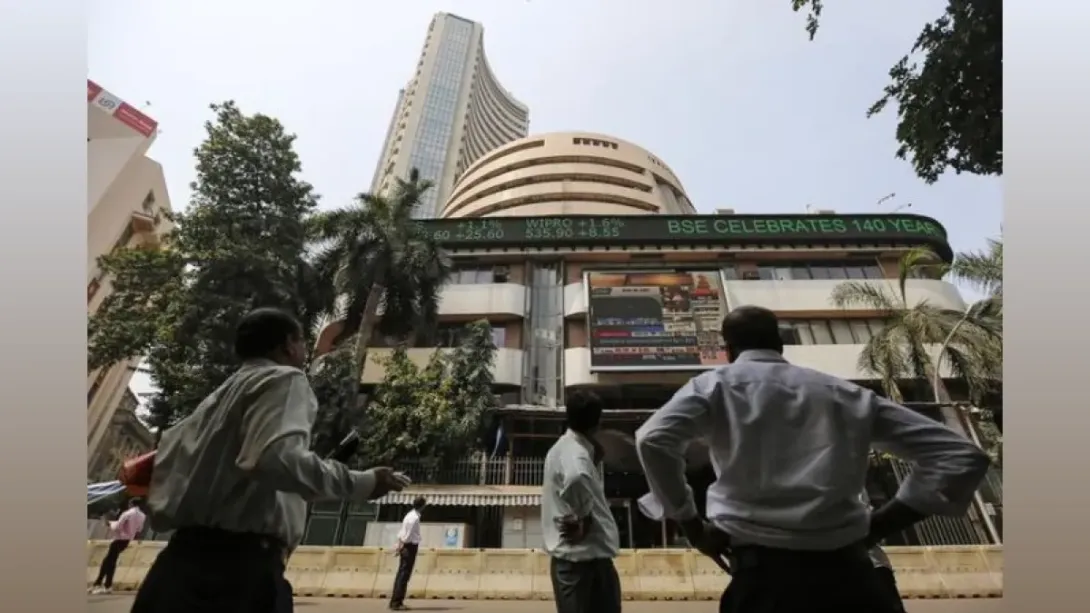
Indian equity benchmarks ended lower as sustained foreign institutional investor outflows weighed heavily on market sentiment. Concerns over global interest rate trajectories, a stronger U.S. dollar and elevated bond yields prompted overseas investors to pare exposure to emerging markets, including India. The selling pressure offset pockets of domestic buying and pushed key indices into negative territory. Sectors with high foreign ownership, such as financials, information technology and large-cap consumer stocks, bore the brunt of the decline. The session reflected broader global risk aversion, highlighting India’s vulnerability to cross-border capital movements despite resilient domestic fundamentals.
Markets React to Persistent Foreign Selling
Indian stock markets opened on a cautious note and extended losses through the session as foreign institutional investors continued to withdraw capital. The selling trend reflected a broader shift toward safer assets globally, driven by uncertainty over interest rate cuts in advanced economies and the allure of higher yields in U.S. debt markets.
Despite steady participation from domestic institutional investors, the scale of foreign selling exerted downward pressure on benchmark indices, underscoring the influence of global capital flows on Indian equities.
Global Cues Shape Investor Behavior
Overseas investors have remained risk-averse amid persistent inflation concerns and mixed signals from major central banks. The strengthening of the U.S. dollar and firm Treasury yields have made emerging-market assets relatively less attractive, prompting portfolio reallocations.
For India, this environment has translated into intermittent but sustained foreign fund outflows, even as macroeconomic indicators such as growth and corporate earnings remain comparatively robust.
Sectoral Impact: Financials and IT Under Strain
Stocks with significant foreign ownership witnessed sharper declines. Banking and financial services stocks slipped as global investors trimmed exposure to large-cap lenders. Information technology shares also came under pressure, reflecting concerns over slowing global demand and currency volatility.
Meanwhile, select defensive and domestic-oriented stocks showed relative resilience, supported by local investors betting on long-term consumption-led growth.
Domestic Investors Provide Limited Cushion
Domestic institutional investors and retail participants stepped in to absorb some of the selling, preventing a steeper fall. However, their support was insufficient to fully counterbalance the magnitude of foreign withdrawals.
Market participants noted that while domestic liquidity has grown structurally stronger in recent years, foreign capital still plays a decisive role in shaping short-term market direction.
Outlook: Volatility Likely to Persist
Analysts expect near-term volatility to continue as markets remain sensitive to global developments, particularly signals from the U.S. Federal Reserve and movements in currency and bond markets. Any clarity on interest rate trajectories could influence the pace of foreign flows into emerging markets.
For long-term investors, the current phase is viewed as a reminder of the cyclical nature of capital flows. While foreign outflows can pressure markets in the short run, India’s underlying growth story and improving corporate balance sheets continue to offer a supportive backdrop over the medium to long term.
Comments