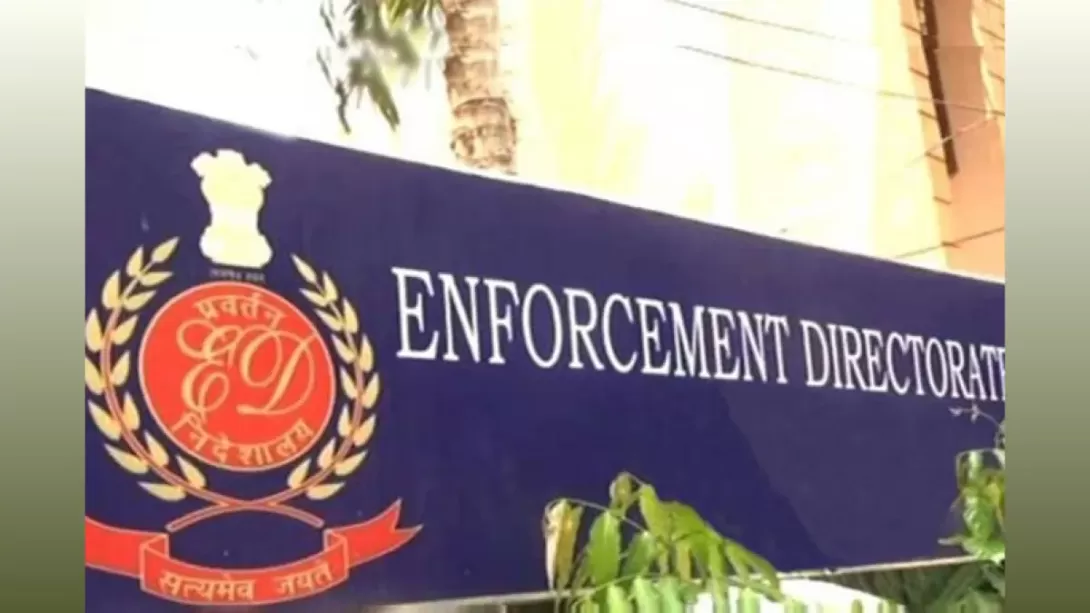
In a major development in one of India’s largest bank fraud investigations, the Enforcement Directorate (ED) has arrested former UCO Bank Chairman and Managing Director Subodh Kumar Goel on charges of money laundering linked to a loan scam exceeding Rs. 6,200 crore. The case, centered on Kolkata-based Concast Steel and Power Ltd (CSPL), involves allegations of massive loan diversion, systematic fund siphoning, and illicit gratification. Goel’s arrest follows extensive raids, forensic tracing of shell entities, and mounting evidence suggesting abuse of his banking authority for personal enrichment through complex financial layering and property acquisitions.
A High-Profile Arrest in a Widening Financial Scandal
The Enforcement Directorate’s arrest of Subodh Kumar Goel marks a significant turn in its ongoing investigation into what is alleged to be a sprawling financial crime rooted in the misuse of public sector banking infrastructure. Goel, who once helmed UCO Bank as CMD, was taken into custody from his residence on May 16. He was presented before a special Prevention of Money Laundering Act (PMLA) court in Kolkata on May 17, which granted ED custody until May 21.
The arrest stems from a broader probe involving Concast Steel and Power Ltd, a Kolkata-based entity accused of orchestrating a Rs. 6,210.72 crore fraud through the diversion and misappropriation of sanctioned loans.
Concast Steel and the Genesis of the Scam
The origin of the case lies in a First Information Report (FIR) filed by the Central Bureau of Investigation (CBI), which highlighted irregularities in the disbursement and subsequent misuse of credit facilities extended to CSPL. According to investigators, substantial credit was approved during Goel’s tenure at UCO Bank. These funds were allegedly siphoned off via a convoluted network of shell firms and front entities, leaving behind a trail of non-performing assets and financial damage to the banking sector.
The ED asserts that Goel played a pivotal role in enabling the fraud and personally benefited from it through concealed payments and assets.
Uncovering the Trail of Illicit Gains
According to the ED, Goel received “substantial illegal gratification” from CSPL in exchange for facilitating the loans. The alleged kickbacks were not delivered overtly but were routed through a series of shell companies, dummy persons, and family members. These transactions were designed to mask the illicit origin of the funds and create the appearance of legitimate business activity.
The investigation uncovered that Goel and his family allegedly acquired high-value assets—including immovable properties, luxury items, and lavish travel arrangements—using funds ultimately traced back to CSPL. The ED has identified multiple such assets, some of which have now been provisionally attached.
Layering, Front Companies, and Systematic Concealment
A key component of the money laundering strategy was the use of layering—a method that involves multiple levels of financial transactions to obscure the origin of illicit funds. Investigators allege that accommodation entries and circular fund flows through front companies were used to launder money and settle bribes in a manner that would evade regulatory scrutiny.
These front entities were allegedly controlled or beneficially owned by Goel or his immediate relatives. Their only function, according to the ED, was to facilitate the systematic movement and re-characterization of illicit gains.
The Larger Network: Arrests and Attachments
Goel’s arrest is the latest in a series of actions taken by the ED against those involved in the CSPL fraud. In December 2024, Sanjay Sureka, the primary promoter of CSPL, was arrested under similar charges. In February 2025, a prosecution complaint (equivalent to a chargesheet) was filed before a special court in Kolkata.
As part of its crackdown, the ED has provisionally attached assets valued at Rs. 510 crore belonging to Sureka and CSPL under provisions of the PMLA, reinforcing the financial scale and systemic nature of the operation.
Broader Implications: Accountability in Public Sector Lending
The unfolding scandal raises urgent questions about oversight and accountability in India’s public sector banking system. The case highlights the critical need for stricter diligence in credit sanctioning processes, robust audit mechanisms, and independent board governance to prevent abuse by high-ranking officials.
It also reinforces the ED’s evolving strategy of tracing proceeds of crime across interlinked shell entities and shadow banking operations—a model increasingly employed in major financial frauds.
Conclusion
The arrest of Subodh Kumar Goel signals a new phase in India's crackdown on white-collar crime, particularly within public financial institutions. As the ED deepens its probe into the CSPL-linked fraud, more revelations are expected to emerge about how systemic loopholes were exploited for personal gain. This case may well serve as a bellwether for future enforcement efforts, highlighting the thin line between fiduciary responsibility and financial misconduct in the corridors of institutional power.
Comments