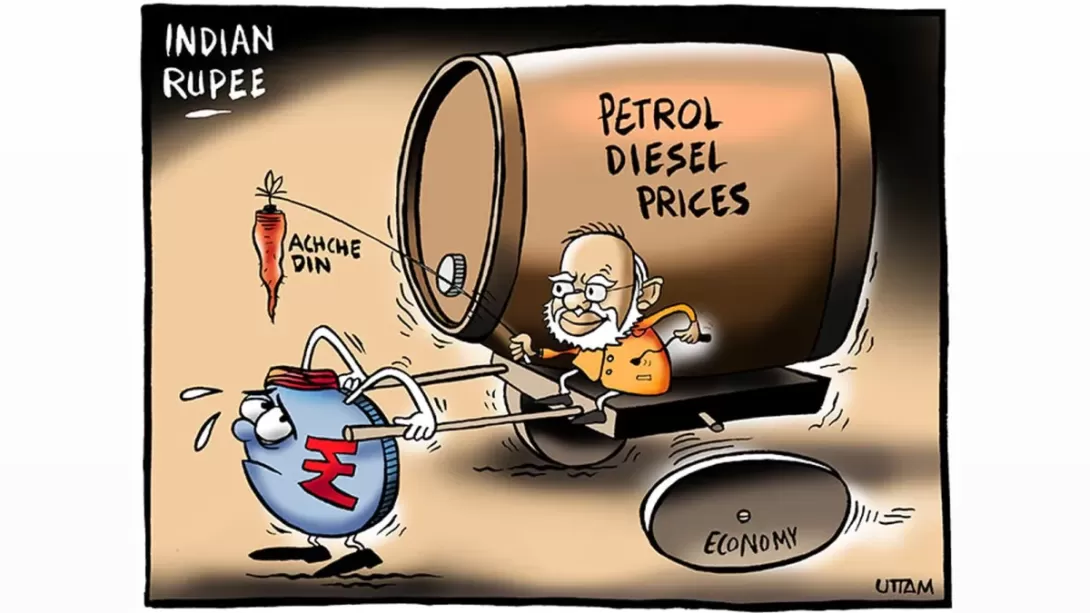
Petrol and diesel prices in Kolkata saw a modest upward revision as oil marketing companies (OMCs) recalibrated the basic price of fuel. Effective May 12, petrol now costs Rs. 105.41 per litre, while diesel stands at Rs. 92.02 per litre, reflecting a 40 paise and 20 paise increase, respectively. This move—stemming from periodic adjustments by OMCs—comes amid stable global crude prices and ongoing worries about domestic inflation. Although the price impact remains localized, the revision underscores the fragile balance between fuel economics, taxation, and consumer sentiment in an environment of cautious macroeconomic optimism.
Price Adjustment: Localized Hike Amid Broad Stability
In a subtle yet significant shift, fuel prices in Kolkata have risen following a revision in the basic pricing structure by oil marketing companies. Petrol saw an increase of 40 paise per litre, bringing it to Rs. 105.41, while diesel climbed 20 paise to Rs. 92.02 per litre.
This adjustment reflects a recalibration of the base price, which acts as the pre-tax benchmark used by OMCs. The change was implemented despite relatively stable global oil markets, suggesting domestic logistical or cost-related considerations are influencing price recalibrations more than international trends.
Contrasting Regional Trends: Divergent Movement in Patna
Interestingly, while Kolkata recorded an uptick in fuel prices, Patna witnessed a decline in diesel rates by 60 paise per litre. This divergence illustrates the regional flexibility exercised by OMCs, who adjust prices not only based on international oil benchmarks but also on localized factors such as transportation costs, refining margins, and tax regimes.
In the broader eastern region, fuel prices remained unchanged in most states, suggesting Kolkata's price revision was a targeted move—possibly influenced by logistical cost shifts, supply chain recalibrations, or state-level fiscal dynamics.
OMCs and the Mechanics of Base Price Recalibration
The base price set by oil marketing companies is a crucial determinant in the final price paid by consumers. Though often overshadowed by discussions around excise duties and VAT, this foundational price is reviewed frequently. Adjustments are typically modest, but their ripple effect—when compounded by central and state levies—can meaningfully impact retail prices.
Industry insiders suggest that these adjustments are tied to operational efficiency, freight costs, refinery gate prices, and international product parity. While the increase in Kolkata remains within a manageable threshold, it nonetheless raises questions about future volatility and the transparency of price-setting mechanisms.
Macroeconomic Implications and Consumer Sentiment
The timing of the price hike is particularly notable. Global crude oil prices have shown a stable to slightly bearish trend in recent weeks. This would typically support steady or even declining retail fuel prices. However, the upward revision in Kolkata coincides with mounting concerns over persistent inflationary pressures in the domestic economy.
Fuel costs are a major input in transportation and logistics, and any increase—however modest—tends to cascade through supply chains, ultimately affecting the end consumer. Given India's current inflation trajectory and the Reserve Bank of India’s continued vigilance, even localized price increases are bound to attract scrutiny.
Outlook: Market Sensitivities and Policy Considerations
With oil prices being a politically sensitive and economically impactful lever, stakeholders will be closely monitoring further adjustments by OMCs. While Kolkata’s hike may be an isolated recalibration, its implications are broader, especially as urban households and commercial operators begin to factor in marginal cost escalations.
Policymakers will need to strike a delicate balance between allowing market-linked pricing and ensuring affordability—particularly for lower- and middle-income groups. As global oil markets remain fluid and domestic demand normalizes post-pandemic, the interplay between fiscal discipline, energy security, and consumer pricing will remain a critical focal point.
Comments