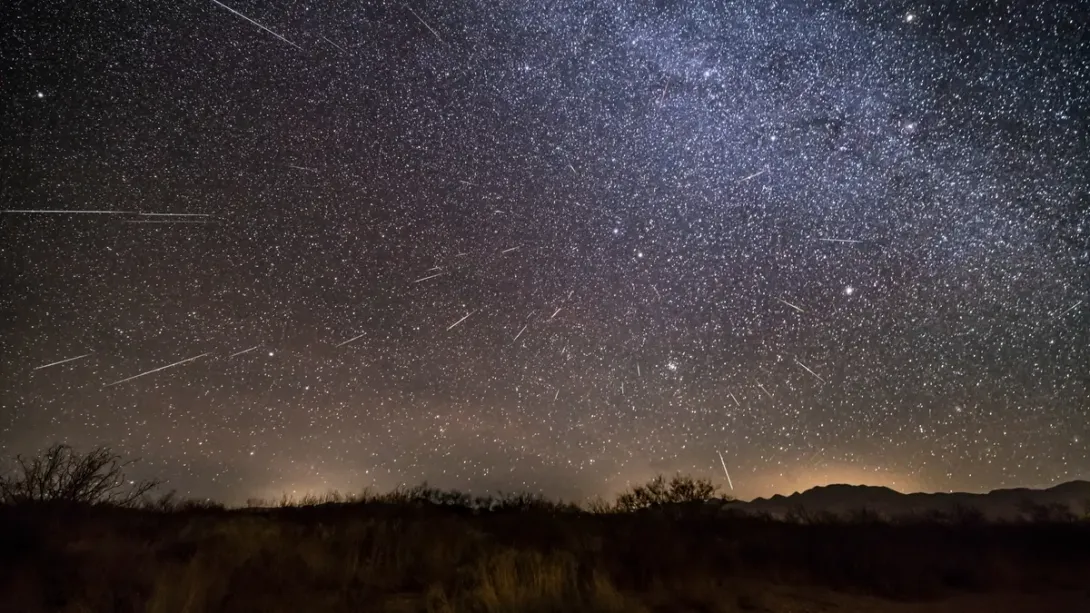
Skywatchers across the world are witnessing the Geminid meteor shower, one of the most reliable and visually striking astronomical events of the year. Known for its bright, slow-moving meteors and high activity rate, the Geminids offer favorable viewing conditions for both amateur stargazers and seasoned astronomers. Unlike many meteor showers that originate from comets, the Geminids are linked to an asteroid, making them a scientific anomaly. With clear skies and minimal light pollution, observers can expect an impressive display, reinforcing the shower’s reputation as a highlight of the annual celestial calendar.
A Global Celestial Spectacle
The Geminid meteor shower is currently visible across large parts of the globe, illuminating night skies with frequent streaks of light. Originating from the constellation Gemini, the shower produces meteors that are often brighter and more colorful than average, enhancing its appeal.
Because of its wide visibility across both hemispheres, the Geminids attract a global audience, from casual observers to professional astronomers tracking meteor activity and composition.
What Sets the Geminids Apart
Unlike most meteor showers, which are caused by debris from comets, the Geminids originate from an asteroid known as 3200 Phaethon. This unusual source contributes to the shower’s dense debris stream and consistent activity levels.
Astronomers consider the Geminids scientifically significant, as they challenge traditional classifications of celestial bodies and offer insights into how asteroids can behave like comets under certain conditions.
Viewing Conditions and Best Practices
The Geminids are best observed under dark skies away from urban light pollution. With no need for telescopes or special equipment, viewers can simply allow their eyes to adjust to the darkness and watch patiently.
Peak activity typically occurs late at night and into the early morning hours, when Earth rotates into the densest part of the debris stream, increasing meteor counts per hour.
Scientific and Cultural Significance
Beyond visual appeal, meteor showers like the Geminids provide valuable data on space debris, atmospheric interaction and planetary defense research. Each streak of light represents a tiny fragment burning up upon entry into Earth’s atmosphere.
Culturally, such events continue to inspire public interest in astronomy, reinforcing a shared sense of wonder and curiosity about the universe.
A Reminder to Look Up
As the Geminid meteor shower unfolds, it serves as a timely reminder of the dynamic nature of the night sky. Brief yet brilliant, the meteors underscore how predictable cosmic events can still evoke awe.
Comments