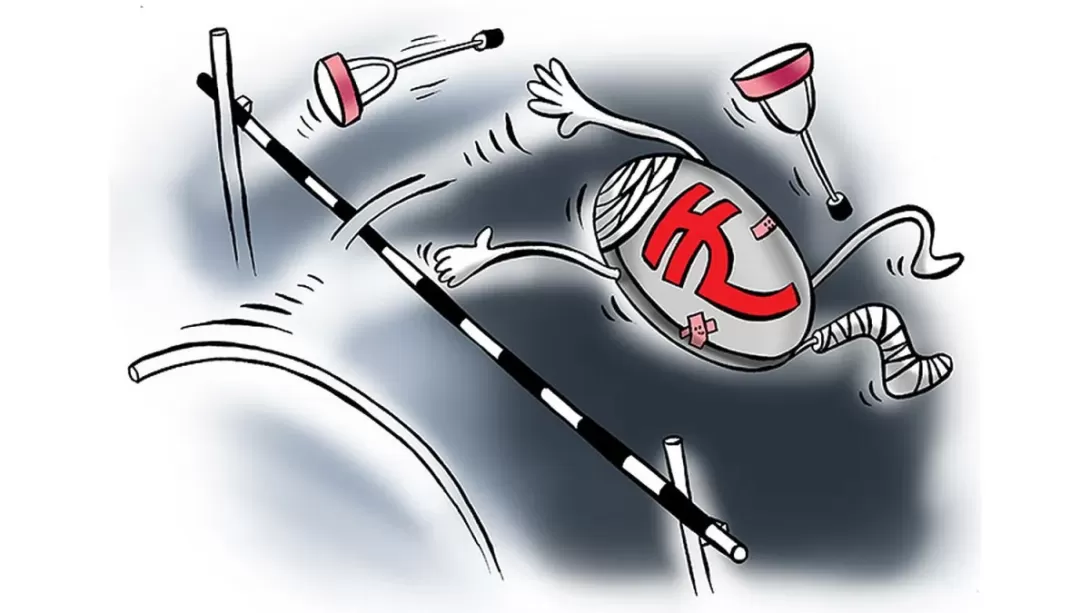
India's economic growth forecast for the fiscal year 2025-26 has been downgraded by international agencies, reflecting a backdrop of escalating global trade tensions and potential recessions in key markets. Despite these challenges, India remains poised to be the fastest-growing major economy. Projections now range between 6.2% and 6.7%, down from earlier estimates. While the US economy's slowdown and China’s diminished growth are contributing factors, India’s resilience continues to attract attention. The latest downward revisions highlight the fragile global economic environment, underscoring the uncertainty facing both developed and emerging markets.
International Agencies Adjust India’s Growth Outlook
The ongoing tariff war and uncertainty surrounding US trade policy have led several international agencies to revise India's growth projections for the current fiscal year. The International Monetary Fund (IMF) and the World Bank have both reduced their forecasts, with the IMF projecting a growth rate of 6.2%, while the World Bank has slightly adjusted its estimate to 6.3%. These cuts come on the heels of a 6.5% growth in India’s economy during the previous fiscal year.
The Organisation for Economic Co-operation and Development (OECD) also revised its outlook for India’s growth, lowering it from 6.9% to 6.4%. Other agencies, including Fitch Ratings and S&P Global, followed suit, with projections of 6.4% and 6.5%, respectively. Notably, Moody’s Analytics has predicted a slightly lower growth rate of 6.1% for India in the 2025 calendar year.
Despite these downward revisions, India remains a bright spot in the global economy, with growth expected to outpace that of many other major nations.
Global Trade Tensions and Their Impact on Growth
A significant factor contributing to the downward revision of India’s growth projections is the ongoing trade dispute between the United States and several key trading partners, including China. The US’s decision to impose reciprocal tariffs on imports, as well as its heightened tariffs on Chinese goods, has created volatility in the global trade environment. The US administration recently announced a 90-day pause on most reciprocal tariffs, but tensions with China persist, especially with the increase in tariffs on Chinese exports to 245%.
As a result of these developments, the IMF has lowered its 2025 GDP growth estimate for China to 4%, down from an earlier forecast of 4.6%. This slowdown in the world’s second-largest economy is expected to have ripple effects across global markets, dampening global demand and affecting trade partners, including India.
The global tariff escalations, according to Moody’s Ratings, have already led to significant disruptions in financial markets and are contributing to growing fears of a potential global recession. Moody’s further warned that the uncertainty caused by these tariffs is stalling investment, impeding business planning, and undermining consumer confidence.
The US Economy and Its Implications for India
The tariff wars have not only impacted China but also raised concerns about the US economy, which is facing the possibility of slower growth. Moody’s warned that tariffs could shave at least one percentage point off US growth, raising the cost of goods for American consumers and businesses. This presents an additional challenge for India, which exports a significant amount of goods to the US.
While the US administration has made attempts to ease tensions through tariff pauses, the impact of prolonged uncertainty remains significant. For India, weaker global demand for exports, especially from developed markets like the US, could dampen its export-driven growth momentum.
India’s Resilience Amidst External Challenges
Despite the global economic turbulence, India’s economy continues to demonstrate resilience. The Asian Development Bank (ADB) has maintained its projection of 6.7% growth, albeit a slight reduction from its previous forecast of 7%. Additionally, India’s Economic Survey in January had projected growth in the range of 6.3%-6.8%, suggesting that the country remains on track to expand, albeit at a slower pace than initially anticipated.
India's continued growth, particularly within sectors like technology, services, and digital infrastructure, offers some buffer against the challenges posed by global trade tensions. However, domestic challenges, particularly weak consumer sentiment, may compound the economic difficulties caused by external factors.
The Road Ahead: Navigating Uncertainty
India’s ability to navigate the ongoing global trade disruptions and maintain its position as the fastest-growing major economy will depend on its response to both domestic and international challenges. While international agencies have scaled back their growth forecasts, India’s large, diverse economy remains a key engine for growth in the region. The government’s ability to stimulate domestic demand, invest in critical infrastructure, and manage trade relations effectively will be crucial for maintaining momentum.
At the same time, the global economic environment will likely remain unpredictable, with continued uncertainty over the US-China trade relationship and its broader economic repercussions. India will need to focus on internal growth drivers, such as domestic consumption, technology innovation, and export diversification, to mitigate the impact of external volatility.
The current economic climate highlights the need for agility in both policy and business strategy. While the country’s growth projections have been revised downward, India is still well-positioned compared to many of its global peers, underscoring its resilience amid global challenges.
Comments