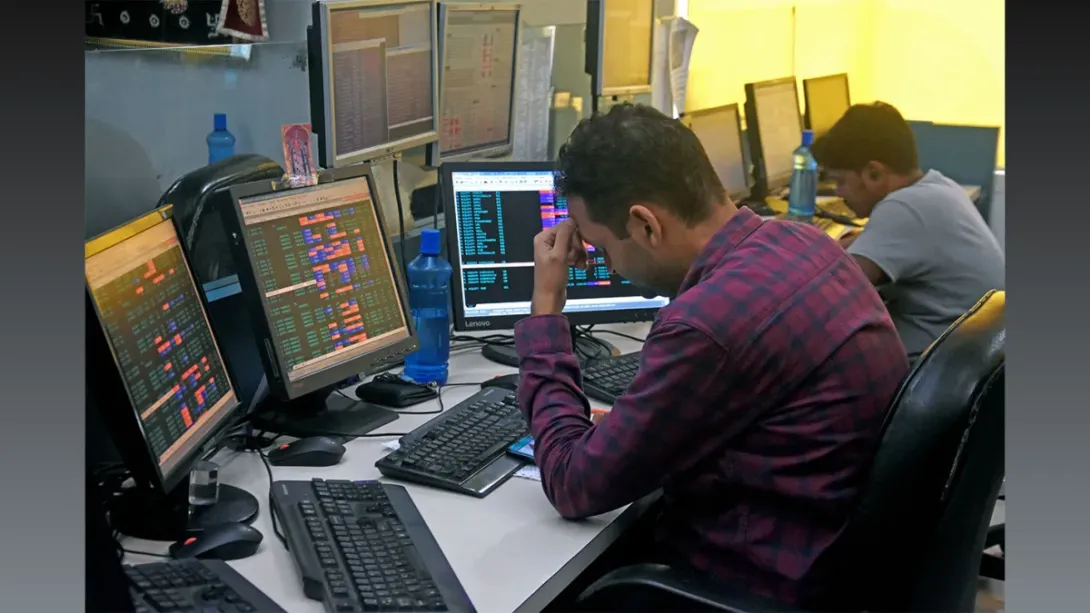
Stock markets across Asia, Europe, and the United States retreated sharply as escalating tensions in the Middle East rattled investor confidence and reignited concerns over energy security and geopolitical stability. Benchmark indices in India and major global exchanges posted declines amid rising crude oil prices and renewed safe-haven flows into gold and government bonds. Market participants responded swiftly to the heightened uncertainty, trimming exposure to risk assets and reassessing growth forecasts. Analysts warn that prolonged instability could disrupt trade flows, elevate inflationary pressures, and complicate central bank policy trajectories, amplifying volatility in global financial markets.
Equities Retreat Amid Escalating Geopolitical Tensions
Global equity markets came under pressure following reports of intensifying conflict in the Middle East, a region central to global energy supply chains and trade routes. Investors responded with caution, reducing exposure to equities and shifting capital toward defensive assets.
In India, the benchmark indices — BSE Sensex and Nifty 50 — closed lower as selling pressure intensified across banking, information technology, and energy counters. European and U.S. markets also recorded declines, reflecting synchronized global risk aversion.
Market strategists said geopolitical uncertainty typically prompts short-term capital reallocation, particularly in emerging markets where foreign portfolio flows play a significant role.
Crude Oil Surge Raises Inflation Concerns
One of the most immediate market reactions was a spike in crude oil prices. Given the Middle East’s pivotal role in global oil production, any disruption — actual or anticipated — tends to trigger sharp price adjustments.
Higher crude prices have direct implications for oil-importing economies such as India. Elevated energy costs can widen trade deficits, increase inflationary pressures, and strain fiscal balances. Analysts caution that sustained oil price escalation could complicate monetary policy decisions, particularly at a time when central banks are balancing growth and inflation objectives.
Energy stocks witnessed mixed reactions, with some upstream companies gaining while broader market sentiment remained subdued.
Safe-Haven Assets Gain Traction
As equities weakened, safe-haven assets such as gold and government bonds attracted renewed interest. Gold prices firmed amid heightened geopolitical anxiety, reflecting its traditional role as a hedge against uncertainty.
Government bond yields in several markets declined modestly as investors sought stability. Currency markets also experienced volatility, with emerging market currencies facing pressure against the U.S. dollar.
Portfolio managers noted that such defensive positioning often persists until geopolitical clarity improves.
Sectoral Impact: Banking and IT Under Pressure
Banking and financial stocks bore the brunt of selling in several markets, reflecting concerns over capital flows and credit demand. Information technology counters also declined, partly due to risk-off sentiment and potential implications for global growth.
Infrastructure and aviation stocks faced additional scrutiny, given their exposure to fuel costs and global supply chain dynamics. Analysts emphasized that while the immediate reaction is sentiment-driven, prolonged instability could translate into tangible earnings revisions.
Outlook: Volatility Likely to Persist
Market participants are closely monitoring diplomatic developments and energy market signals. Historically, financial markets tend to overreact in the initial stages of geopolitical crises before stabilizing as clearer assessments emerge.
However, the current global environment — characterized by fragile supply chains and uneven economic recovery — amplifies sensitivity to external shocks. Investors may remain cautious until geopolitical risks subside or clearer policy responses materialize.
For now, the Middle East crisis has reinforced a fundamental market principle: geopolitical risk remains an ever-present variable capable of swiftly reshaping global capital flows and investor sentiment.
Comments