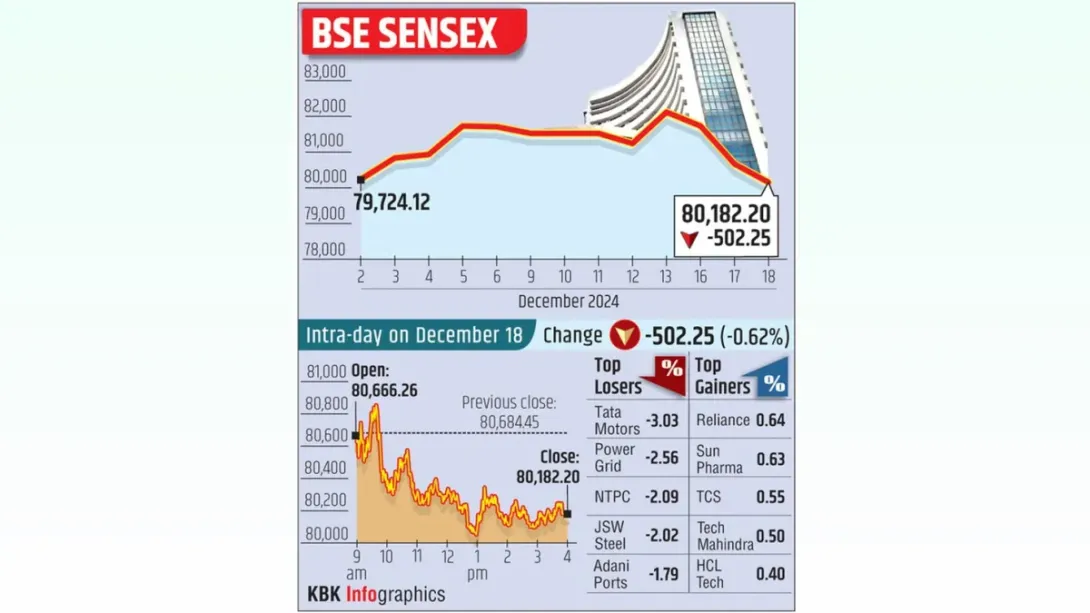
Global financial markets slid sharply as escalating geopolitical tensions in the Middle East unsettled investors and reignited fears of supply disruptions, inflationary pressure, and slower global growth. Equity indices across Asia, Europe, and North America declined as traders shifted capital into safer assets such as government bonds, gold, and the U.S. dollar. Energy prices surged amid concerns about oil supply stability, amplifying volatility in equity and currency markets. Analysts warn that prolonged instability in the region could undermine investor confidence and complicate central bank policy decisions, particularly as economies continue grappling with inflation risks and fragile post-pandemic recovery.
Geopolitical Shock Sends Global Equities Lower
International stock markets retreated as geopolitical tensions intensified in the Middle East, triggering a wave of risk aversion across financial markets. Investors, already navigating fragile economic conditions and persistent inflationary pressures, reacted swiftly to the possibility of a broader regional conflict that could disrupt global trade routes and energy supplies.
Major equity indices across Asia opened sharply lower, with technology and export-oriented companies among the hardest hit. European markets followed suit, registering widespread declines as investors reassessed geopolitical risk exposure. U.S. stock futures also pointed to a weaker opening, reflecting mounting anxiety over the potential economic consequences of a prolonged crisis.
Market strategists say the sell-off reflects a classic “risk-off” shift. In periods of geopolitical uncertainty, investors typically reduce exposure to equities and other high-risk assets, instead seeking the relative safety of government bonds, gold, and reserve currencies.
Energy Markets React to Supply Concerns
One of the most immediate reactions occurred in global energy markets. Oil prices climbed as traders priced in the possibility that instability could affect production, transportation routes, or infrastructure in one of the world’s most strategically important energy regions.
The Middle East accounts for a substantial share of global crude supply, and even the perception of disruption can trigger significant price volatility. Higher oil prices, in turn, have ripple effects across financial markets, influencing inflation expectations, corporate profit margins, and consumer spending.
Energy stocks were among the few sectors that recorded gains, benefiting from the surge in crude prices. However, analysts caution that sustained energy inflation could ultimately weigh on broader economic activity by increasing operating costs for industries ranging from transportation to manufacturing.
Safe-Haven Assets Gain Momentum
As equities retreated, investors shifted funds toward traditional safe-haven assets. Government bonds experienced increased demand, pushing yields lower in several major markets. Gold prices also strengthened, reflecting renewed demand for assets perceived as a store of value during periods of geopolitical turmoil.
Currency markets mirrored this defensive posture. The U.S. dollar and other reserve currencies strengthened against several emerging-market currencies, which tend to be more vulnerable during global risk-off cycles.
Financial analysts note that these shifts highlight the delicate balance currently facing global investors. Markets remain sensitive not only to geopolitical shocks but also to macroeconomic uncertainty, including interest-rate trajectories and slowing growth forecasts.
Implications for Central Banks and Monetary Policy
The escalation arrives at a complicated moment for global monetary policymakers. Central banks worldwide are still grappling with inflation that remains above long-term targets, even as economic growth shows signs of moderation.
Rising oil prices could further complicate the policy landscape. Energy costs are a key component of consumer inflation, and sustained increases could force central banks to maintain tighter monetary conditions for longer than markets currently anticipate.
For policymakers, the challenge lies in managing inflation without triggering a deeper economic slowdown. Geopolitical instability adds another layer of uncertainty, potentially forcing central banks to recalibrate economic projections and risk assessments.
Corporate Sector Braces for Volatility
Businesses with global supply chains are particularly sensitive to developments in the Middle East. Shipping routes, energy inputs, and international trade flows all face potential disruptions if tensions escalate further.
Multinational corporations may also encounter currency volatility and increased input costs, both of which can compress profit margins. Industries such as aviation, logistics, and heavy manufacturing are especially vulnerable to higher fuel prices.
At the same time, defense and cybersecurity firms may see increased investor interest as governments review strategic spending priorities in response to heightened security concerns.
Investor Outlook: Uncertainty Likely to Persist
Market observers warn that volatility could persist as investors monitor diplomatic developments and assess the likelihood of further escalation. Historically, geopolitical crises tend to produce sharp but sometimes temporary market reactions. However, the duration and severity of market disruptions depend largely on whether the conflict remains localized or expands into a broader regional confrontation.
For now, portfolio managers are emphasizing diversification and risk management. Many institutional investors are increasing allocations to defensive sectors, commodities, and assets that traditionally perform well during periods of geopolitical stress.
While markets may eventually stabilize, analysts say the episode underscores a recurring lesson in global finance: geopolitical risk remains one of the most unpredictable forces capable of reshaping economic expectations and market behavior.
Comments