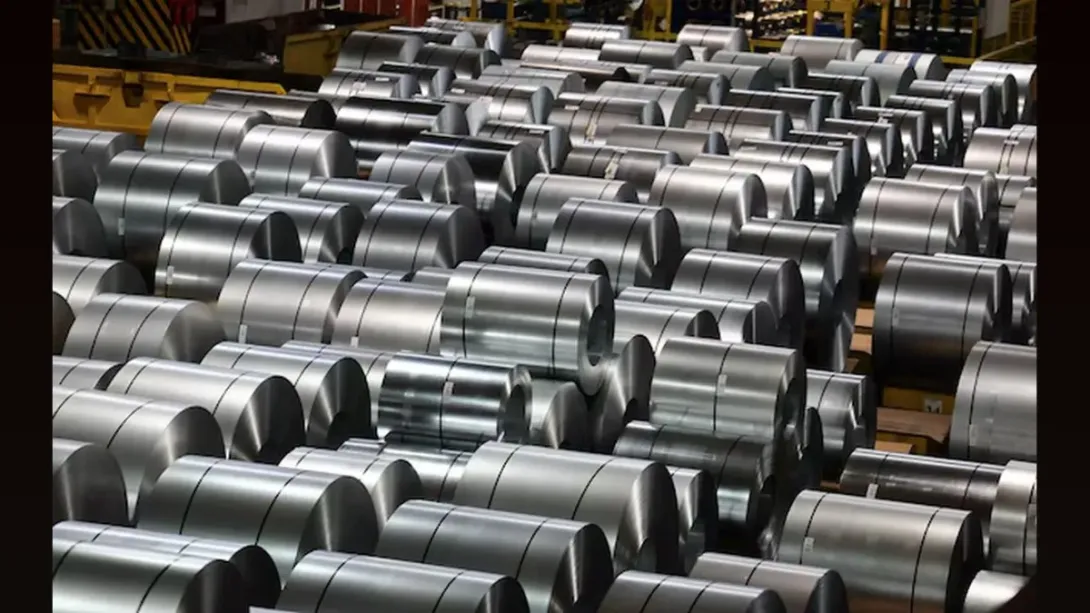
The Indian government has launched the third round of the Production-Linked Incentive (PLI) Scheme for Specialty Steel, marking another step toward strengthening the country’s steel manufacturing ecosystem. The initiative, designed to promote value-added steel production and reduce import dependency, invites applications from both existing manufacturers and new entrants. With this new phase, the government aims to attract significant private investment, enhance exports, and position India as a global hub for high-grade steel products, aligning with the Atmanirbhar Bharat vision of industrial self-reliance.
Driving the Next Phase of Steel Sector Growth
The Ministry of Steel has opened the third round of applications under the PLI Scheme for Specialty Steel, a flagship initiative intended to encourage large-scale production of high-value steel categories. This phase builds upon the earlier two rounds, which attracted considerable industry participation and commitments for capacity expansion.
The government is targeting the production of advanced steel grades such as coated steel, high-strength alloys, and electrical steel—segments that have traditionally relied heavily on imports. By incentivizing domestic producers through the PLI framework, the ministry aims to close this gap and stimulate innovation in steel manufacturing technologies.
The PLI scheme is part of India’s broader industrial policy designed to strengthen domestic production capacity, promote exports, and make Indian manufacturing globally competitive.
Investment and Employment Opportunities
Officials have highlighted that the third round is expected to attract substantial private investment, potentially exceeding previous phases. With financial incentives linked to incremental production and sales, the scheme seeks to boost both capacity utilization and technological advancement across the steel industry.
According to the government’s estimates, the overall PLI framework for specialty steel could lead to new investments worth over Rs. 30,000 crore, creating hundreds of thousands of direct and indirect jobs. The scheme’s structure ensures that participating companies are rewarded based on measurable output growth, aligning incentives with productivity and export performance.
Additionally, by fostering domestic value addition, the initiative aims to enhance India’s resilience against supply chain disruptions and fluctuating global steel prices.
Reducing Import Dependence and Strengthening Exports
India’s current dependence on imported specialty steel for sectors like automotive, defense, energy, and infrastructure remains a key challenge. The government’s PLI initiative seeks to address this by empowering domestic manufacturers to meet the country’s advanced steel requirements.
The third round focuses particularly on high-end steel categories, including stainless steel, galvanized products, and electrical steel used in transformers and electric vehicles. This shift toward specialized segments is critical for India’s industrial ambitions, especially as global demand for advanced materials continues to grow.
Furthermore, expanding domestic capacity will enhance India’s export potential, enabling local firms to tap into markets in Europe, Southeast Asia, and Africa, where demand for specialty steel is accelerating due to infrastructure expansion and renewable energy projects.
Government’s Strategic Vision for the Steel Sector
The Ministry of Steel’s broader vision under the National Steel Policy 2017 aims to make India a global leader in steel production, targeting 300 million tonnes of annual capacity by 2030. The PLI scheme serves as a vital policy instrument to achieve this target by encouraging diversification beyond traditional steel grades.
In the earlier rounds, the government approved 57 applications from 27 companies, with committed investments exceeding Rs. 29,500 crore. Many of these projects are currently under implementation, signaling steady progress in transforming India’s steel landscape.
The third round, therefore, is not merely a continuation but an acceleration of this momentum—focused on deepening value chains, promoting sustainability, and positioning India as a preferred destination for global steel innovation.
Industry Response and Outlook
Industry stakeholders have welcomed the government’s continued commitment to supporting the sector. Executives from leading steel producers have emphasized that the PLI scheme provides much-needed policy stability and performance-linked incentives, helping companies undertake capital-intensive projects.
Experts also point out that as global markets shift toward green steel and low-carbon manufacturing, India’s policy support can help local firms adopt cleaner technologies, positioning the country competitively in the global transition toward sustainable metallurgy.
The integration of research, development, and environmental standards within the PLI framework could also encourage technological collaboration with foreign partners, fostering innovation while ensuring compliance with international benchmarks.
Conclusion: A Step Toward Industrial Self-Reliance
The launch of the third round of the PLI Scheme for Specialty Steel underscores the government’s intent to transform India’s steel industry into a global powerhouse of advanced material production. By incentivizing domestic manufacturing, encouraging technological upgrades, and reducing import dependency, the initiative strengthens both economic resilience and industrial capability.
As India moves toward becoming a net exporter of specialty steel, the scheme stands as a testament to the nation’s evolving industrial policy—anchored in self-reliance, competitiveness, and sustainable growth.
Comments