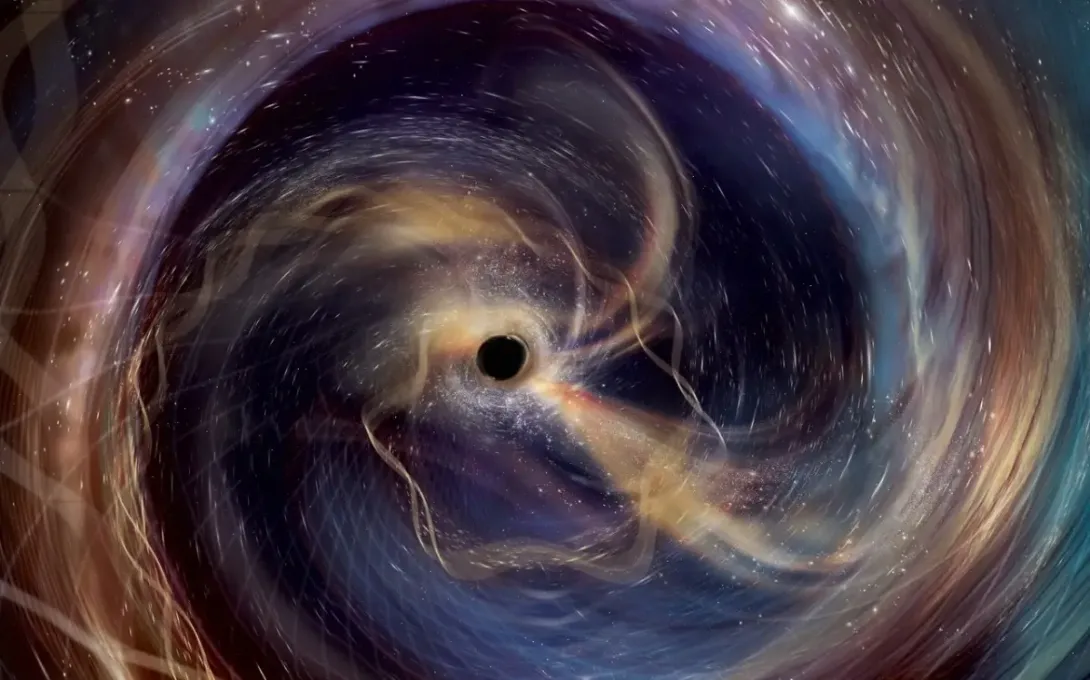
Recent advances in gravitational wave research have once again validated the groundbreaking predictions of Albert Einstein, reinforcing his lasting influence on modern physics. First theorized over a century ago as part of his general theory of relativity, gravitational waves are ripples in spacetime generated by massive cosmic events such as black hole mergers. New detections and refined measurements are offering scientists unprecedented insights into the universe’s most extreme phenomena. Beyond pure science, these discoveries are reshaping astrophysics, driving technological innovation, and strengthening global collaboration in space research and high-precision instrumentation.
Einstein’s Prediction and Its Modern Validation
Albert Einstein proposed the existence of gravitational waves in 1916, describing them as distortions in spacetime caused by accelerating massive objects. For decades, the concept remained theoretical due to the limitations of observational technology.
The first direct detection in 2015 marked a historic milestone, transforming Einstein’s equations into observable reality. Since then, repeated confirmations have cemented gravitational waves as a foundational pillar of modern astrophysics.
Recent Breakthroughs in Gravitational Wave Research
Scientists using advanced observatories such as LIGO and its international partners have detected increasingly subtle and distant gravitational wave signals. These observations have expanded understanding of black holes, neutron stars, and the structure of spacetime itself.
Researchers say improved sensitivity now allows detection of events billions of light-years away, effectively turning gravitational waves into a new tool for exploring the early universe.
Scientific and Economic Implications
Beyond their scientific value, gravitational wave discoveries are driving innovation in precision engineering, data analytics, and quantum measurement technologies. Governments and research institutions continue to invest heavily in next-generation detectors, recognizing both the scientific prestige and technological spillovers associated with such programs.
Analysts note that large-scale physics projects often generate long-term economic returns through spin-off technologies and high-skilled workforce development.
Global Collaboration and the Future of Discovery
Gravitational wave research is inherently international, relying on collaboration across continents to triangulate signals and validate findings. This cooperative model is increasingly seen as essential for tackling complex scientific challenges.
Future missions, including space-based detectors, are expected to further refine measurements and potentially uncover new classes of cosmic events.
Conclusion
More than a century after Albert Einstein’s prediction, gravitational waves continue to transform humanity’s understanding of the universe. Each new discovery not only confirms the depth of Einstein’s insight but also opens fresh frontiers in science and technology. As detection capabilities advance, gravitational wave astronomy is poised to remain one of the most powerful tools in unraveling the universe’s deepest mysteries.
Comments