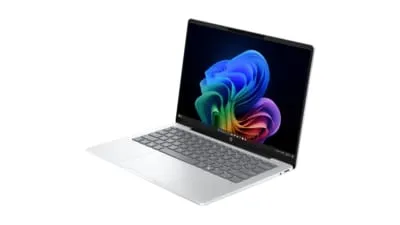
In a strategic move to align with the accelerating integration of artificial intelligence in personal computing, HP has launched its latest line of AI-enhanced laptops—the OmniBook 5 and OmniBook 3—tailored for productivity-centric professionals and next-generation users. Priced from Rs. 69,999, these models mark HP’s commitment to embedding intelligent capabilities into mainstream devices, while also showcasing its partnership with leading chipmakers to deliver high-efficiency computing. The devices come equipped with dedicated neural processing units (NPUs), designed to manage AI workloads locally, enhancing responsiveness and energy efficiency. This product launch further underscores HP’s vision of making AI a native experience in modern computing.
AI at the Core: Redefining Personal Computing
HP’s OmniBook series is not just a hardware refresh—it’s a paradigm shift toward AI-native devices. Both the OmniBook 5 and OmniBook 3 integrate on-device AI capabilities via dedicated NPUs, allowing for faster processing of tasks such as real-time language transcription, intelligent background blur, and facial recognition—without relying on cloud processing.
These AI cores enable power-efficient performance, prolonging battery life while ensuring smooth multitasking across enterprise, creative, and productivity software. HP positions this as a critical evolution in personal computing, especially for users working in hybrid or mobile-first environments.
Performance Backed by Intel's Core Ultra Chipsets
Powering the new OmniBook lineup are Intel’s Core Ultra 5 and Ultra 7 processors, which are part of Intel’s next-gen chipset family designed with AI acceleration in mind. These chips feature integrated GPUs and NPUs, optimizing graphics rendering and AI workload distribution.
By utilizing these processors, HP aims to deliver a seamless balance between computational muscle and thermal efficiency, a vital requirement in slim-form-factor laptops. This architectural advancement directly benefits professionals using AI-heavy applications like video editing, predictive analytics, and content generation.
Premium Build and Display Features
HP has designed the OmniBook 5 and OmniBook 3 with a focus on portability and premium aesthetics. Featuring aluminum chassis construction and minimalist design language, the laptops are built to appeal to executives and creators alike.
Both models come equipped with high-resolution displays that support low blue light emission and enhanced color calibration, ideal for extended usage and visual-intensive tasks. Additionally, adaptive refresh rate technology ensures smooth visuals during media playback and presentations.
Security and Collaboration Tools Optimized for Hybrid Work
In keeping with evolving work dynamics, the new OmniBooks include enhanced collaboration tools, such as AI-driven noise reduction, auto-framing during video calls, and biometric logins. These features cater to professionals who prioritize security and seamless communication in remote or hybrid setups.
HP has also integrated Wolf Security for Business, offering enterprise-grade protection against firmware attacks, malware, and unauthorized access, reinforcing the company’s push toward secure, AI-enhanced ecosystems.
Market Positioning and Price Strategy
Starting at Rs. 69,999, the OmniBook 5 and OmniBook 3 are competitively positioned in the upper-mid consumer segment, directly targeting tech-savvy professionals, business travelers, and content creators. HP’s pricing strategy appears to strike a balance between premium specifications and affordability, making AI-powered computing accessible without compromising on performance.
This launch also aligns with a broader industry trend where OEMs are embedding AI capabilities across product lines, positioning these features as standard rather than luxury.
Broader Implications for the Indian Market
India, with its fast-growing base of knowledge workers and digitally native consumers, presents a fertile ground for AI-embedded personal devices. HP’s move to introduce these laptops in the country reflects a clear recognition of India’s role in the global AI adoption curve.
From freelancers to enterprise users, the demand for intelligent systems that can adapt, learn, and optimize workflows is rising. The OmniBook series positions HP to tap into this momentum effectively.
Conclusion: A Calculated Bet on the AI Future
With the launch of the OmniBook 5 and 3, HP isn’t merely releasing new laptops—it’s advancing a vision where AI is inseparable from everyday computing. By embedding intelligence at the silicon level, HP is building systems that are not only faster and more efficient but also contextually aware and user-adaptive.
As the market matures and AI capabilities become an expectation rather than a differentiator, HP's proactive stance could offer it a strategic edge in the post-pandemic computing landscape.
Comments