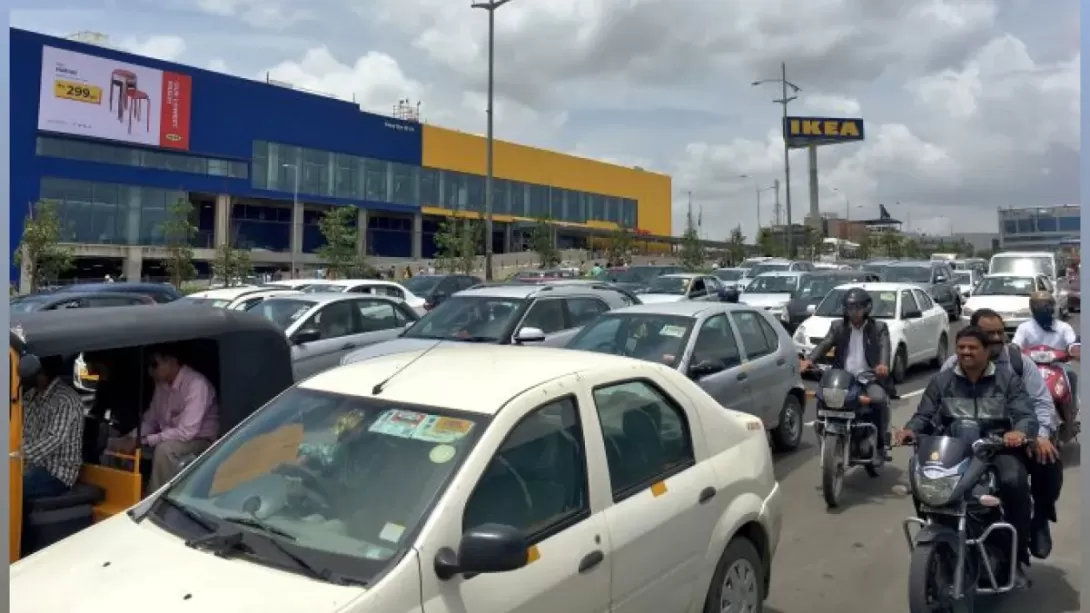
IKEA is recalibrating its growth strategy in India by focusing on smaller-format stores, targeting tier II and III cities. The company plans to launch compact stores, potentially as small as 10,000 square feet, in neighborhood malls and high streets, making its products more accessible to a broader customer base. Alongside physical stores, IKEA is also expanding its online presence in key cities. The move marks a shift in IKEA’s approach to India, where it seeks to capitalize on growing demand for affordable home furnishings across smaller locations, enhancing accessibility and agility in a competitive market.
IKEA’s New Approach: Compact Stores for Expansive Reach
Swedish retail giant IKEA is undergoing a significant shift in its Indian expansion strategy, aiming to increase accessibility for customers by introducing compact stores in smaller cities. The company, which is currently in its second phase of growth in India, is now focusing on opening stores that range from 10,000 square feet in size. This decision reflects IKEA’s intent to tailor its stores to specific local needs, allowing the brand to establish a presence in high-traffic neighborhood shopping malls and on prominent high streets.
Pooja Grover, IKEA India’s Country Expansion Manager, explained that this smaller-store format will enable IKEA to expand rapidly while maintaining flexibility and agility in meeting market demands. The compact stores will feature a limited selection of physical displays but will offer customers the ability to explore over 7,000 products through a digital catalogue. This hybrid model aligns with IKEA’s global strategy of blending physical and digital experiences.
The Shift Toward Tier II and III Cities
While IKEA is initially focusing on six major cities—Hyderabad, Bengaluru, Mumbai, Delhi NCR, Chennai, and Pune—the company has also set its sights on expanding into smaller cities in India’s tier II and III regions. Grover confirmed that IKEA is developing plans to open additional physical stores in these cities, aiming to tap into the growing demand for affordable and modern home furnishings across a broader geographical area.
This shift reflects IKEA’s evolving approach to India’s retail market, where the demand for quality home furnishings is rising not just in urban centers but also in smaller towns, driven by a burgeoning middle class and a growing aspirational market. The move is also in line with the Indian government's push to promote retail growth in these regions.
Partnerships and Innovations to Drive Growth
To support its new compact store model, IKEA is exploring partnerships with real estate developers, ensuring that its stores are strategically located in accessible, high-footfall areas. This partnership model will be crucial as the company scales its operations across India, particularly in tier II and III cities, where infrastructure and retail space availability can be a challenge.
In addition to the new compact stores, IKEA has been innovating with its service offerings. The company recently launched its first "Plan & Order Point" (PaOP) in Bengaluru, a 740-square-meter customer interaction hub that provides personalized consultations, expert home design services, and flexible planning assistance. This format offers customers a more tailored experience, allowing them to choose from a DIY approach to complete end-to-end design and installation services.
Expanding Digital and Physical Presence
IKEA is also ramping up its digital presence in India. In February, the company launched online sales in Delhi-NCR and nine other markets ahead of the physical store openings in Gurugram and Noida. This expansion is part of IKEA’s broader strategy to create an omnichannel retail experience, where customers can shop both online and offline.
The company plans to open new physical stores in Chennai and Pune, continuing its focus on key urban markets while strategically expanding to capture demand from smaller cities. In addition to the large-format stores, which typically exceed 40,000 square meters, IKEA has also developed smaller, city-based stores like the one in Mumbai, which spans 7,500 square meters.
Profitable Growth and Strategic Investments
Looking forward, IKEA is focused on achieving profitable growth in the Indian market. The company is in discussions with the Indian government to secure approval for a new round of foreign direct investment (FDI), following the initial Rs 10,500 crore FDI proposal approved in 2013. This investment was earmarked for the establishment of 10 stores and associated infrastructure over a 10-year period, which the company is well on its way to fulfilling.
In a related development, Ingka Centres, part of the Ingka Group that operates IKEA retail, is investing one billion euros to set up two centers under the Lykli brand in Gurgaon and Noida. These centers will further IKEA’s strategy to increase its footprint in India, blending retail, leisure, and experience-focused spaces.
Conclusion: IKEA’s Vision for the Indian Market
IKEA’s shift toward smaller-format stores marks a significant recalibration of its growth strategy in India. With an emphasis on accessibility and local relevance, the company is poised to tap into untapped markets and expand its reach across both major urban centers and smaller cities. The hybrid model of physical stores combined with digital catalogues offers a modern shopping experience, meeting the diverse needs of Indian consumers. As IKEA continues to innovate and expand, its approach to balancing physical and digital experiences will be crucial in securing its position as a key player in India’s evolving retail landscape.
Comments