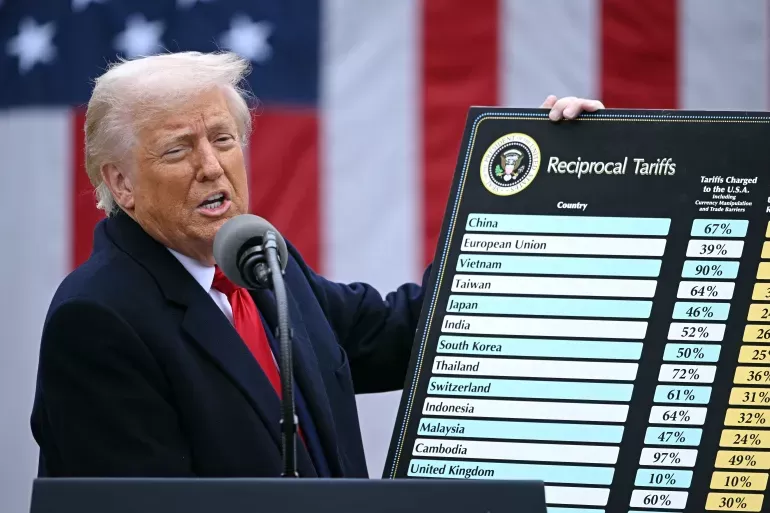
The recent escalation in trade tensions between the United States and China, marked by US President Donald Trump's imposition of 34% tariffs on Chinese exports, is expected to exacerbate the economic slowdown in China. This could reduce China's GDP by 2 to 2.5 percentage points, according to Larry Hu, the Chief China Economist at Macquarie. As the tariffs deepen the rift between the two largest economies in the world, the ripple effects are likely to spread across global markets, influencing not only trade flows but also China's domestic economic strategy. The intensified trade conflict further complicates Beijing's efforts to stimulate domestic consumption and maintain stable growth.
The Economic Consequences of Trump's Tariff Strategy
US President Donald Trump’s latest move to impose 34% tariffs on Chinese exports marks a sharp intensification of the ongoing trade war between the two global superpowers. According to Macquarie's Larry Hu, these tariffs could result in a significant decline in China’s economic output, particularly affecting its exports, which are a cornerstone of the nation's growth.
Projected Impact on China's Economy
Hu estimates that the tariffs could reduce China's export volume by 15 percentage points, and more critically, lower the nation's GDP growth by 2 to 2.5 percentage points. As China already struggles with a domestic economic slowdown, these added tariffs could stifle further growth and exacerbate the existing challenges. This further sets back China’s ability to meet its modest five percent GDP growth target for the year. With the country already facing stagnating domestic consumption and a crisis in its real estate sector, the tariffs could serve as a substantial blow to its export-driven economy.
Tariff Timeline and Trade Retaliations
Since Trump's initial tariffs, which amounted to 15%, the total tariffs on Chinese exports to the United States have surged to 54%. In addition to the tariffs imposed under Trump’s administration, President Joe Biden has maintained these trade levies. The most recent policy change involves an end to the duty-free exemption on China's small parcel exports, which have traditionally amounted to a significant USD 30-50 billion annually. In retaliation, China has imposed 34% tariffs on US goods, particularly targeting agricultural products, a move that is likely to cause considerable damage to American farmers. Furthermore, China has implemented export controls on rare earth metals, which could severely affect key American industries such as defense, technology, and smartphones.
The Global Impact: Supply Chain Disruptions
The new tariffs are not just affecting bilateral trade but are creating ripples across global supply chains. The Chinese Foreign Ministry has condemned Trump’s actions, labeling them as protectionist and harmful to the stability of global trade. The consequences could potentially derail the fragile recovery of the global economy, which is already grappling with the effects of the COVID-19 pandemic.
China's Shift Toward Domestic Demand and Consumption
Despite the escalating tariffs, China is being forced to reassess its long-term economic strategy. Historically, China's economic model has been heavily reliant on two key engines: exports and infrastructure investment. However, the trade war and mounting tariffs are pushing China to consider rebalancing its economy toward greater domestic consumption.
Challenges in Stimulating Domestic Demand
The Chinese government has long recognized the need to increase domestic consumption, but significant challenges remain. China's household consumption currently accounts for just 38% of its GDP, far below the 60-70% seen in many Western economies. The difficulty lies in transitioning away from a reliance on industrial output and export-driven growth toward a consumption-based model. This shift is crucial, especially considering the youth unemployment rate in China has surged into double digits. Revitalizing the private sector, which contributes significantly to the country's GDP and urban employment, is essential to reducing the economic reliance on exports and achieving the government’s growth targets.
Political and Economic Tensions: A Long-Term Outlook
The latest tariffs reflect deeper geopolitical tensions and could have far-reaching consequences for both countries. China's response has included countermeasures aimed at defending its economic interests and pushing for a return to multilateral trade agreements. As the Chinese government continues to navigate the complex landscape of international trade, it is becoming clear that these tariffs could catalyze broader reforms in China’s economic management and policies.
The Global Economic Landscape
On the broader stage, the escalating trade war presents a considerable challenge to the stability of the global economy. As both countries face off in what appears to be an economic standoff, international businesses, particularly those operating within China, are calling for a return to stability. The disruption of supply chains, combined with an unpredictable global economic environment, underscores the need for cooperation and resolution. China’s government, acknowledging the strains imposed by the trade conflict, has urged American companies operating within China to consider the situation pragmatically, with an emphasis on stabilizing global supply chains and fostering mutual benefits.
Conclusion: Navigating Uncertainty in a Globalized Economy
The recent escalation of tariffs between the US and China underscores the fragility of global economic recovery and highlights the ongoing trade tensions that continue to define US-China relations. As China faces significant headwinds due to these tariffs, the country is being forced to reconsider its economic model and address the long-standing reliance on exports. In the years ahead, these challenges may lead to profound shifts in both China's domestic policy and the broader global trade landscape. The road to economic stability and growth will require both nations to navigate their differences and find common ground for the benefit of global prosperity.
Comments