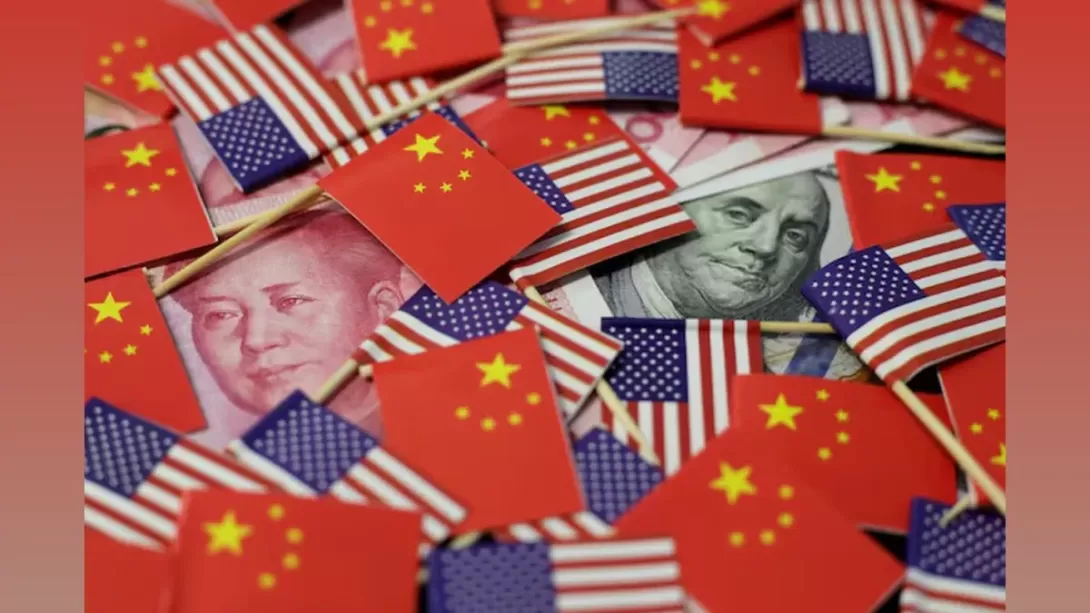
In a recent report, Moody's Ratings highlighted the growing risks that U.S. tariffs pose to both the domestic and global economy, with a particular emphasis on corporate credit conditions. According to the agency, escalating trade tensions and tariff increases are expected to exacerbate global economic instability, heightening default risks, particularly for low-rated and speculative-grade companies. As the U.S. government escalates its trade war with China, the implications for growth, consumer confidence, and investment are profound. Moody's has also warned that these tariff hikes could contribute to a potential global recession and disrupt business planning.
The Threat of U.S. Tariffs: Implications for Credit Markets
Moody’s recent analysis underscores a crucial reality: U.S. tariffs are increasingly straining corporate credit conditions, especially for already financially vulnerable businesses. The primary concern lies with low-rated, speculative-grade firms relying heavily on liquidity in debt markets. These companies, already navigating higher borrowing costs and greater uncertainty, are particularly susceptible to the financial pressure caused by escalating tariffs.
According to Moody's, the direct impact of U.S. trade policy on most sovereign states and banks is more indirect. While banks are shielded from immediate shocks, they will still be vulnerable to broader economic weakness driven by weaker consumer demand and sluggish business investment.
This unpredictability in U.S. trade policy, especially with the sudden tariff hikes, has led to a rapid deterioration in credit conditions globally. As companies face increasing costs and shrinking access to capital, Moody’s projects a higher likelihood of defaults. Moody’s baseline scenario for the coming months predicts that the number of corporate defaults will rise, as businesses struggle to adjust to the compounded pressure of elevated tariffs, scarce funding, and mounting uncertainty.
U.S. Tariff Policy and Its Recessionary Threat
The U.S. government’s decision to impose a sweeping series of tariff hikes on both Chinese and global imports has sparked alarm in the global financial community. On April 9, the U.S. administration temporarily paused some reciprocal tariffs, reverting to a universal rate of 10% on most targeted countries. However, this pause is a temporary reprieve. On April 16, the U.S. raised tariffs on Chinese goods to an unprecedented 245%, heightening market anxiety and casting a long shadow over global trade relations.
Moody's has warned that the trade war could result in a major slowdown in U.S. growth, shaving at least one percentage point off the country’s GDP. The inflationary pressures stemming from these tariffs will inevitably be passed on to U.S. consumers, leading to higher prices for imported goods. Although this "pass-through" of costs may take time, it will reduce household purchasing power, ultimately damaging the broader economy.
From an investment perspective, the trade uncertainty is particularly damaging. Businesses, unsure of the tariff regime post-90 days, are hesitant to make long-term investment commitments, opting instead to adopt a wait-and-see approach. This cautious outlook stifles innovation, delays new projects, and restricts overall economic dynamism.
The Impact on China and Global Supply Chains
While the U.S. economy grapples with the consequences of its own tariff policy, China faces its own set of severe challenges. The country’s export sector has already felt the brunt of the trade war, and ongoing tensions with the U.S. are not helping matters. Despite efforts by the Chinese government to stimulate domestic consumption and encourage private-sector investment, the escalating tariffs are undermining consumer confidence, both within China and globally.
Moody’s assessment points to an economic slowdown in China, forecasting that the country's growth could fall below 4% in 2025 if the current tariff dispute remains unresolved. The combination of reduced demand from major global markets and internal economic constraints may force China to rely more heavily on state intervention, but even these efforts may not be enough to stave off further economic deceleration.
Additionally, China’s manufacturing sector faces increasing pressure from U.S. tariffs, particularly with the elevated tax on Chinese goods now reaching as high as 245%. This has caused ripple effects throughout global supply chains, leading to rising costs for companies that rely on Chinese imports.
Conclusion: Tariff-Induced Uncertainty and Its Long-Term Ramifications
The escalating U.S.-China trade war, fueled by a series of tariff hikes and an increasingly volatile political environment, has far-reaching implications for the global economy. According to Moody’s, the growing uncertainty surrounding U.S. trade policy is a significant threat to global economic stability, particularly for low-rated corporations and heavily indebted firms.
In the United States, rising tariffs are likely to curtail growth, dampen consumer confidence, and push up prices for businesses and households alike. Globally, the ripples of these tariff increases will continue to disrupt international trade, undermine business investment, and fuel the growing possibility of a recession.
For China, the challenges are even more acute, as the nation grapples with the economic fallout from strained U.S. relations. Moody’s suggests that the Chinese government may struggle to generate enough internal support to counterbalance the negative impacts of the tariffs, leaving the country vulnerable to slower growth in the coming year.
The road ahead remains fraught with uncertainty, and while a resolution to the trade conflict may be on the horizon, the long-term effects of the tariff-driven policy will likely linger for years to come, reshaping the landscape of global trade and finance in ways that are yet to be fully understood.
Comments