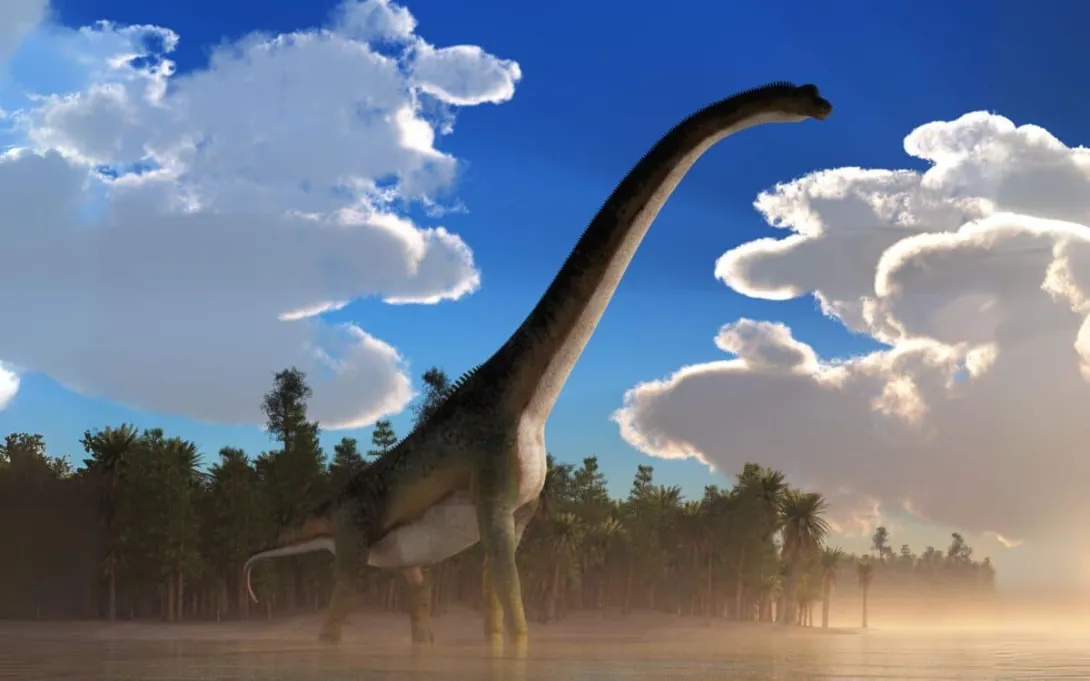
Paleontologists in China have announced the discovery of a previously unknown species of gigantic sauropod dinosaur, unearthed from Middle Jurassic strata in the country’s northwest. This new species, characterized by an unusually long neck and robust body structure, adds critical insight into the early evolution of some of the largest terrestrial animals to have ever lived. The fossil find—among the most complete sauropod specimens from the era—suggests these dinosaurs attained colossal sizes much earlier than previously believed, reshaping scientific understanding of how these titans evolved and adapted in prehistoric ecosystems.
A Landmark Discovery in Dinosaur Paleontology
The fossilized remains of the newly identified sauropod were excavated from sedimentary rock formations dating back approximately 165 million years. Located in the Yanan region of Gansu Province, the site is renowned for yielding well-preserved Jurassic-era fossils. The new species, tentatively named pending peer-reviewed classification, belongs to a lineage of long-necked herbivorous dinosaurs and is believed to have measured over 25 meters in length.
Initial assessments suggest the specimen is among the most massive animals known from the Middle Jurassic, bridging a crucial evolutionary gap between earlier, smaller sauropods and the gigantic forms that dominated the Late Jurassic and Cretaceous periods.
Anatomical Features and Evolutionary Implications
Distinct anatomical traits—including elongated cervical vertebrae, a widened pelvic girdle, and reinforced limb structures—indicate the dinosaur was not only large, but also adapted to support significant body mass while maintaining mobility. The vertebral column alone points to a remarkably long neck, potentially used for high browsing or accessing wide feeding ranges.
These adaptations suggest that gigantism in sauropods evolved earlier and more rapidly than previously thought. The discovery challenges the long-standing view that truly massive body sizes only emerged in the Late Jurassic, pushing back the evolutionary timeline and prompting fresh analysis of environmental pressures that may have driven such rapid growth.
Fossil Context and Geological Significance
The sedimentary layers encasing the fossil provided a near-ideal preservation environment, with the bones largely undistorted and aligned in their natural anatomical positions. Surrounding geological strata include evidence of diverse flora and fauna, indicating a lush, semi-humid ecosystem that could have supported the massive nutritional demands of sauropods.
Dating techniques applied to volcanic ash layers within the rock formation confirmed the specimen’s age, placing it securely within the Middle Jurassic epoch. This adds a valuable timestamp to the fossil record and enhances our understanding of dinosaur dispersal and ecosystem development in prehistoric Asia.
Broader Impact on Dinosaur Evolution Research
The discovery of this sauropod species not only expands the known diversity of Jurassic dinosaurs but also emphasizes Asia’s growing importance in global paleontological research. While North America and Africa have historically dominated sauropod fossil records, China’s contributions—particularly over the last two decades—are increasingly central to reconstructing the evolutionary history of these massive creatures.
Moreover, the find offers new comparative material for evaluating sauropod morphology and biomechanics across continents, contributing to ongoing debates about parallel evolution and ecological adaptation among megaherbivores of the Mesozoic era.
Looking Ahead: Excavation, Study, and Preservation
Excavation teams continue to study additional fossilized material from the site, including potential cranial fragments and limb bones that could help reconstruct the full skeletal anatomy. Once formally named and described in academic literature, the dinosaur is expected to become a central exhibit in China’s national paleontology collections, drawing interest from researchers and the public alike.
This discovery may also spur further exploration in the region, where other partially exposed fossils hint at the presence of additional dinosaur species yet to be studied.
Conclusion
The unearthing of this enormous sauropod in China represents more than a scientific breakthrough—it is a window into a forgotten ecosystem, a pivotal moment in evolutionary biology, and a testament to the global reach of modern paleontology. As research deepens, this newly found giant may help rewrite the narrative of dinosaur evolution, proving once again that Earth's prehistoric past continues to offer new and humbling surprises.
Comments