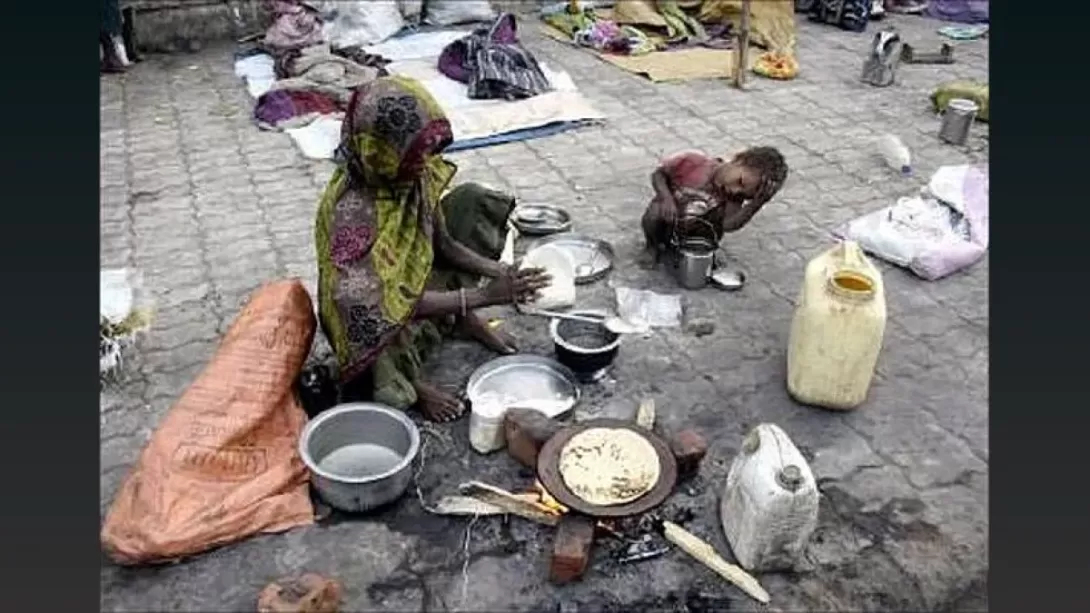
India has made remarkable strides in poverty reduction over the past decade, lifting an estimated 171 million people out of extreme poverty between 2011-12 and 2022-23, according to the World Bank's latest Poverty and Equity Brief. This success story reflects a broader socioeconomic shift, characterized by a sharp decline in both rural and urban poverty rates, a narrowing rural-urban divide, and notable progress in employment generation—particularly among women. However, structural challenges remain, including high youth unemployment, informality in the labor market, and persistent gender gaps. The report places India among key global leaders in the fight against poverty.
A Landmark Reduction in Poverty Rates
India’s journey over the past decade has been nothing short of transformative. According to the World Bank, the nation’s extreme poverty rate—measured by the international threshold of USD 2.15 per day—plummeted from 16.2% in 2011-12 to just 2.3% in 2022-23. This shift has lifted 171 million individuals above the extreme poverty line, representing one of the most significant poverty reduction achievements globally during this period.
This dramatic fall was underpinned by accelerated rural development, robust economic growth, targeted welfare programs, and enhanced financial inclusion—factors that played a pivotal role in reshaping the country's socio-economic fabric.
Rural and Urban Convergence: A Narrowing Divide
The World Bank report highlights a notable convergence between rural and urban poverty rates. Rural poverty fell from 18.4% to 2.8%, while urban poverty dropped from 10.7% to 1.1%, shrinking the rural-urban poverty gap from 7.7 to 1.7 percentage points. This 16% annual decline reflects the improved reach of social services, employment schemes, and infrastructure investments in rural areas.
The declining disparity also underscores a crucial policy outcome—India’s ability to achieve inclusive growth by bridging geographical inequalities and targeting historically underserved regions.
Rise to Lower-Middle-Income Status
India has transitioned into the lower-middle-income category, which uses a higher benchmark of USD 3.65 per day to measure poverty. Under this threshold, the poverty rate fell from 61.8% to 28.1%, lifting 378 million people out of poverty. Rural poverty at this level declined from 69% to 32.5%, while urban poverty was reduced from 43.5% to 17.2%.
The report’s findings suggest that India’s growth trajectory has not only improved living standards but also brought a significant portion of the population closer to a secure economic footing.
Regional Performance: Populous States Lead the Way
India’s five most populous states—Uttar Pradesh, Maharashtra, Bihar, West Bengal, and Madhya Pradesh—were home to 65% of the country’s extremely poor in 2011-12. These states also accounted for two-thirds of the reduction in extreme poverty by 2022-23. Yet, the challenge remains substantial. As of 2022-23, these regions still represent 54% of India’s extremely poor and 51% of its multidimensionally poor, as per the Multidimensional Poverty Index (MPI).
While these figures reflect significant progress, they also indicate where the next phase of poverty reduction efforts must be concentrated.
Multidimensional Poverty and Social Progress
Beyond monetary poverty, the World Bank notes a marked decline in multidimensional poverty—factors such as education, health, and living standards. The proportion of people living in multidimensional poverty fell from 53.8% in 2005-06 to 16.4% by 2019-21.
This decline indicates broader improvements in human development outcomes, fueled by expanding access to education, sanitation, electricity, and healthcare across both rural and urban India.
Employment Dynamics: Growth with Complexity
India’s employment landscape has evolved notably since 2021-22, with job creation outpacing the growth of the working-age population. The report points to a resurgence in labor force participation, especially among women. Urban unemployment declined to 6.6% in Q1 FY24/25—the lowest since 2017-18—indicating renewed momentum in India’s urban economy.
A significant trend is the migration of male workers from rural to urban areas, reflecting growing employment opportunities in non-agricultural sectors. Simultaneously, female employment in rural agriculture has increased, and self-employment is on the rise, especially among rural women.
Persistent Challenges: Youth and Gender Disparities
Despite the headline improvements, the labor market faces lingering structural issues. Youth unemployment remains high at 13.3%, and among college-educated individuals, it soars to 29%. The formal job sector is still limited—only 23% of non-farm paid jobs are formalized, while agricultural employment remains largely informal.
Furthermore, gender disparities continue to limit inclusive labor force participation. With only a 31% female employment rate, and 234 million more men in paid work, bridging the gender gap remains a key policy imperative.
A Global Example with Local Hurdles
India’s progress underscores the potential of sustained economic reforms, targeted welfare, and demographic leverage in reducing poverty at scale. Yet, as the World Bank notes, persistent inequalities—especially across gender, geography, and education—must be addressed through long-term policy innovation.
The data tells a story of advancement, but also a reminder that the path to inclusive prosperity is ongoing.
Comments